Al-Budaiwi tells Security Council Gulf states reject any breach of their security and sovereignty
GCC Secretary‑General Jasim Al‑Budaiwi told the UN Security Council in New York that Gulf states reject any infringement of their security and sovereignty and called for action to stop attacks that violate international law.
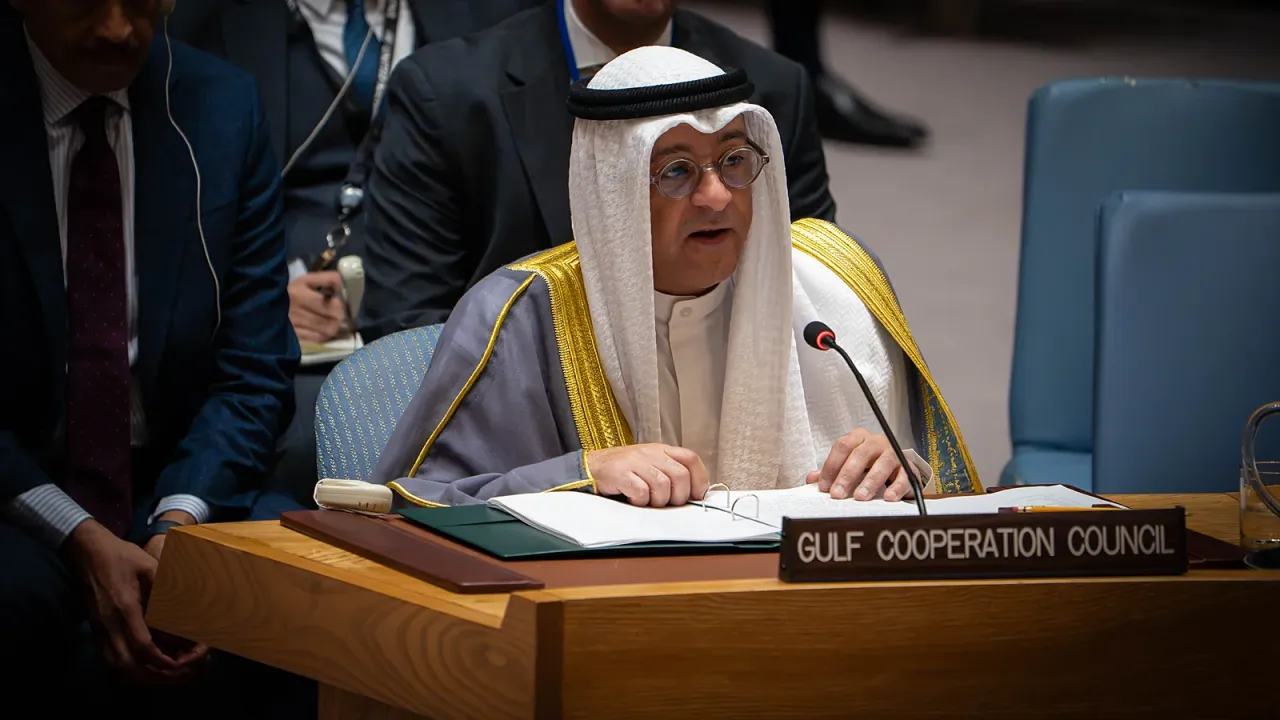
The Secretary‑General of the Cooperation Council for the Arab States of the Gulf (GCC), Jasim Al‑Budaiwi, said during a briefing to the UN Security Council at UN headquarters in New York on Friday, 13 November 2026, that the Council states reject any infringement of their security, sovereignty and territorial integrity. He said the attacks they have been subjected to violate international law, threaten international peace and security, and require the Council to act to ensure their cessation in implementation of its resolutions and to prevent their recurrence.
The briefing took place at a session convened at Bahrain’s request to present the unified Gulf position on regional developments and their implications for regional and international security and freedom of navigation. Al‑Budaiwi thanked Latvia, which holds the Security Council presidency this month, for convening the session.
Iranian attacks with more than seven thousand rockets and drones
He said the GCC states have been subjected since 28 February 2026 to Iranian attacks involving more than seven thousand rockets and unmanned aerial vehicles, which targeted airports, ports, energy, power and desalination facilities, as well as residential areas and civilian infrastructure. The strikes have caused fatalities and injuries, extensive damage to infrastructure and repercussions for the marine environment in the Arabian Gulf.
He reiterated the GCC’s condemnation of these attacks and held Iran fully responsible for them, noting that the Council states have made diplomatic efforts to avert escalation. He welcomed Security Council resolution 2817 (2026), which condemned the Iranian attacks on the GCC states and Jordan and called for an immediate cessation, and referred to Human Rights Council resolution 61/1 (2026), which called for accountability and demanded that Iran make reparations.
Call to stop attacks on Saudi Arabia and protect navigation
Al‑Budaiwi reiterated the GCC’s condemnation of Houthi attacks on Saudi Arabia, which the council says are supported by Iran, affirming the member states’ full solidarity with Riyadh and support for measures Saudi Arabia is taking to safeguard its sovereignty and security. He welcomed the Security Council’s unanimous adoption of resolution 2837, which condemned the Houthis’ military escalation in Yemen and their attacks on Saudi Arabia and threats to commercial navigation, and which called for an immediate and unconditional halt to those attacks, including those against civilians and civilian infrastructure.
He said the effects of the attacks have extended to international sea lanes, noting that the Strait of Hormuz and the Bab al‑Mandeb are vital arteries for trade and energy supplies and that their security is a shared international interest. He condemned attacks on commercial vessels and oil and gas tankers in the Strait of Hormuz that have cost the lives of a number of seafarers, rejected any attempt to close the strait or to impede navigation or impose unlawful transit restrictions or fees, and denounced Houthi attacks on commercial ships in the Red Sea and Bab al‑Mandeb.
He concluded the briefing by calling on the UN Security Council and the international community for an immediate and unconditional end to the Iranian attacks on the GCC states and Jordan, an end to Houthi attacks on Saudi Arabia and commercial shipping, accountability for those responsible and a requirement that Iran make reparations, stressing that the security of the Arabian Gulf is an integral part of international security.