COP31 climate summit ends without agreement after European rejection of text that ignores fossil fuels
COP31 in Antalya ended without a final agreement after the EU and UK objected to a draft that made no mention of fossil fuels, while Saudi Arabia defended carbon capture technologies.
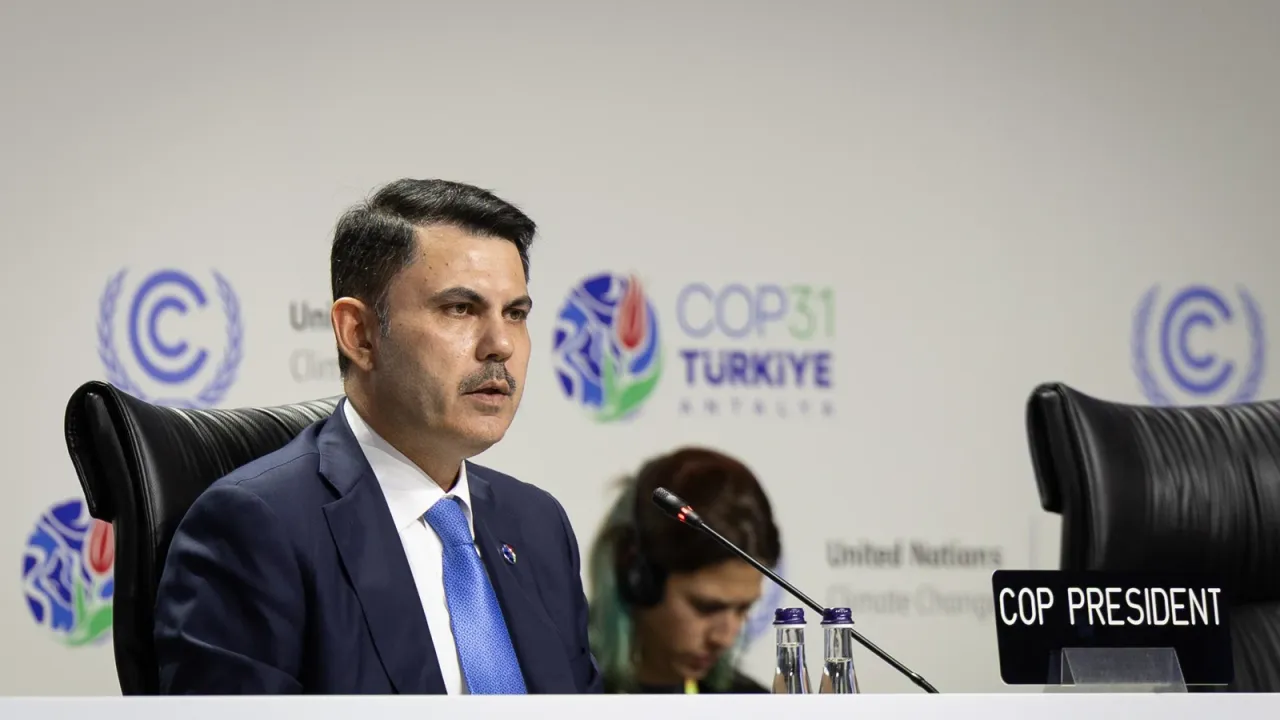
The United Nations climate summit COP31 in the Turkish city of Antalya concluded on Sunday without adopting a final agreement, after the European Union, Britain and other countries rejected the main draft text that made no reference to fossil fuels or to a transition away from them, bringing to a close two weeks of negotiations and two additional days of extension that made it the longest UN climate conference ever.
The conference president, Turkish Minister of Environment, Urbanization and Climate Change Murat Kurum, acknowledged in the closing plenary that consensus could not be reached, saying there were parties in the room opposing the text and that there was no unanimity on it, and therefore these decisions were not adopted, stressing that the presidency had not imposed the text on anyone. The summit had been due to conclude last Friday.
European objection to ignoring fossil fuels
Irish minister Daragh O'Brien, speaking for the European Union, said the bloc would not back a final decision or an “Antalya Charter” that does not even mention fossil fuels, the main driver of climate change, adding that the EU would not accept a conference that whitewashes fossil fuels and that the proposed text did not meet the moment.
Britain officially joined the objection, saying the draft proposed by the Turkish and Australian presidencies would move climate work backwards rather than accelerate implementation, while Panama and the Marshall Islands said they rejected the text because it weakens previous commitments and does not reflect the urgency of the climate crisis.
Read also: COP31 launches in Turkey amid security tensions and an energy crisis
Saudi defense of carbon capture
By contrast, Saudi Arabia defended including carbon capture and storage technologies in the text, while Pakistan and the group of African states did not formally object to the draft despite reservations about some of its provisions; Pakistan called for the whole package not to be sacrificed because some parties object to parts of it.
The draft had called on countries to electrify their economies and to raise the share of electricity in global final energy consumption to about 35 percent by 2035, alongside expanding technologies for removing carbon from the atmosphere—provisions that critics said could be used to justify prolonging dependence on oil and gas.
Co-president of the conference, Australian Minister for Climate Change and Energy Chris Bowen, said the red lines the two presidencies had tried to reconcile proved impossible to bridge.
UN disappointment and eyes on COP32
UN Secretary-General António Guterres expressed deep disappointment at the summit ending without consensus on a comprehensive outcome, saying: “There may be no consensus in the negotiating room, but there is no ambiguity in the science.”
Despite the failure to pass the main text, the conference adopted decisions on other files, including a decision on a “just transition” to help workers in high-emission sectors move to a low-carbon economy, and attention now turns to COP32, scheduled to be held in the Ethiopian capital Addis Ababa.
Read also: Amidi visits Iraq’s pavilion at COP31 and stresses strengthening international presence