Factions' disarmament negotiations reach 'near-closed' road with warnings escalation could spill into streets
A government source close to Prime Minister Ali al-Zaidi warns negotiations to dismantle factions' weapons have stalled after factions refused to surrender arms and resumed a media campaign; leaders in the Coordination Framework are moving to contain tensions.
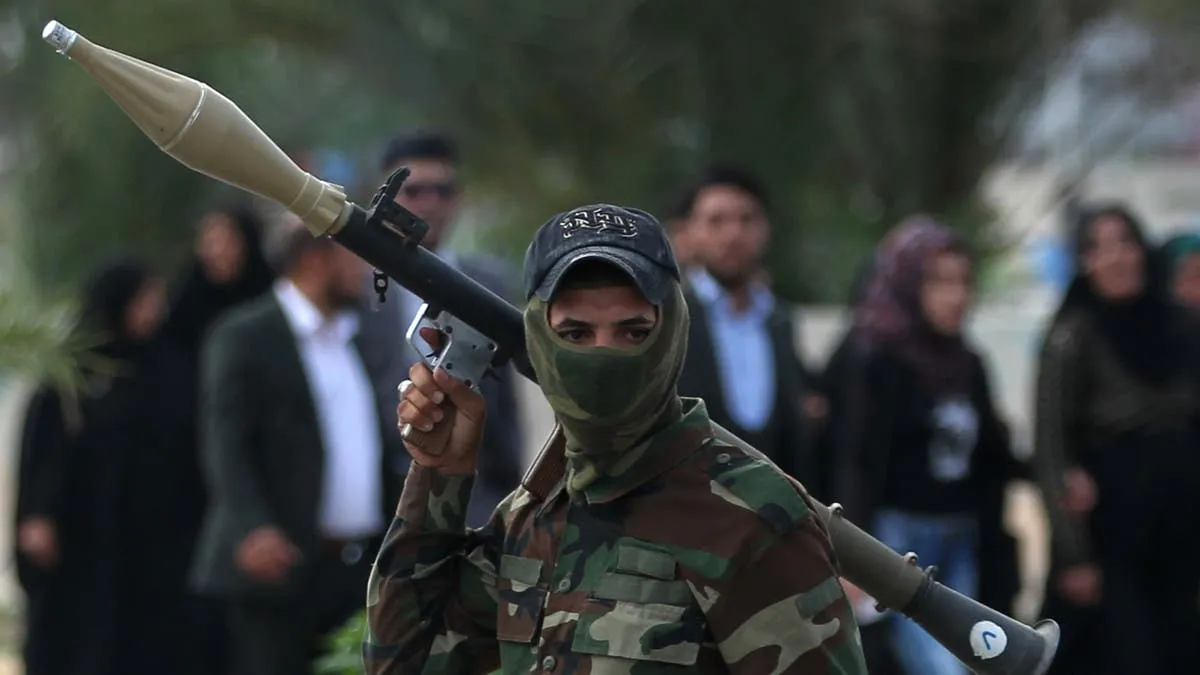
A government source close to Prime Minister Ali al-Zaidi said on Thursday that negotiations aimed at dismantling the armed factions' weapons have reached a near-closed road, warning of the possibility that media escalation could spill into the streets and affect the security situation.
The source said the factions continue to refuse to hand over weapons, prompting them to resume a media campaign against the prime minister and his government and against the Coordination Framework that is negotiating with them through a specialized committee.
The source warned that continuing this media escalation could push the confrontation from the realm of political statements into the streets, which could negatively impact the country's security situation.
He added that influential figures within the Coordination Framework have in recent hours launched moves and contacts aimed at calming the situation and containing escalation among all parties to prevent the dispute from worsening.
These developments come against the backdrop of criticism voiced by the security official of Kata'ib Hezbollah, Abu Mujahid al-Assaf, on Tuesday toward the government and the Coordination Framework leadership, demanding clarifications on political, security and economic files, including oil sale contracts to the UAE's ADNOC company, and accusing the government of failing to fulfill its promises.
Al‑Assaf indicated that the "Islamic Resistance" is still awaiting a copy of the agreement signed with the Coordination Framework committee, while at the same time confirming that it has ceased carrying out any military actions inside Iraq until further notice.
In a related context, an informed source disclosed last Tuesday that some members of the four-member committee tasked with negotiating with the factions, including Badr Organization leader Hadi al‑Amiri, are displeased with Prime Minister Ali al‑Zaidi's intervention by holding separate meetings with leaders of factions that refuse to surrender their arms, fearing these moves could produce adverse results.
The source explained that the committee has made progress in its talks and is committed to completing its mission by the end of June 2027, but later information indicates that disputes persist that hinder reaching a final settlement.
The issue of concentrating weapons in the hands of the state remains one of the most contentious issues between the government and the armed factions, as groups including Kata'ib Hezbollah, Harakat al‑Nujaba and Kata'ib Sayyid al‑Shuhada have previously announced their refusal to give up their military capabilities.
These moves coincided with the announcement by Quds Force commander Ismail Qa'ani on Wednesday that commanders and members of what Tehran calls the "Resistance Front" have declared in writing their "absolute loyalty" following directives from the Iranian Supreme Leader Mojtaba Khamenei regarding dealing with the enemy without geographic constraints, asserting that they received the message at the highest level and have begun to act on its substance.
Khamenei had issued on Saturday directives to senior Iranian military commanders to respond immediately to any potential threat without geographic constraints; he also praised in a message on the occasion of the November 4 anniversary what he described as the "Resistance Front's" achievements in Iraq, Lebanon, Palestine and Yemen, warning that any new American attack on Iran would be met with a broader military response.
Conversely, al‑Zaidi's efforts to confine weapons to the state's hands enjoy support from several Shiite political parties, led by the Sadrist National Movement headed by Muqtada al‑Sadr and the Wisdom Movement led by Ammar al‑Hakim, as well as Asa'ib Ahl al‑Haq led by Qais al‑Khazali and Kata'ib Imam Ali, which announced steps to dissociate their armed formations from party structures and subject them to state authority.
This direction also has declared American support: the U.S. State Department affirmed its backing of al‑Zaidi's efforts to extend state sovereignty, concentrate weapons and prevent armed attacks, while the White House emphasized the need to transfer the factions' weapons to the federal government, amid ongoing internal disputes over the terms of handover and the guarantees required to carry out the operation.