GCC and JIBKA sign memorandum in Dubai to protect industry
The GCC General Secretariat signed a memorandum of understanding with the Gulf Petrochemicals and Chemicals union (JIBKA) in Dubai to protect Gulf industry from harmful practices in international trade.
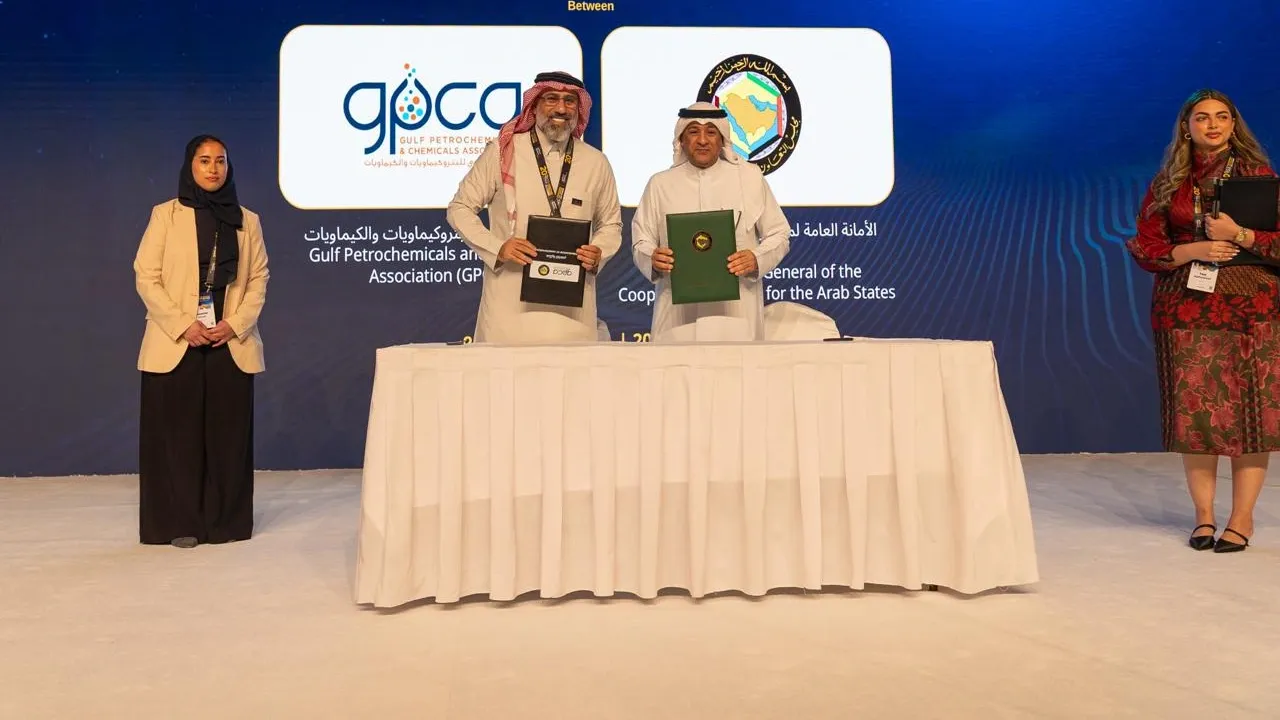
GCC Secretary‑General Jassim Mohammed Al‑Budaiwi and the Secretary‑General of the Gulf Petrochemicals and Chemicals Union (JIBKA), Matar Al‑Dhafiri, signed on Monday, 23 November 2026 in Dubai a memorandum of understanding aimed at protecting Gulf industry from harmful practices in international trade, on the sidelines of the union's 20th annual conference.
What does the memorandum include?
The memorandum sets out a general framework for cooperation between the two parties and for developing areas of joint work through the exchange of knowledge and modern international practices, information, expertise, legislation and statistical data; in addition to providing technical support and consultations, exchanging experts, preparing joint studies, organizing workshops and training courses, developing technical and administrative capacities, and exchanging views in regional forums.
Gulf exports worth about 14 billion riyals
Al‑Budaiwi said in his opening remarks to the conference that the General Secretariat continues to defend the commercial and industrial interests of the GCC states through the unified law to combat dumping and countervailing and safeguard measures, and by handling trade investigations in international markets, which has helped preserve market access for Gulf exports subject to those investigations, estimated at about 14 billion Saudi riyals.
He explained that the petrochemicals and chemicals industry represents one of the fundamental pillars of industrial and economic development in the GCC states, given its role in maximizing the value of natural resources, expanding non‑oil exports, creating jobs and developing national competencies.
Global shifts and new opportunities
The Secretary‑General noted that the conference, which is attended by industry leaders, policymakers, investors and representatives of more than 450 companies from 42 countries, is being held against a backdrop of economic and geopolitical shifts, disruptions in international trade and supply chains, a rapid acceleration in emerging technologies and artificial intelligence, and a global move toward sustainability and emissions reduction.
He said these shifts open up opportunities for the Gulf states to develop higher‑value, more sustainable products, provided they continue to invest in research and development, innovation and skills development, link Gulf production capacities and develop regional supply chains, encourage joint investments, diversify markets and build stable international partnerships.