Unprecedented images show ions' role in DNA molecule adhesion
Researchers at the Universities of Sheffield and York presented visual evidence that positive ions may help bind DNA molecules together, supporting a hypothesis proposed more than 20 years ago and calling for additional verification inside living cells.
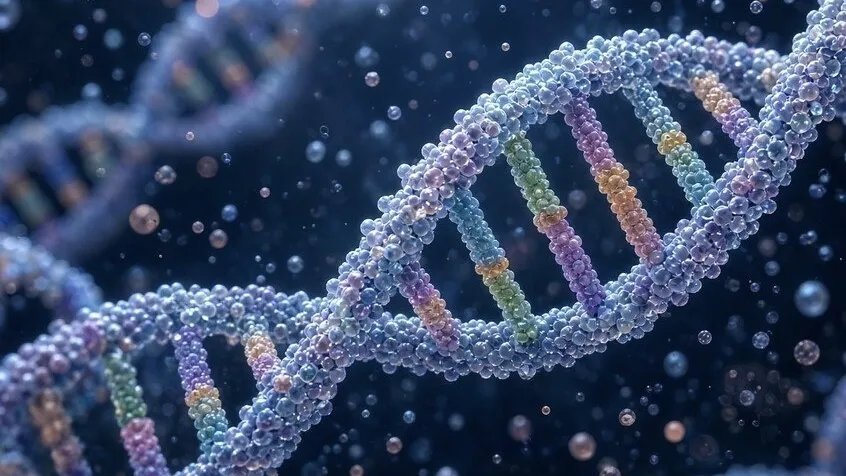
Researchers from the Universities of Sheffield and York in the United Kingdom revealed visual evidence showing how DNA molecules can pack tightly despite the repulsion of their electric charges.
The research team showed that positive ions may contribute to linking DNA molecules and holding them close together. These observations support a scientific hypothesis proposed more than 20 years ago, and could contribute to understanding how genetic material is organized inside cells and how identical regions of DNA align before exchanging genetic information.
The researchers used a high-resolution microscope to study DNA molecules, and the images showed two adjacent strands packed together. Computer simulations indicated that positive ions, such as nickel, magnesium and calcium, may act as a mediator that links the molecules and helps keep them close.
Alice Payne, a biophysicist at the University of Sheffield, said: "Ions help form a bridge between the two molecules, which binds them together."
The simulations also concluded that the way the molecules bind is affected by the order of bases in the DNA, and that some sequences — including a short sequence known as GTAC — may help form more stable links in the presence of nickel ions.
Agnès Nouy, a biophysicist at the University of York, explained: "These images represent the first visual evidence for this idea."
The experiments were performed under laboratory conditions, so the researchers stress the need to verify whether the same mechanism operates inside living cells, where proteins and other molecules interact in organizing genetic material. The study also did not establish a direct relationship between this mechanism and cancer.
The results may help clarify ways DNA packs and is organized, and improve understanding of some processes that allow the exchange or assembly of genetic material.



