Mediations in Baghdad Stumble Over Jurf al-Sakhar as Friday Deadline Approaches
Attempts to reach an agreement between the government and Kata'ib Hezbollah regarding control over the Jurf al-Sakhar area have failed despite Iranian mediation, amid fears of an imminent military confrontation.
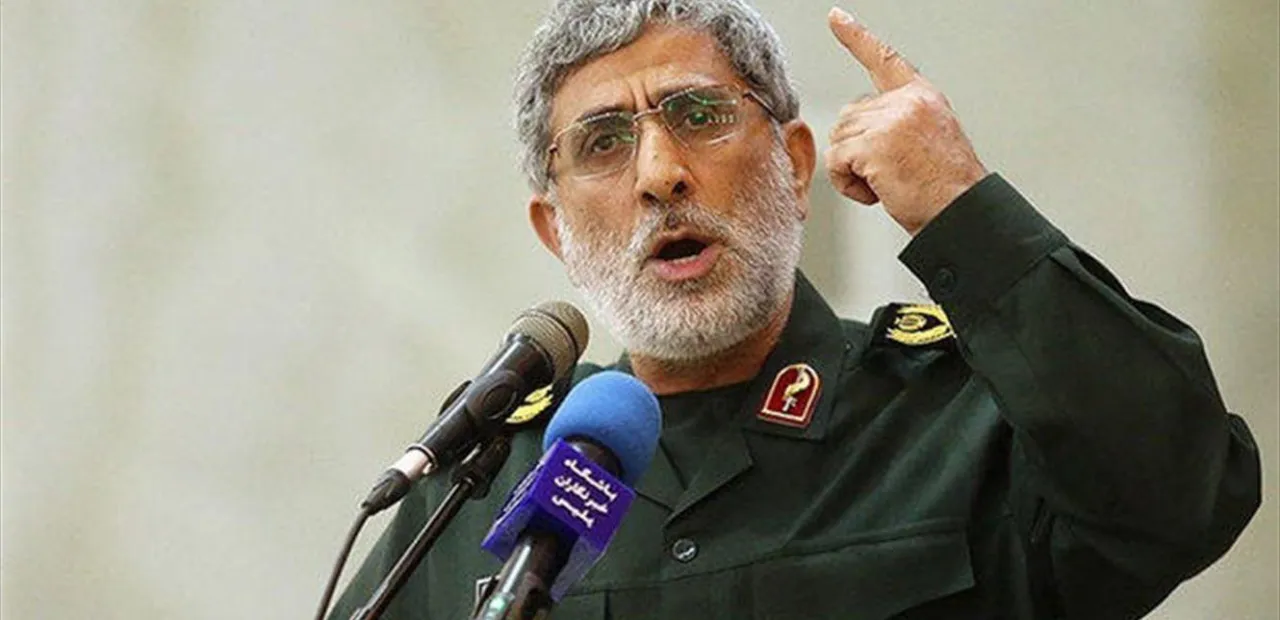
The Jurf al-Sakhar (Al-Nasr) area faces increasing possibilities of military confrontation following the failure of intensive negotiation rounds held in Baghdad between leaders of the Coordination Framework and Kata'ib Hezbollah, despite the participation of the commander of the Iranian Revolutionary Guard Corps' Quds Force, Esmail Qaani, in an attempt to bridge differences before the expiration of the government deadline set for next Friday evening.
A political source reported that communications involving leaders of armed factions failed to reach a final agreement due to Kata'ib Hezbollah's rejection of some proposals, while Prime Minister Ali al-Zaidi expressed rejection of other proposals, leaving the area in a state of anticipation regarding the upcoming decisive hours that may lead to either a peaceful settlement or military escalation to impose state authority.
As part of de-escalation efforts, the Coordination Framework formed a tripartite committee on Tuesday evening, comprising Hadi al-Amiri, the head of the Popular Mobilization Forces (PMF) Falih al-Fayyadh, and the PMF Chief of Staff Abdul Aziz al-Mohammadawi (Abu Fadak), to present settlement proposals to Kata'ib Hezbollah. These proposals included transferring brigades affiliated with the group from Jurf al-Sakhar to the Iraqi-Syrian border, replacing them with three PMF brigades, involving the Third Division of the Federal Police in maintaining regional security, and keeping a limited number of the group's members at specific points.
Prime Minister Ali al-Zaidi adheres to the decision for Kata'ib Hezbollah to withdraw from the area and hand over security responsibility to government forces, emphasizing that there will be no additional extension to the deadline set for the end of Friday. Tensions had escalated following government investigations that revealed the existence of oil refining and smuggling facilities in the area, resulting in the dismissal of nine security and administrative officials and their referral to the judiciary.
For his part, Kata'ib Hezbollah leader Abu Talib al-Saidi denied the accusations related to oil smuggling, describing the investigation results as fabricated, and affirmed the group's refusal to withdraw from the area while ruling out entering into a confrontation with security agencies. In a related context, a spokesperson for the U.S. Department of State stated that the United States expects the Zaidi government to hold Iran-aligned armed factions accountable for activities that destabilize Iraq and the region.
The areas surrounding Jurf al-Sakhar are witnessing intensive Iraqi security reinforcements, coinciding with ongoing political efforts to prevent the dispute from sliding into armed conflict, as Qaani arrived in Iraq on the assignment of the Iranian Supreme Leader to attempt to contain the crisis.