Creating New Ministries in Iraq: Can the Economy Bear More Expenditures?
Amid financial pressures and a rising dollar exchange rate, establishing new ministries raises questions about the cost of government expansion, public spending priorities, and whether Iraq needs additional institutions while requiring broad administrative and economic reform.
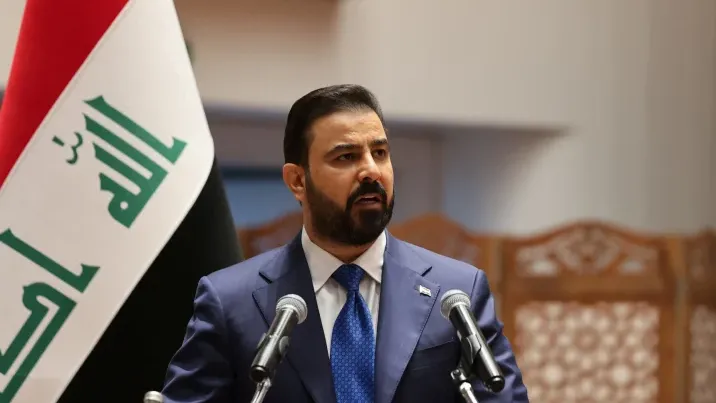
Creating new ministries in Iraq... a costly decision at a time when the state needs to rationalize spending and confront economic pressures.
Al-Wasat (Iraq) newspaper.
At a time when Iraq faces accumulating economic challenges—rising cost of living, pressure on citizens’ purchasing power, and fluctuations in the dollar exchange rate on the parallel market—serious questions arise about the wisdom of creating new ministries and expanding the government structure, and whether that step aligns with current needs that demand more efficient management of financial resources, tighter control of public spending, and directing expenditure toward the sectors that need it most.
A state seeking to address its economic imbalances must, before thinking of adding new government institutions, review the performance of existing institutions, identify areas of waste and duplication of responsibilities, and ensure that every dinar of public money spent delivers tangible benefit to citizens and the national economy.
First: Why is creating ministries at this time questionable?
Creating a new ministry is not merely an administrative decision involving appointing a minister and naming an institution; it is a long-term financial and administrative commitment that requires allocating an operating budget, providing buildings and offices, hiring staff, procuring work necessities, forming directorates and administrative departments, in addition to expenses related to vehicles, security, communications, services, and electronic systems.
Some of these costs may seem limited when viewed individually, but they become ongoing burdens when accumulated across multiple institutions, especially if the duties of the new ministries overlap with the responsibilities of existing ministries and agencies.
The core problem is that creating a ministry without a clear actual need may expand the government apparatus instead of developing it, adding administrative layers that can slow decision-making and increase bureaucratic complexity.
Therefore, the question that should precede any such decision is: Does Iraq truly lack an institution to carry out this task, or is the problem weak performance of existing institutions and failure to utilize their powers and resources correctly?
Second: The cost of new ministries is not limited to the minister’s salary.
A common mistake is to reduce the cost of creating a new ministry to the minister’s salary and a small number of officials, while the actual cost includes a complete administrative system that may expand gradually over time.
Depending on the ministry’s size and nature of work, these burdens include employee salaries, administrative allowances, rent or fit-out costs for buildings, purchase of furniture and equipment, provision of transportation, protection and maintenance costs, as well as establishing directorates and departments in provinces when needed.
Establishment may also require transferring staff from other institutions or creating new job grades, and in both cases the financial and administrative impact should be evaluated precisely.
Crucially, these expenses are not necessarily temporary; they can become annual obligations that are hard to reduce later, even if the ministry fails to achieve the goals for which it was created.
In a country that needs to increase investment spending, improve services, and develop infrastructure, directing resources to additional administrative institutions without a clear feasibility study may reduce the space available to fund more urgent priorities.
Third: The rise of the dollar and living pressures impose a prioritization of needs.
The dollar exchange rate is one of the important factors affecting the Iraqi market, especially given the country’s reliance on imports to supply a large portion of goods, products, and raw materials.
When the dollar rises in the parallel market, or the gap widens between the official and market rates, pressures may be reflected in higher import and trade costs, and citizens may fear price increases for some goods and services, although the extent of the impact varies by the nature of the good and pricing and monitoring mechanisms.
Under such circumstances, the government is required to strengthen confidence in monetary policy, combat speculation and manipulation, improve trade and foreign transfer procedures, and work to stabilize markets and protect household purchasing power.
But creating ministries does not by itself address the causes of the dollar’s rise, nor does it automatically increase public revenues or directly boost domestic production.
Managing monetary pressures requires coordinated fiscal and monetary policies, a more diversified economy, a private sector capable of creating jobs, and increased domestic production that reduces excessive reliance on imports.
Accordingly, any new government expansion should be measured by its actual contribution to achieving these goals, not merely by adding a ministerial post or creating a new administrative title.
Fourth: An oil-dependent economy cannot afford unplanned expansion.
One of the main weaknesses of Iraq’s economy is the heavy reliance on oil revenues to finance the public budget, which makes public finances vulnerable to fluctuations in oil prices and levels of export and production.
When revenues decline or financial obligations rise, it becomes increasingly important to curb unnecessary spending, improve spending efficiency, and direct resources to projects that raise productivity and create sustainable economic value.
Expanding government institutions without identifying stable financing sources may increase the difficulty of managing expenditures over the medium and long term, especially if it coincides with expanded salaries, allowances, and operational commitments.
This does not mean that every new ministry is necessarily a waste of public money; there may be a genuine need for a specialized institution if it addresses a significant national issue that existing institutions cannot manage efficiently.
But that need must be proven by numbers and studies, not assumed in advance—especially in a country that must balance government administration requirements with limited economic resources.
Fifth: Duplication of functions may increase bureaucracy instead of solving problems.
One risk to watch is that some government files can be managed by developing an existing directorate, redistributing powers among ministries, or creating a specialized agency with defined authorities, rather than establishing a full ministry with a broad administrative structure.
When multiple institutions’ responsibilities intersect, a citizen or investor may be forced to deal with more than one agency to complete a single transaction, while responsibility is spread across multiple administrations and it becomes difficult to determine who is accountable for failures.
Multiple institutions can also lead to repeated studies, committees, programs, and procurements, as well as conflicting decisions and delayed project implementation.
If the real problem is weak coordination, lack of authority, or poor management, creating a new ministry without addressing the root causes may simply move complexity from one place to another instead of eliminating it.
Therefore, true administrative reform is not measured by the number of ministries and departments, but by their ability to provide services quickly and efficiently, reduce procedures, clarify responsibilities, and deliver measurable results that can be held accountable.
Sixth: What does the Iraqi citizen need at this stage?
Against the backdrop of living and economic pressures, a set of priorities emerges that should come before any administrative expansion that lacks a clear necessity.
1. Protecting purchasing power: through market monitoring, enhancing competition, combating monopolies and price manipulation, and developing social protection tools for the most vulnerable groups.
2. Creating real job opportunities: by supporting small and medium enterprises, improving the investment climate, encouraging local production, and reducing obstacles facing the private sector.
3. Improving basic services: including electricity, water, health, education, and municipalities, with directing spending to projects that deliver tangible results for citizens.
4. Controlling government spending: by reviewing operational expenditures, evaluating institutions with overlapping mandates, reducing unnecessary spending, and improving oversight of contracts and procurements.
5. Diversifying revenue sources: by developing industrial, agricultural, and tourism sectors, and improving collection of non-oil revenues fairly and effectively, without imposing ill-considered burdens on citizens.
6. Strengthening economic stability: through coordination of fiscal and monetary policies, developing the banking sector, improving foreign trade procedures, and addressing imbalances that affect the exchange rate and markets.
These issues are direct tests of the government’s ability to turn public resources into real improvements in people’s lives, and they are more important than administrative expansion that does not produce clear results.
Seventh: Could there be justifications for creating a new ministry?
It is fair to acknowledge that absolute rejection of creating new ministries is not always a sound position; some strategic issues or economic changes may require a specialized government body with clear powers and genuine executive capacity.
Creating a new ministry may be justified if studies prove that existing institutions cannot handle a specific file, that restructuring those institutions would not achieve the required result, and that the expected economic and social benefits outweigh the financial and administrative costs.
But a sound decision should be preceded by a comprehensive assessment that includes defining the problem, measuring its scale, estimating the cost of alternatives, specifying the intended outcomes, setting measurable performance indicators, and publishing the rationale before the public.
The study should also include estimates of establishment costs and ongoing annual costs, sources of financing, required staff, and the extent of overlap with existing institutions’ authorities.
Thus, creating a ministry becomes an institutional option based on need and feasibility, not an end in itself or a response to short-term political and administrative demands.
Eighth: The better alternative is to reform existing institutions.
Instead of unplanned expansion, Iraq can achieve significant progress by reviewing the government structure, identifying directorates with similar tasks, merging duplicate functions where needed, modernizing e-governance, reducing paper transactions, and linking fund allocations to actual performance.
Strengthening financial and administrative oversight, improving public procurement systems, and making public spending data available can help detect waste and better allocate resources.
Reform should not be limited to cutting spending; it should aim to increase the efficiency of every dinar spent, because cutting necessary spending on essential services can backfire, just as increasing spending on poorly performing institutions does not guarantee improved services.
The goal is to build a smaller government where possible, more efficient where needed, capable of implementing policies and holding underperformers accountable, rather than measuring state strength by the number of institutions and positions.
Ninth: Financial responsibility requires transparency and accountability.
Decisions about expanding the government apparatus should not be discussed as administrative choices separate from economic reality, but as financial options that affect the distribution of public resources among competing needs.
Citizens have the right to know the estimated cost of any new ministry, the number of job grades it will require, the tasks it will undertake, the results it is expected to achieve, and how those results will be measured after one or two years of its establishment.
There should also be periodic reviews of the performance of new institutions, with readiness to restructure or merge them if they fail to meet the announced objectives.
Transparency on these matters is not an obstacle to government work; it provides a basis for strengthening public trust and limits decisions that carry long-term commitments without sufficient evaluation.
Conclusion: The state needs management of public money, not more institutional labels.
The debate over creating new ministries in Iraq should start with a fundamental question: what does the country actually need at this stage, what can it afford financially, and what delivers the best economic and social return for citizens?
Given challenges related to the exchange rate, reliance on oil revenues, rising spending needs, pressures on services and employment opportunities, it is necessary to prioritize institutional reform, rationalize spending, and improve government performance.
One cannot assert that every new ministry is wasteful, nor assume that administrative expansion will automatically improve performance. The real test is proven need, calculated cost, and measurable results.
Iraq does not need extra institutions merely to increase their number; it needs institutions capable of solving problems, managing resources efficiently, meeting economic challenges, and converting public money into services, jobs, and livelihood stability.
Ultimately, government success is not measured by the number of ministries it creates, but by its ability to protect the national economy, rationalize spending, improve Iraqi citizens’ lives, and provide clear evidence that every financial and administrative decision serves the public interest.