NIST in Boulder announces first optical clock synchronized by sunlight
Scientists at NIST in Boulder built the first optical clock that uses sunlight to set its time, using the neutral iron (Fe I) absorption line in the solar spectrum instead of a laboratory atomic reference.
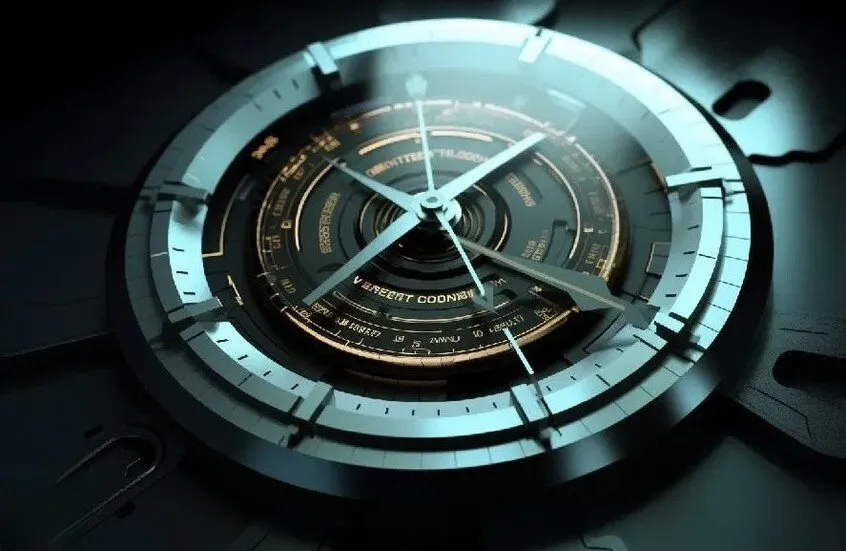
The U.S. National Institute of Standards and Technology (NIST) in Boulder announced that a team of physicists has developed the world's first optical clock that is synchronized using sunlight.
The developed device builds on two traditional elements: harnessing sunlight, which humanity has long used to tell time, and modern optical-clock techniques that are now the most precise means of measuring time.
In conventional optical clocks, an electron in an atom is excited to transition between two energy levels, a highly stable laser is locked to the frequency of that transition, and an optical frequency comb divides the laser frequency down to a value that electronics can measure to serve as the clock’s "pendulum."
In the new clock, those electron oscillations were replaced by spectral locking: the neutral iron (Fe I) absorption line present in the solar spectrum was used as an optical reference. A collimator mounted on the facility collects sunlight and tracks its position, then transmits the light through optical fibres to a laboratory for analysis.
During the partial solar eclipse of 2024 the clock recorded a shift in the spectrum caused by the Moon passing in front of the Sun. It is believed that pointing the clock at a distant star could reveal similar shifts caused by planets orbiting it outside the solar system, but that would require collecting the star’s light with large telescopes and possibly observations stretched over long periods.
Professor Beit Schmidt of the German National Metrology Institute said this is the first optical clock to be synchronized using starlight rather than a tightly controlled laboratory light source.
Schmidt added that the technique has not yet outperformed current astronomical spectrographs, but it could be useful for studying solar flares, sunspots and the solar wind.
Source: Agencies