Oceans warming at an accelerating pace and sea ice declining
Oceans warming at an accelerating pace and sea ice declining
Follow-up - Al-Wasat Iraqi newspaper
Over the past twenty years, the rate at which ocean temperatures are rising has doubled, accompanied at the same time by shrinking sea ice, rising water levels, and increasing ocean acidity.
The tenth report of the Copernicus programme, a continuous Earth-monitoring programme, on rising ocean temperatures points to long-term changes in ocean temperature, sea level, and the health of marine ecosystems. The report, prepared by more than 100 scientists from various countries, was based on data from satellites, buoys, and sensors spanning more than 40 years. Island nations and coastal areas are considered particularly exposed to risk.
According to researchers, the world’s oceans absorb nearly 90% of the excess heat generated by human burning of fossil fuels. Surface ocean temperatures during 2023–2026 reached record levels, with the ocean in 2025 alone absorbing an additional 23 zettajoules of heat, marking a record for the ninth consecutive year. This amount is equivalent to the energy of 12 Hiroshima bombs every second throughout the year.
This accumulated heat contributes to marine heatwaves, affects marine organisms, and accelerates sea-level rise. Since 1999, the global mean sea level has risen by about 3.8 mm per year, bringing the total increase to roughly 10 centimetres. Moreover, the rate of rise has accelerated since 2012.
In addition, the chemical composition of seawater is changing: since 1985, ocean waters have become approximately 17% more acidic as a result of absorbing carbon dioxide.
Ocean acidification affects some marine organisms, including shellfish, lobsters, and corals, making it harder for them to form and maintain their shells and skeletons.
Some regions are experiencing severe climatic shifts. In 2024, the Mediterranean Sea and the Black Sea were hit by record marine heatwaves, some lasting more than 30 days, with water temperatures rising by 4.6°C above normal.
The Arctic region has also seen notable changes: over the past four decades, sea surface temperatures there have risen by about 4.2°C.
Between 1979 and 2025, the average monthly sea-ice area decreased by about 490,000 square kilometres per decade — roughly equivalent to the area of Spain.
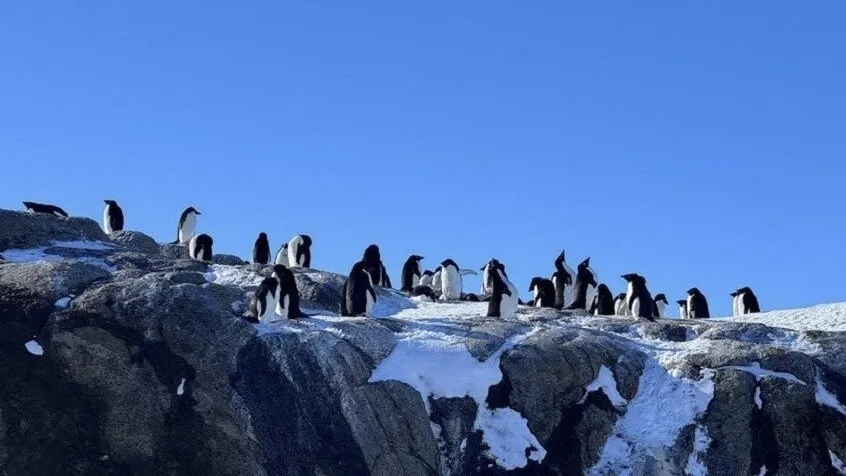
Melting in Antarctica in 2022 led to a catastrophic breeding failure among emperor penguins, with four out of five colonies failing to hatch.
This is an indication that climate change is already damaging habitats that depend on sea ice.
Source: Agencies



