Saudi Arabia calls for regional security system with mutual guarantees, rejects any dominant power in the region
At the Mediterranean Dialogues conference in Naples, Saudi special envoy Manal bint Hassan Radwan called for a regional security system based on mutual guarantees, saying no state’s security should come at the expense of its neighbors and that the security of the Straits of Hormuz and Bab al-Mandeb is a global interest.
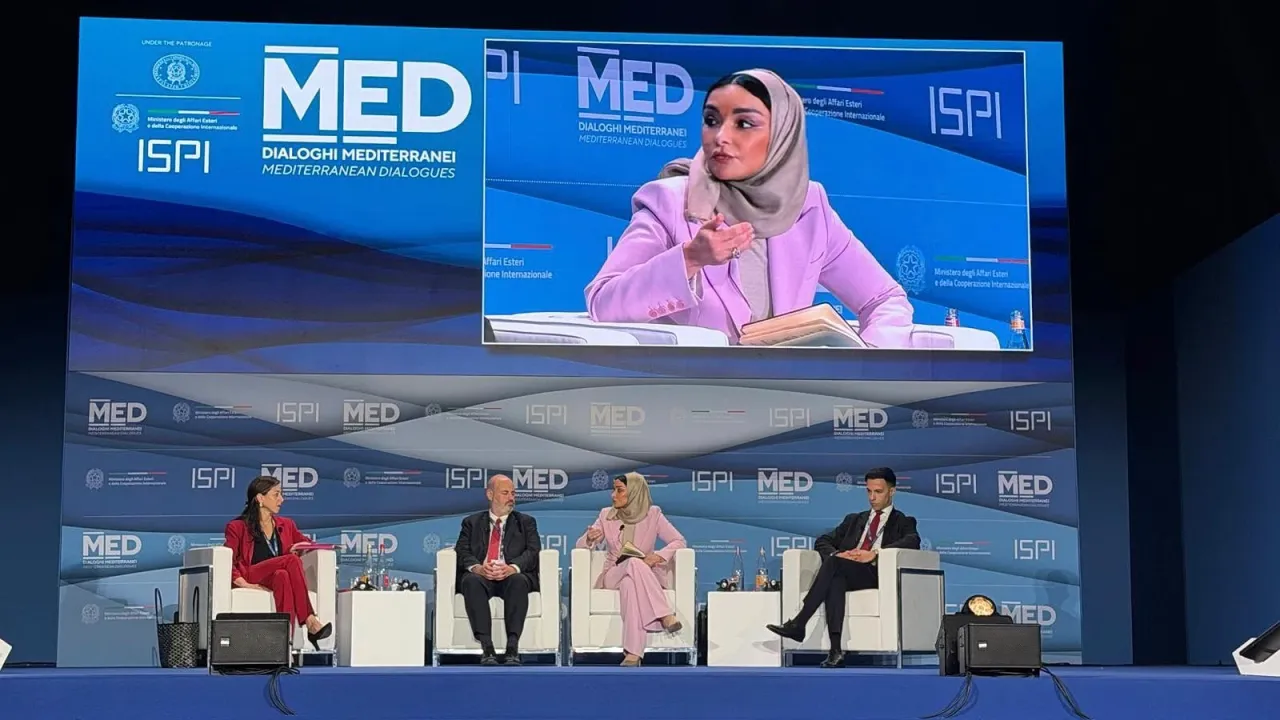
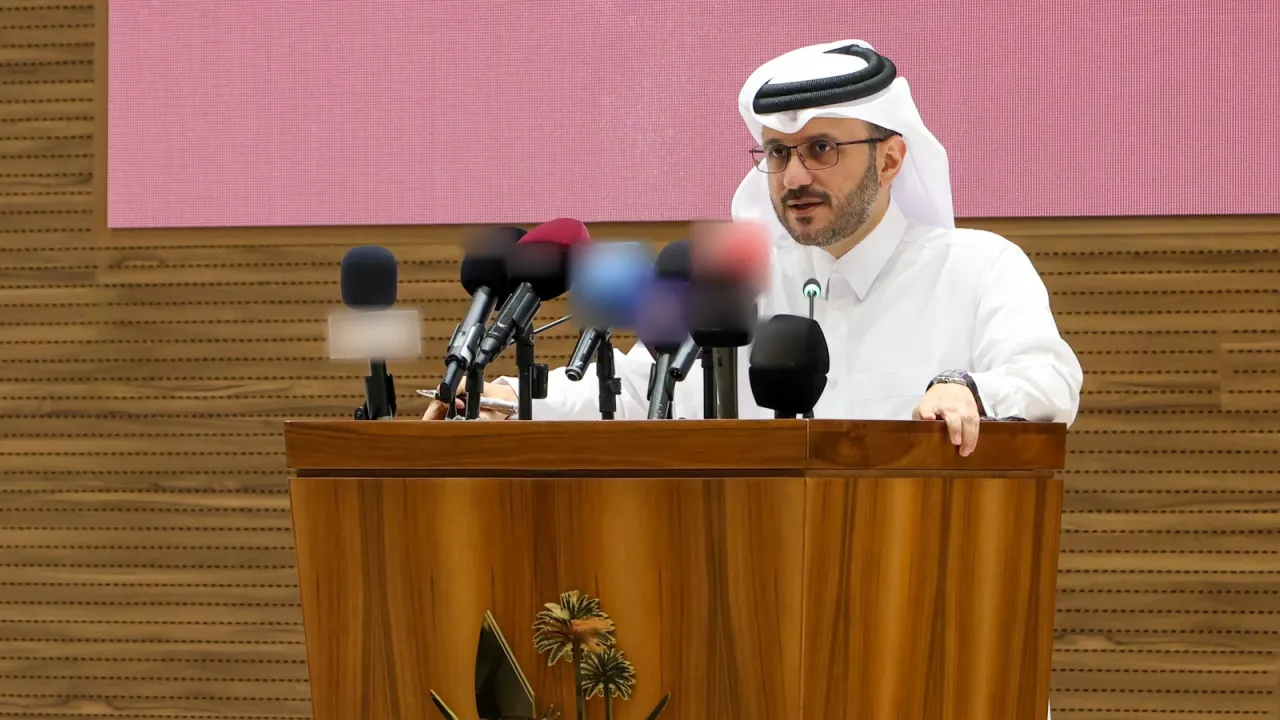
Saudi Arabia called for building a sustainable regional security system based on mutual security guarantees that link each state's security to that of its neighbors, during the participation of adviser and Special Envoy of the Saudi Foreign Minister for Negotiations and Peace Efforts, Manal bint Hassan Radwan, at the Mediterranean Dialogues conference hosted by the city of Naples, Italy, between 19 and 21 November 2026.
Radwan's intervention took place in a session titled "Recasting the Concept of Security: Iran, the Straits, and the Future of the Regional Order."
Containment, deterrence and dialogue
Radwan affirmed that the Kingdom is pursuing an approach that combines containment, deterrence and dialogue, and that its defense of its own security, the security and stability of the Gulf, and the security of the Straits of Hormuz and Bab al-Mandeb, in fact serves the interests of the entire world.
She added that the security of any state is contingent on the stability of its surroundings, including Iran, calling for mutual security guarantees that do not simply end one round of conflict only to start a more violent one, but instead establish an interconnected security arrangement that takes everyone's interests into account.
She stressed that temporary arrangements will not succeed unless they are consistent with long-term strategic arrangements, and that dealing with armed groups outside state control requires a political vision, not only a security one, that addresses the local causes of their emergence and their connections to the parties that support and exploit them.
No place for a dominant power
Radwan pointed out that the Gulf Cooperation Council countries are united in their objectives, and that their roles should complement one another to support mediation efforts, reduce escalation and prevent the outbreak of a new round of war, paving the way for a phase in which confidence is built. She affirmed that regional dialogue and international stability are intertwined, and that there is no place in the region for any dominant power.
On the Yemen file, she said the war in Yemen is fundamentally a Yemeni–Yemeni conflict, and that the Kingdom supports its resolution through political and economic tracks in accordance with the UN roadmap.
Warning against managing crises without root solutions
At the end of her remarks, the Saudi envoy warned that merely managing the region's crises and conflicts for years to come without addressing their roots could have catastrophic consequences for everyone, calling for joint action to seize the available opportunity to reach a comprehensive and sustainable solution that meets the interests of all parties, includes the establishment of a Palestinian state, and achieves regional integration.
This call comes as tensions continue around the Strait of Hormuz, and as the confrontation between the Houthis and the Saudi-led coalition escalates; the coalition announced on Saturday that it intercepted ballistic missiles and drones launched toward Riyadh and the southern region.