Scientists revive microscopic organism trapped in Siberian soil for about 24,000 years
A scientific team reactivated a rotifer after it remained frozen in permafrost soil from the Alaiziya River in Russia’s Arctic for about 24,000 years; it returned to activity after gradual thawing.
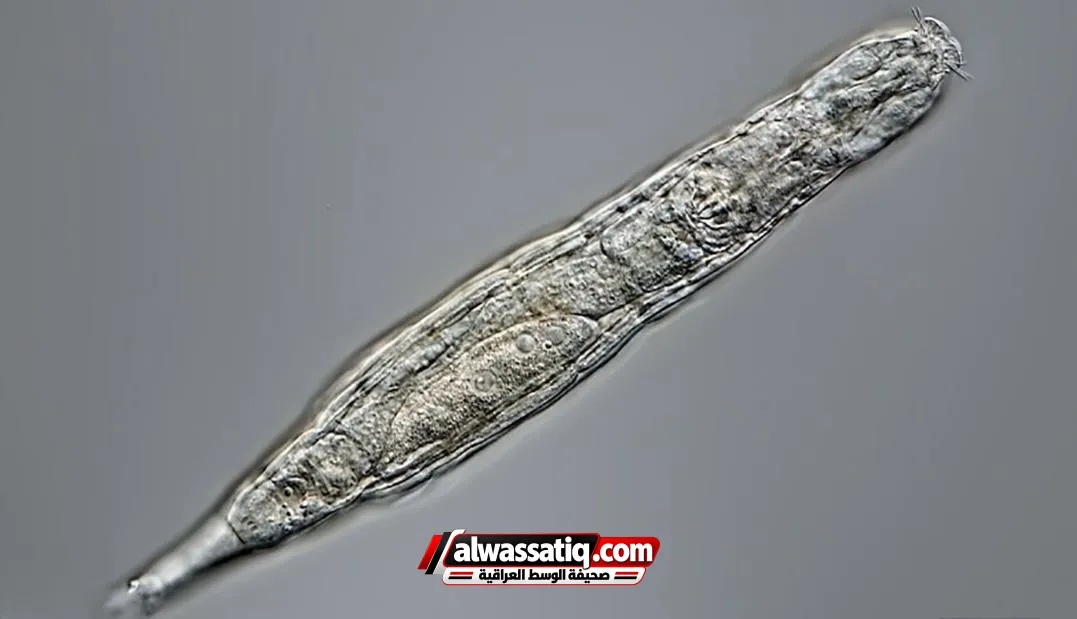
A team of scientists succeeded in reactivating a microscopic living organism belonging to the rotifers after it remained trapped in permafrost soil in Siberia for about 24,000 years, according to researchers participating in the study.
The organism was found inside a cylindrical sample of permafrost soil extracted from the Alaiziya River area in the Russian Arctic, and when the sample underwent a gradual thawing process the organism regained its biological activity and came back to life.
Stas Malavin, a researcher at the Institute of Physical, Chemical and Biological Problems of Soil Science in Russia, said the importance of the discovery lies in proving that a multicellular organism can be frozen and remain in that state for thousands of years before recovering life, describing the finding as close to science‑fiction ideas.
Malavin pointed out that the difficulty of preserving living organisms increases with the complexity of their structure, explaining that achieving this with mammals is still not possible at present, and that moving from preserving single‑celled organisms to supporting the survival of multicellular organisms with specialized systems represents a notable scientific advance.
To determine the mechanisms responsible for tolerating freezing and recovering activity, the researchers conducted a series of laboratory experiments that involved freezing dozens of individuals of the rotifer group, then thawing them and observing their responses.
The experimental results showed that these organisms can tolerate the formation of ice crystals inside their cells and tissues during slow freezing, while retaining the ability to restore biological activity after thawing.
The research team described these results as opening new avenues for studying mechanisms of preserving cells and living tissues at low temperatures, and for deepening understanding of the limits of organisms' ability to resist time and extreme environmental conditions.