Trump Seeks Permanent Deal with Iran as Qatari Delegation Holds Talks in Tehran
President Donald Trump said he wants a permanent deal with Iran that prevents it from obtaining a nuclear weapon and that no future U.S. president can undo, as a Qatari delegation held talks in Tehran.
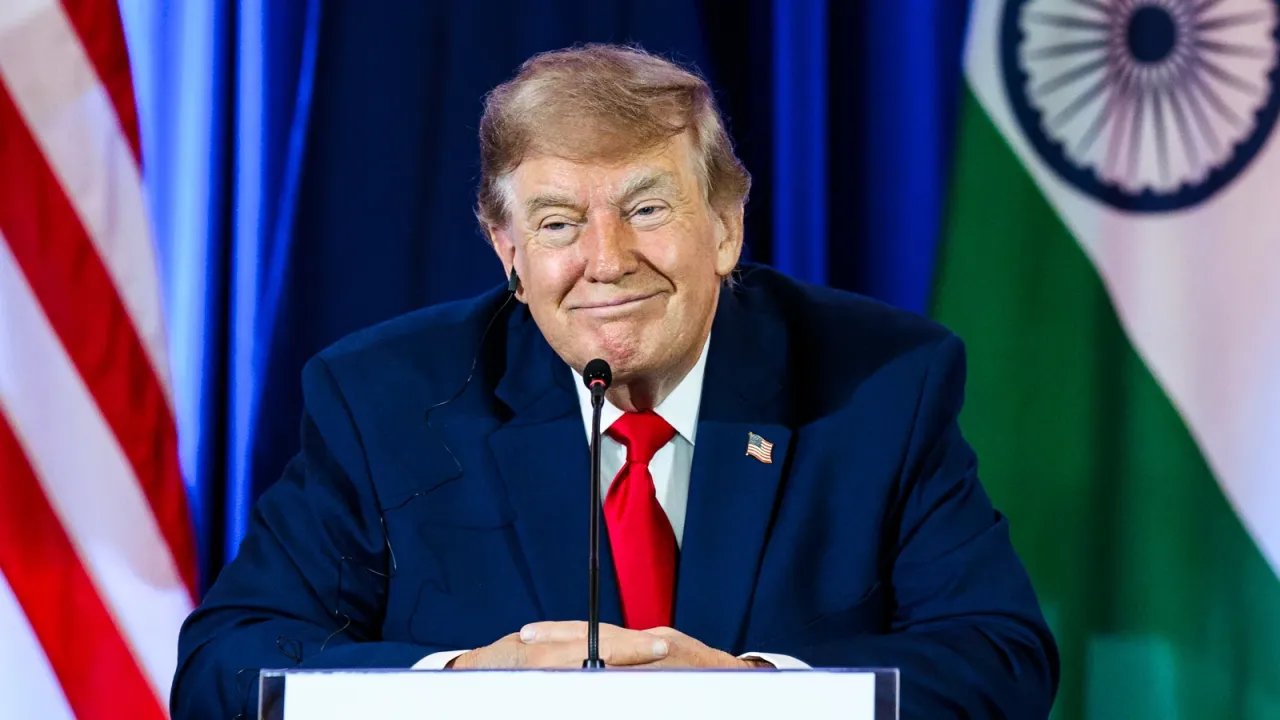
President Donald Trump, on Saturday, Nov. 21, 2026, said he seeks to conclude a permanent agreement with Iran that ensures it will not possess a nuclear weapon and that no U.S. president after him can reverse it, at a time when a Qatari delegation held talks in Tehran to explore opportunities to revive the diplomatic track.
"A deal no future president can revoke"
Trump said in a phone interview with a U.S. television network that he wants an agreement that outlasts his presidential term, saying: "If an incompetent president comes after four years or 15 or 20 years, I will make a deal that will be permanent," stressing that he will not allow anyone to enable Iran to acquire a nuclear weapon.
He added that he has not been very concerned with regime change in Iran, noting that Washington dealt with three successive Iranian leaderships, and said the current leadership "may be more reasonable" but is difficult to deal with because it might make a deal and then break it the next day.
Trump had said at a press conference on Friday that Iran wants a deal but it is not the deal acceptable to him, adding that his country wants "a real deal, not a fake deal," and earlier in the week he indicated he is not in a hurry to decide his next move toward Iran and may wait until 2027.
Qatari delegation in Tehran
Meanwhile, Iranian Deputy Foreign Minister Kazem Gharibabadi announced that a Qatari delegation held talks with Iranian officials in Tehran on Friday evening, saying his country remains in contact with mediators, including Qatar, through in-person meetings and remote communications to determine whether diplomacy can be given another chance.
Tehran reiterated its insistence on keeping enriched uranium inside the country, while Foreign Minister Abbas Araghchi said his country hopes to end the war through diplomacy and that messages with Washington continue via mediators, conditioning talks on guarantees of the U.S. side's seriousness in negotiations.
Hormuz and sanctions
The diplomatic activity coincides with continued tensions in the Strait of Hormuz: Iran's Islamic Revolutionary Guard announced it shot down two U.S. drones over the strait today, one over the airspace of Qeshm Island, with no immediate comment from the U.S. military, while the U.S. Treasury Department on Friday imposed sanctions on four Iranians it accuses of collecting proceeds from Iranian oil sales abroad.
Read also: Iranian army: an air-defense missile damaged a U.S. F-16 over the Gulf