Iranian Foreign Ministry: U.S. pressure will not affect relations between the Iraqi and Iranian peoples
Esmail Baqaei said the war, the naval blockade and sanctions on Iran are illegal and illogical, and urged Washington to reassess its positions in light of the closure of the al‑Shaib border crossing.
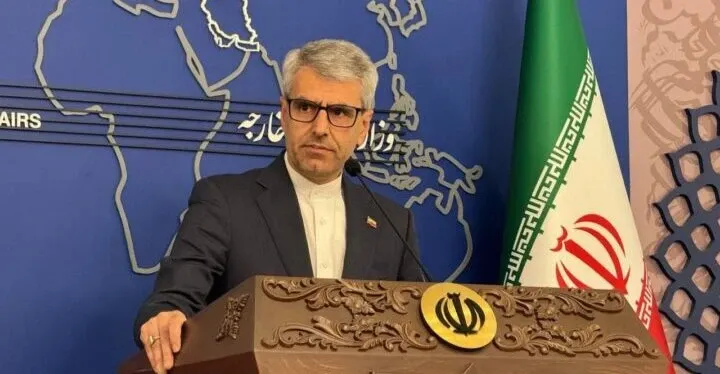
The spokesman for the Iranian Foreign Ministry, Esmail Baqaei, said on Monday that U.S. pressure would not affect relations between the Iraqi and Iranian peoples, calling on the United States to reassess its positions toward Tehran.
During a press conference, Baqaei said the war, the naval blockade and the economic sanctions imposed on his country are illegal and illogical, and that such policies do not help resolve the outstanding issues.
Baqaei’s remarks came after Iraq closed the al‑Shaib border crossing with Iran, amid two conflicting accounts of the reasons for the closure: one attributes it to U.S. pressure, while the other links it to logistical arrangements related to combating smuggling.
The spokesman questioned the logic of U.S. demands in light of what he described as the naval blockade and the sanctions, affirming that the Iranian proposal remains on the table, that it is the most logical among the proposals put forward, and that it could form a basis for a subsequent phase, without detailing the nature of the proposal at the conference.
Baqaei accused some parties of attempting to justify a war on Iran after losing the U.S. midterm elections, saying that the U.S. admission that a war on Iran affected those election results should be accompanied by an understanding of the message of the American people, and that Iran has been subjected to aggression by both U.S. political parties.
Baqaei’s comments follow earlier criticism of Washington’s policy toward Baghdad by the Supreme Leader’s representative on the Supreme National Security Council, Saeed Jalili, who said on Sunday that the United States entered Iraq under the pretext of toppling Saddam Hussein but continues to seek to route Iraqi oil revenues first to the U.S. Treasury to determine how they are used.