Aramco inaugurates Shahin petrochemicals project in South Korea with $7 billion investment
Saudi Aramco and its Korean unit S-Oil inaugurated the Shahin petrochemicals project in Ulsan with a $7 billion investment, the largest Aramco investment in South Korea; commercial operations are due to start in 2027.
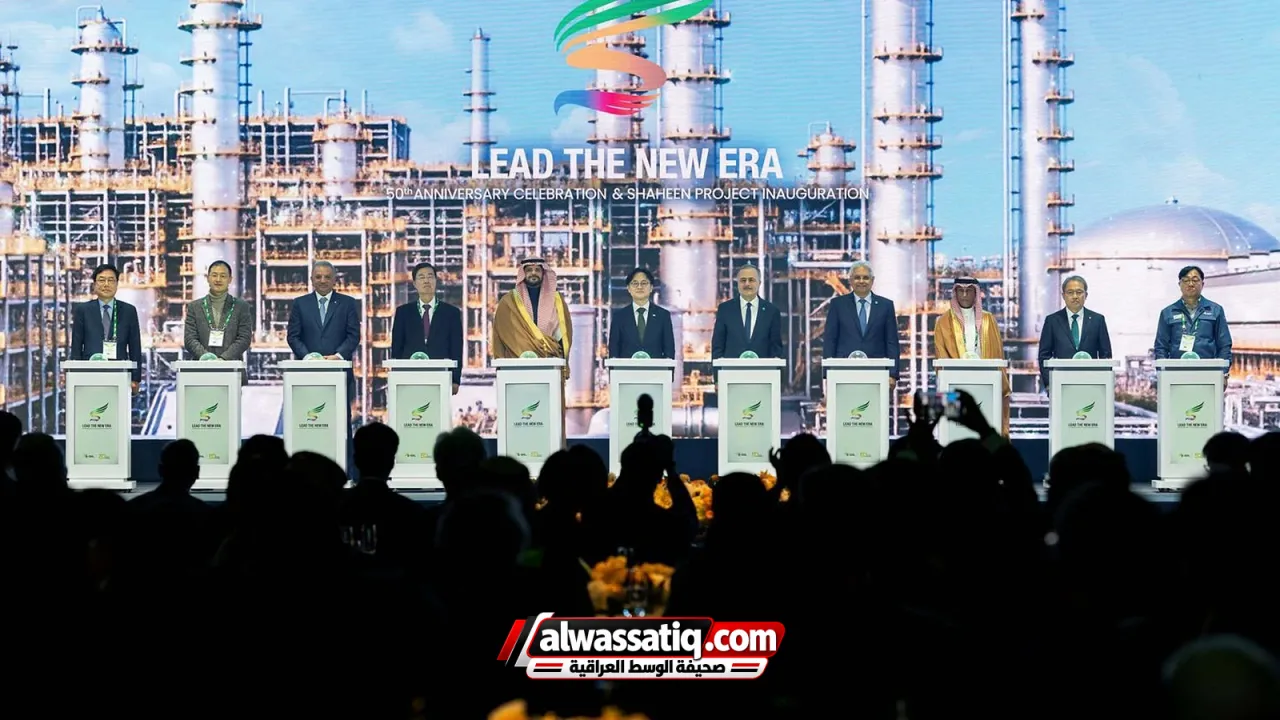
Saudi Aramco and its Korean subsidiary S-Oil inaugurated the Shahin petrochemicals project on Wednesday, 25 November 2026, at a ceremony in Seoul, South Korea, with an investment of $7 billion, or about 26.25 billion riyals, marking the largest investment the Saudi company has poured into South Korea.
Around 500 guests attended the ceremony, including government officials and business leaders from both countries, as well as representatives from the energy and chemical sectors. The event coincided with S-Oil’s 50th anniversary and the 35th anniversary of the partnership between the two companies, which began with Aramco’s first investment in the Korean firm in 1991.
The world’s largest single steam cracker
The project is located in the Onsan industrial complex in the city of Ulsan in southeastern South Korea. It includes the world’s largest single steam cracker unit, a propylene splitter unit, facilities to convert crude oil into chemicals, and polymer production units. It is the largest single investment in South Korea’s petrochemical sector.
Shahin is the first large commercial application of crude-to-chemicals thermal cracking technology developed by Aramco in collaboration with Lumus Technologies, enabling a larger share of a barrel of oil to be converted into higher-value chemicals.
The project is expected to add about 3.2 million tonnes annually to S-Oil’s petrochemical production capacity and to raise the share of petrochemicals in its business portfolio from 12 percent to 25 percent. Commercial operations are due to begin in 2027 after the completion of the trial-run phase.
The project will be connected to the company’s existing refining and petrochemical facilities in Ulsan and will supply neighboring companies in the complex via a dedicated pipeline network with basic petrochemical feedstock, reducing their dependence on imports.
Nasser says geopolitical risks do not change the company’s outlook
Amin Nasser, Aramco’s president and chief executive officer, said economic challenges and rising geopolitical risks do not change the company’s long-term view on strategic investments. He added that Shahin is the company’s largest ever investment in Korea and reflects confidence in the country and in a region that will lead energy demand in the future.
Nasser explained that such investments build the resilience markets need in times of uncertainty, and that the project will enhance the Korean company’s competitiveness and extract greater value from every barrel, meeting rising demand in Asia for feedstocks for industries ranging from electric vehicles to semiconductors.
Mohammed Al-Qahtani, head of Refining, Chemicals and Marketing at Aramco, said petrochemicals are a core element of industrial competitiveness. S-Oil CEO Anwar Al-Hijazi confirmed continued efforts to strengthen integration between refining, petrochemicals and base oils businesses over the next fifty years.
Saudi stake exceeds 63 percent
Aramco is the largest shareholder in S-Oil, owning more than 63 percent of its shares through its subsidiary Aramco Refining, Petrochemicals and Marketing Asia. The investment in the project was announced during Saudi Crown Prince Mohammed bin Salman’s visit to South Korea in November 2022, and construction began in March 2023.
The project inauguration comes as Aramco continues to expand its investments in major Asian oil-importing markets, despite regional disruptions that have affected shipping and supplies.