Healthy Nutrition for Children from 6 Months to 3 Years | A Comprehensive Guide for Parents
Healthy nutrition for children from 6 months to 3 years | A comprehensive guide for parents
Healthy nutrition for children aged 6 months to 3 years.. A comprehensive guide to building a healthy body and supporting growth and immunity
Al-Wasat Iraqi Newspaper – Health
Proper nutrition during the first three years of a child’s life is one of the most important factors affecting physical growth, brain development and learning ability, as well as supporting the immune system and preventing deficiencies in essential nutrients.
The World Health Organization states that complementary feeding should begin at about six months of age, because breast milk alone is no longer sufficient to meet the child’s increasing nutritional needs, and breastfeeding should continue up to two years or beyond when possible.
Healthy feeding is not limited to the amount of food given; it also includes variety of foods, preparation methods, number of meals, and whether the texture of the food is appropriate to the child’s age and ability to chew and swallow.
First: Nutrition from 6 to 8 months
This stage represents the actual beginning of introducing the child to foods alongside breast milk or infant formula.
It is recommended to start when the child can hold their head steady and sit with support, and shows readiness to take and swallow food.
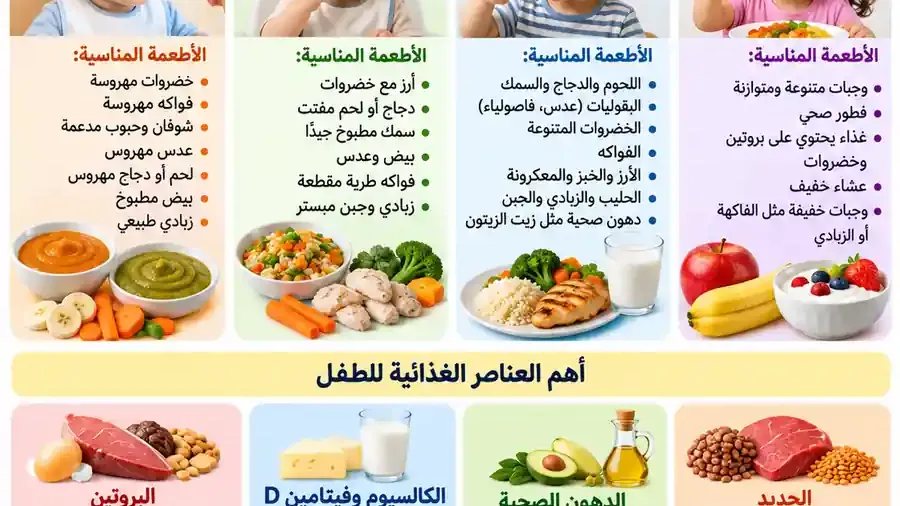
Suitable foods for this stage:
Cooked and mashed vegetables, such as potato, carrot and zucchini.
Mashed fruits, such as banana, cooked apple and pear.
Oatmeal and iron-fortified infant cereals.
Well-cooked and mashed lentils.
Well-cooked and mashed meats and chicken with an appropriate texture.
Fully cooked eggs and pasteurized plain unsweetened yogurt.
It is preferable to start with two or three teaspoons, then gradually increase the amount according to the child’s acceptance, aiming for two to three meals daily while continuing breastfeeding.
It is important not to rely only on vegetables and fruits, but to introduce sources of iron and protein from the start of complementary feeding.
Second: Nutrition from 9 to 11 months
At this stage the child’s ability to handle food develops, and more varied foods with thicker textures can be offered, with a gradual move to soft foods cut into small safe pieces.
Recommended foods:
Well-cooked rice with vegetables.
Tender shredded chicken and meats.
Well-cooked fish completely free of bones.
Eggs, mashed lentils and beans.
Soft fruits cut in a safe way.
Plain yogurt and age-appropriate pasteurized cheese.
A child usually needs three to four meals a day, with the possibility of adding a nutritious snack depending on appetite, alongside breastfeeding.
Children should be allowed to try feeding themselves under direct supervision, as this helps develop motor skills and independence.
Third: Nutrition from 1 to 2 years
After the first year, most children can eat a wide range of family foods, provided they are prepared healthily and served in safe sizes and textures.
In this stage dietary variety becomes important rather than repeatedly relying on a limited set of foods.
Key foods to include in the daily diet:
Proteins: meats, chicken, fish, eggs and legumes.
Vegetables: carrot, broccoli, spinach, zucchini and others.
Fruits: banana, apple, orange and seasonal fruits.
Grains: rice, oats, bread and pasta.
Dairy products: pasteurized milk, yogurt and cheese that are not overly salty.
Healthy fats: appropriate amounts of olive oil, avocado and smooth nut butters thinned and offered safely.
It is recommended to offer three to four meals a day, plus one or two snacks depending on the child’s needs.
Milk should not replace meals, because excessive milk intake can reduce the child’s appetite for iron-rich foods.
Fourth: Nutrition from 2 to 3 years
This stage is marked by increased activity and movement and the development of eating habits; some children may become more selective and refuse foods they previously ate.
It is best to organize three main meals daily with one or two snacks, focusing on natural and varied foods.
Meals can include eggs, bread and fruit for breakfast; rice or bulgur with protein and vegetables for lunch; and a light dinner containing balanced nutrients.
Children should be encouraged to eat with the family, and caregivers should avoid pressure, force or using sweets as a reward.
Fifth: Key nutrients a child needs
1. Iron to prevent anemia
Iron helps form hemoglobin and supports brain growth, and is especially necessary after six months. Sources include red meat, chicken, lentils, beans and iron-fortified infant cereals. Offering vitamin C–rich foods, such as orange and tomato, helps improve iron absorption from plant sources.
2. Protein for building muscles and tissues
Children need protein to support growth and tissue repair, which can be obtained from eggs, meats, fish, legumes and age-appropriate dairy products.
3. Calcium and vitamin D for bone health
Calcium and vitamin D contribute to building bones and teeth. Calcium is found in dairy products and some other foods, while some children may need a vitamin D supplement on medical advice, especially breastfed infants.
4. Healthy fats for brain development
Fats are an essential part of young children’s diets and can be provided from olive oil, avocado and appropriate fish, without relying on fried foods.
The World Health Organization recommends offering a diverse diet for children that regularly includes vegetables, fruits, animal protein sources and legumes.
Sixth: Foods and practices to avoid
Health guidance warns against certain foods and practices that may affect children’s health during their early years.
Honey before one year: It must not be given to infants under 12 months because of the risk of infant botulism.
Cow’s milk before one year: Cow’s milk should not be used as the main drink in place of breast milk or infant formula before 12 months, although pasteurized yogurt and cheese can be included in complementary foods.
Added sugar and soft drinks: They should be avoided, especially before age two; rely on water and age-appropriate milk instead.
Juices: Do not give juice before the first year; after that whole fruit remains preferable. If 100% natural fruit juice is given to children aged one to three years, it should not exceed about 120 ml per day.
Choking-risk foods: Such as whole nuts, popcorn, whole grapes and hard carrot pieces — foods should be modified in shape and texture according to the child’s age.
Delaying introduction of egg or peanut solely because of allergy concerns is not recommended; they can be introduced in a safe texture when starting complementary feeding. Children with severe eczema or egg allergy should consult a doctor about introducing peanuts.
Seventh: Sample healthy daily meals
The following table offers flexible examples, not mandatory portions, and quantities and textures should be adjusted according to the child’s age and ability to eat.
Age Examples of meals
6–8 months: iron-fortified oatmeal, mashed vegetables, and mashed lentils or meat
9–11 months: well-cooked eggs, soft rice with chicken, and soft fruits
1–2 years: eggs and bread, rice with meat and vegetables, yogurt and fruit
2–3 years: balanced breakfast, healthy family lunch, light dinner with fruit or yogurt snacks
Breastfeeding or appropriate infant formula should be given during the first year alongside food, while after one year pasteurized full-fat cow’s milk can be introduced in most cases, observing each child’s medical recommendations.
Eighth: How to deal with a child who refuses food?
A child may refuse some new foods because of differences in taste, color or texture, and this does not necessarily indicate a health problem.
The U.S. Centers for Disease Control and Prevention note that some children may need to try a new food many times before accepting it.
It is recommended to offer food calmly, present it on different days, include the child in family meals, and avoid forcing eating. Also avoid screens during meals and pay attention to hunger and fullness cues.
Ninth: When should you consult a pediatrician?
Some signs require a pediatric visit, including poor weight gain or faltering growth,
persistent refusal of most foods, difficulty swallowing or repeated choking during meals, or the appearance of allergic symptoms after eating a particular food.
A child’s growth should be monitored regularly, and iron or vitamin supplements should not be given at treatment doses without medical assessment, while following preventive supplements recommended by the doctor.
Conclusion
Healthy nutrition from six months to three years does not depend on expensive or commercial baby products; it can be achieved with simple, widely available household ingredients such as eggs, lentils, rice, vegetables, fruits, meat and age-appropriate milk.
Dietary diversity, safe preparation, and attention to the child’s appetite and developmental stages remain key foundations for building healthy eating habits that continue into later life.
Scientific references: World Health Organization (WHO), United Nations Children’s Fund (UNICEF), and the U.S. Centers for Disease Control and Prevention (CDC).