China's Industrial Revival 2026: Product Evolution and Xi Jinping's Role
China's industrial revival 2026: product evolution and Xi Jinping's role
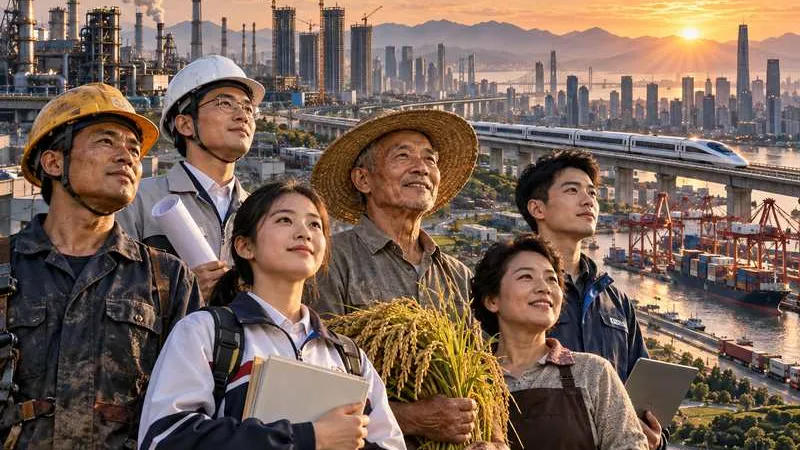
China: the story of a people who made the impossible and an industrial revival that reshaped the global economy
Al-Wasat Iraqi Newspaper – Special Report
China's renaissance was not born of chance, and the country did not reach its global industrial and economic position overnight. It was the result of long decades of work, struggle, planning and investment in people, science and technology, transforming it from a state facing major economic and livelihood challenges into an industrial power with a wide presence in global markets.
Today, the phrase "Made in China" no longer simply denotes low-priced products; it now appears on advanced electronic devices, modern electric cars, medical equipment, precision industrial machinery and technological products that compete with long-established global brands.
From years of hardship to building a giant economy
The modern story of China's economic renaissance begins with the reforms and opening-up in 1978, when the country set out to change its economic structure, develop its productive sectors, and open the door to investment, trade and the establishment of new industrial zones.
In the following decades, China witnessed the migration of millions from rural areas to industrial cities, expanded educational and employment opportunities, improved infrastructure, and made factories a primary engine of economic growth.
According to the World Bank, China's economic transformation helped lift nearly 800 million people out of extreme poverty over four decades, one of the most notable poverty-reduction experiences in modern history.
This transformation was not just economic statistics; it reflected on the lives of vast numbers of people, with rising incomes, improved services and expanded commercial and industrial activity.
The Chinese people: a story of struggle behind giant factories
Behind every Chinese factory is a story of workers, engineers, technicians and researchers who contributed to building the country's production capacity.
The industrial renaissance relied on a broad human workforce and a gradual shift from labor-intensive work to industries that depend on skills and modern technologies.
Although rapid industrialization stages were accompanied by challenges and difficult working conditions in some sectors, skills development, vocational education and scientific research became fundamental elements of China's industrial transformation.
A distinctive feature of the Chinese experience is that production processes did not remain confined to factories alone; integrated ecosystems emerged around them, including suppliers, transport companies, R&D centers, universities and tech firms.
Within this system, China became capable of manufacturing large and complex products and meeting foreign market demands in large quantities and varied specifications.
How Chinese products shifted from competing on price to competing on quality?
For decades, Chinese products were known in many markets as an economical choice for consumers seeking low prices.
But that image no longer fully reflects Chinese industry.
Many companies moved to develop quality and design, improve raw materials, upgrade automated production lines and product inspection systems, and invest in branding and research and development.
China now produces different tiers of goods, from simple economy products up to advanced, high-value items whose specifications rival those of well-known international companies.
This shift is evident in smartphones, home appliances, electric vehicles, batteries, drones, solar panels and industrial equipment.
However, quality is not determined by country of origin alone; it varies by factory, specifications, material quality and inspection and control standards.
Here lies one of Chinese industry's major strengths: its ability to offer multiple options to importers and consumers according to market needs, desired quality levels and price.
China and its wide spread in global markets
China has become a major player in international trade, with its industries integrated into supply chains across continents.
According to World Trade Organization data, China's merchandise exports reached about $3.77 trillion in 2025, reflecting the vastness of its production base and the breadth of its external market network.
Many countries import Chinese products for final use or to incorporate them into domestic industries, including electronics, machinery, spare parts and industrial components.
China's strength extends beyond final goods production to manufacturing basic components, equipment and processed raw materials relied upon by companies around the world.
Investments in ports, roads, railways and logistics services have helped Chinese firms reach international markets more effectively.
While China does not dominate all sectors and markets worldwide, it holds industrial and commercial weight that is hard to ignore in the global economy.
Electric vehicles and technology: China's new industrial face
China's electric vehicle sector has seen significant development, and Chinese companies have become prominent competitors in international car markets.
According to the International Energy Agency, China produced about 16 million electric vehicles in 2025, representing roughly three-quarters of global output in this category.
These figures reflect a major shift from reliance on traditional industries to building modern sectors based on batteries, software, driving systems and advanced technologies.
In innovation, Chinese filers recorded 73,718 international patent applications through the Patent Cooperation Treaty system in 2025, according to the World Intellectual Property Organization.
These indicators show that China is no longer focused solely on increasing production volume but is also seeking to develop technology and acquire the knowledge needed to manufacture future products.
President Xi Jinping: industry and technology at the top of priorities
Since Xi Jinping assumed the presidency in 2013, China has continued to strengthen industrial development strategies with increasing emphasis on advanced technologies and reliance on domestic capabilities in vital sectors.
During his term, important industrial programs were launched and implemented, most notably the "Made in China 2025" strategy, which aimed to upgrade domestic industries, develop technical capabilities and increase the value added of Chinese products.
Current directions are linked to the concept of "new qualitative productive forces," which focuses on innovation, modern technologies and emerging industries.
Xi's attention to manufacturing is visible in his field visits to factories and meetings with workers and engineers, alongside his repeated directives to strengthen cooperation between companies, universities and research centers.
In September 2026, the Chinese president stressed the need to expand and strengthen advanced industries, promote smart and environmentally friendly production, and enhance the resilience of industry and supply chains to face risks.
These policies are prominent features of the economic approach during his presidency, as China continues to invest in advanced technology and modern industry while seeking to reduce dependence on imports in strategic fields.
It is fair to view these developments as an extension of a long trajectory that began decades ago and continued under Xi Jinping through new industrial policies and plans.
China's experience in this phase exemplifies the importance of policy continuity and linking economic development to education, scientific research and innovation.
Why can China compete with global companies?
China's competitiveness rests on an interconnected set of industrial strengths, notably massive production capacity, diverse suppliers, advanced infrastructure and the availability of technical and engineering expertise.
Chinese firms also benefit from the close proximity of specialized factories to each other, which helps accelerate production, product development and reduce some transportation and supply costs.
Innovation has become an increasingly important part of competition strategy; low price is no longer the sole factor attracting buyers. Quality, design, technical specifications and after-sales services are now part of competitive elements.
This has led to the growing presence of Chinese brands in international markets, after many companies that previously manufactured for foreign brands began selling under their own names.
Challenges facing the industrial giant
Despite broad progress, the Chinese economy faces challenges, including slowing domestic demand, problems in the real estate sector, trade tensions and higher tariffs in some markets.
Some sectors also face pressures linked to overcapacity and intense competition among companies.
Nevertheless, China continues to develop its industries, seek new markets and invest in modern technologies as part of plans to maintain its economic and industrial position.
The lesson China offers the world
The Chinese experience demonstrates that building a large industrial base requires long-term investment in education, infrastructure, production and scientific research, as well as the ability to develop economic policies and keep pace with global changes.
This experience offers important lessons for countries seeking to diversify their economies and reduce import dependence, including Iraq, which has opportunities to develop some industrial sectors through investment, training and providing a suitable production environment.
Industrial wealth is not built on factories alone, but on people able to operate and develop them, and institutions capable of turning knowledge into competitive products and services.
Conclusion: a revival made by generations and continued by future plans
China's industrial story is not merely about large factories and billions of dollars in exports, but a long developmental experience shaped by generations of workers, scientists, engineers, entrepreneurs and decision-makers.
From the initial economic reforms to smart factories, artificial intelligence and electric vehicles, China has made enormous progress in economic transformation.
Under Xi Jinping's presidency, the country continues to prioritize advanced industry, innovation and technological independence, directions that will remain influential in its economic future and relations with global markets.
The key message of this experience is that industrial revival is not an achievement realized by a single decision or in a few years, but the result of cumulative work, planning and long-term investment.
China has transformed from a global hub for low-cost production into a force manufacturing a significant portion of future technologies, and "Made in China" has come to represent a wide world of products varying in price, quality and technical capabilities.
Al-Wasat Iraqi Newspaper
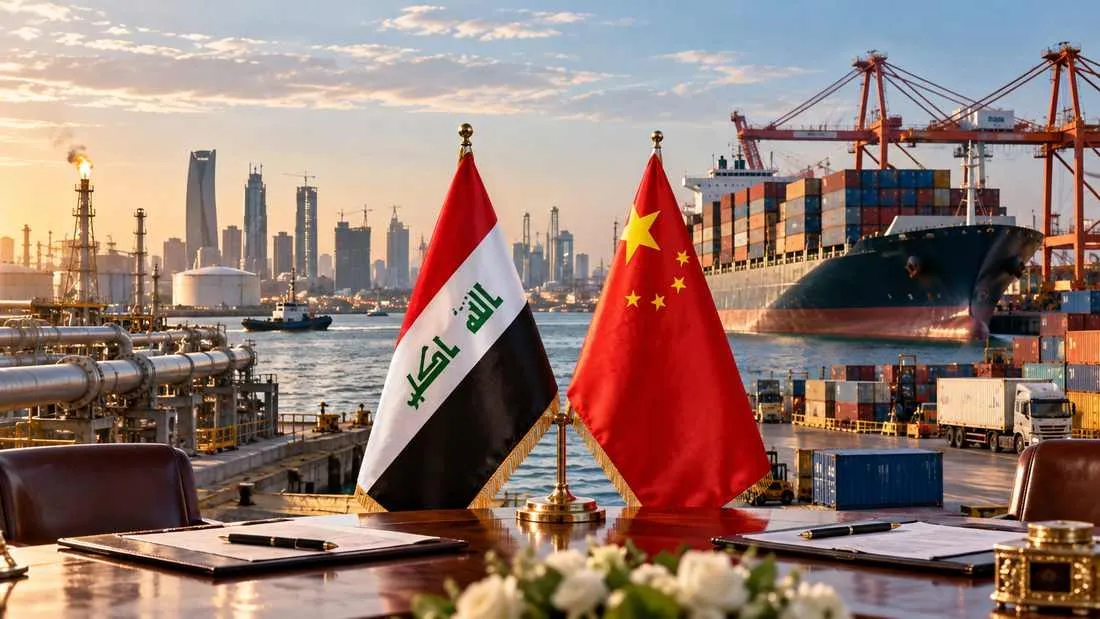
Iraq and China: historical ties and a strategic partnership shaping the future of political and economic cooperation
Al-Wasat Iraqi Newspaper – Special Report
Relations between the Republic of Iraq and the People's Republic of China continue to develop politically and economically, based on a long history of diplomatic ties and shared commercial interests. Beijing has become one of Baghdad's most prominent economic partners, particularly in oil, trade, infrastructure and reconstruction.
Official figures reflect the size of this partnership: trade between the two countries exceeded $51 billion in 2025, while Chinese companies continue to participate in Iraqi markets and projects, with mutual interest in expanding cooperation into industry, energy, education and technology.
First: political relations between Iraq and China — a history of diplomatic engagement
Official diplomatic relations between Iraq and the People's Republic of China date back to August 25, 1958, beginning a new phase of political contact between two countries with deep civilizational and historical heritage.
Over the past decades, bilateral relations have passed through changing regional and international circumstances but have maintained channels of communication and cooperation, reaching a more organized phase in recent years.
The year 2015 was an important milestone, when the two countries announced a strategic partnership during former Iraqi Prime Minister Haider al-Abadi's visit to China.
This development helped expand fields of cooperation, moving relations from traditional diplomatic frameworks to a partnership that includes economy, energy, investment and development projects.
In December 2022, Chinese President Xi Jinping met Iraq's then-prime minister Mohammed Shia' Al-Sudani on the sidelines of the China-Arab Summit, a meeting that reflected Iraq's importance in China's relations with the Arab region.
The year 2024 saw continued political consultations and official visits, including Iraqi Foreign Minister Fuad Hussein's visit to China.
Political relations between the two sides are based on respect for national sovereignty, development of diplomatic dialogue and cooperation on regional and international issues of mutual interest.
Second: China is Iraq's largest trading partner
China has become Iraq's largest trading partner, reflecting a major shift in economic relations between Baghdad and Beijing.
According to data published by the Chinese Ministry of Foreign Affairs, trade between the two countries reached about $51.17 billion in 2025.
This trade comprised Chinese exports to Iraq of about $17.21 billion versus Chinese imports from Iraq worth $33.96 billion, with petroleum products making up the largest share.
In the first quarter of 2026, trade between the two countries amounted to about $8.93 billion, according to official Chinese data.
These indicators reveal Iraq's position in Chinese trade at a time when many sectors of the Iraqi market rely on imported Chinese products.
These products include cars, electrical appliances, electronics, phones, industrial equipment, building materials, textiles, furniture and many consumer goods.
Conversely, crude oil is the backbone of Iraq's exports to the Chinese market.
Third: Iraqi oil — the cornerstone of the economic partnership
The energy sector is one of the most important areas of cooperation between the two countries, given China's huge demand for stable crude oil sources and Iraq's large oil reserves, production and export capacities.
According to the Chinese Ministry of Foreign Affairs, China imported about 64.63 million tonnes of crude oil from Iraq in 2025, keeping Iraq among the top three sources of oil imports to China.
These volumes confirm the importance of Iraqi oil in supporting Chinese industrial activity, particularly in refining, petrochemicals and energy sectors.
At the same time, the Chinese market provides a major outlet for Iraqi oil exports, making economic relations between the two countries directly important to Iraq's public revenues.
Cooperation in oil is not limited to purchasing crude; it also includes Chinese companies working on field development, oil services and energy-related projects.
In October 2026, international trade reports indicated increased purchases by some independent Chinese refineries of Iraqi oil amid changes in global energy markets.
Fourth: the 2019 agreements — a step toward broader cooperation
September 2019 marked a significant development in economic relations between Iraq and China when former Iraqi Prime Minister Adil Abdul-Mahdi made an official visit to Beijing.
The visit resulted in signing eight agreements and memoranda of understanding covering financial, trade, security, educational and cultural fields, in addition to cooperation in reconstruction and communications.
Those understandings opened the door for greater participation by Chinese institutions and companies in Iraqi projects.
However, evaluating the economic outcomes of any agreement requires distinguishing between projects that were agreed upon, those that entered implementation and those that were actually completed.
The importance of these agreements depends on their ability to provide real services to citizens, create jobs, develop infrastructure and achieve sustainable economic returns.
Fifth: the 1,000-schools project — a prominent model of Iraq-China cooperation
The project to build one thousand model schools in Iraq is one of the most prominent practical examples of cooperation between the two countries.
In April 2025, the completion of the 1,000-schools project was announced; it was implemented under the Iraq-China framework agreement to address part of the school building crisis and reduce overcrowding and double or triple shifts.
Chinese companies, including PowerChina, contributed to constructing hundreds of schools in several Iraqi provinces.
This project represents a model of cooperation that can have a direct impact on citizens' lives, especially in service sectors that require wide investment.
It also demonstrates the possibility of turning trade relations into development projects that help improve educational infrastructure and basic services.
Sixth: the Belt and Road Initiative and Iraq's geographic importance
Iraq's strategic geographic position links the Gulf region with Turkey and European markets, giving it special importance within transport and regional trade projects.
Through the Belt and Road Initiative, China seeks to develop economic and trade link networks and infrastructure between Asia and other parts of the world.
Iraq, for its part, is working to develop a 'development road' project aimed at enhancing its role in international transport and trade.
Political consultations between Baghdad and Beijing have discussed opportunities for aligning the two initiatives, particularly in transport, logistics and infrastructure.
If based on feasibility studies and clear agreements, future cooperation could provide investment opportunities in industrial zones, warehouses, transport and commercial services.
But turning these opportunities into actual projects requires financing, organization, coordination and resolution of technical and legal requirements.
Seventh: the quality of Chinese products and their presence in the Iraqi market
Chinese industry has advanced greatly in recent decades; its products are no longer limited to low-cost goods but include equipment, technology and products with advanced quality and specifications.
In Iraq, Chinese brands are widespread in cars, home appliances, communications, building materials and electrical equipment.
Chinese factories offer multiple options in terms of price, quality and design, giving Iraqi importers the opportunity to choose products that suit the local market's needs.
However, product quality remains linked to the factory, specifications and quality control mechanisms, not to the country of origin alone.
Expansion of imports should be accompanied by development of standards, quality control, consumer rights protection and maintenance and warranty services.
Eighth: can Iraq benefit from China's industrial experience?
China's importance to Iraq is not limited to being a source of goods or a market for oil; it extends to China’s experience in building a large industrial base and developing technology and infrastructure.
Iraq can benefit from this experience by establishing genuine industrial partnerships, transferring technical expertise, training local labor and attracting investments that help produce goods domestically.
Fields worthy of study include electrical and electronic industries, solar energy equipment, construction industries and processing industries linked to local resources.
Cooperation between universities, training centers and industrial institutions in both countries can support preparing Iraqi cadres capable of managing modern projects.
The chief economic goal is a gradual shift from importing and consuming to participating in production and manufacturing.
Ninth: challenges facing commercial relations
Despite the large trade volume, Iraqi-Chinese economic relations face a number of challenges that require practical solutions.
A major issue is Iraq's heavy reliance on crude oil exports to China, while Chinese goods entering the Iraqi market remain highly diversified.
Intense price competition from imports may affect some local industries that face high production costs, weak financing and energy problems.
There is also a need to develop banking services, financial transfers, commercial transport, border procedures and to provide a stable and transparent investment environment.
These challenges underscore the need for economic policies that balance benefiting from Chinese products and investments with protecting opportunities for growth of Iraq's domestic industry.
Tenth: the future of Iraq-China relations
Baghdad and Beijing have broad opportunities to expand cooperation in the coming years, especially in energy, reconstruction, technology, education, transport and industry.
Mutual interests play an important role in sustaining political and commercial dialogue, while Iraq seeks to develop economic relations with various countries and international partners.
Diplomatic meetings in 2026 showed continued mutual interest in developing cooperation in oil, gas and electricity—sectors directly linked to economic activity and basic services.
The future of this partnership depends on the two countries’ ability to turn understandings into tangible results and to create projects that yield mutual benefits and sustainable economic value.
Conclusion: a historical partnership and economic opportunities
Iraq-China relations exemplify cooperation between two countries with long civilizational histories and broad economic interests.
From diplomatic ties that began in 1958, to the strategic partnership announced in 2015, to trade that exceeded $51 billion in 2025, relations between Baghdad and Beijing have seen notable development across multiple fields.
Today China is an important economic partner for Iraq, whether through its purchases of crude oil, its exports of industrial products, or the participation of its companies in reconstruction, energy and service projects.
However, Iraq's greatest success will not be measured solely by the volume of imported goods, but by its ability to leverage this relationship to develop its economy, create jobs, build national industries and improve service levels.
Successful economic relations are not built on goods exchange alone but on long-term partnerships that open development horizons and give future generations better opportunities for work, production and prosperity.
Al-Wasat Iraqi Newspaper