From New York: A Close Reading
From New York: A Close Reading
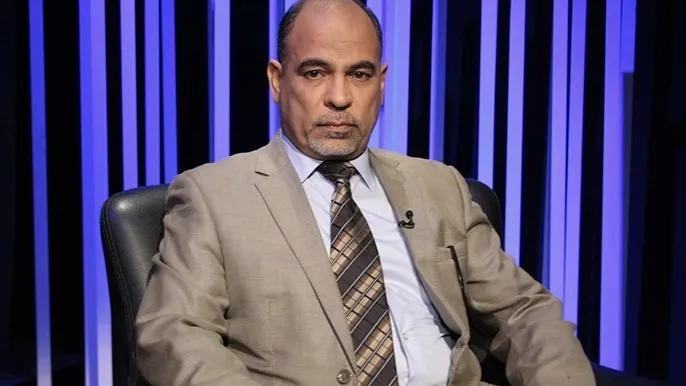
Abdul-Zahra Muhammad al-Hindawi
Talk of Prime Minister Ali al-Zaidi's visit to New York to participate in the eighty-first session of the United Nations General Assembly will not be casual, because the visit itself was not casual, nor was its timing, which came at a pivotal Iraqi, regional and international moment. The picture al-Zaidi painted of Iraq in New York does not resemble the image through which Iraq is viewed as a arena where others' wills and calculations intersect; rather it is a new four-dimensional image. Those dimensions are: restoring decision-making; rearranging relationships; reclaiming its natural position in the region and the world; and transitioning from crisis management to opportunity creation. The prime minister's meeting with U.S. President Trump, and his foreign minister Rubio, along with meetings with a number of state leaders and heads of government from Europe, Asia and Africa, were not mere bilateral meetings on the margins of the UN sessions. They came in a highly sensitive regional context where security, energy, and war-and-peace issues overlap, while Iraq is working to establish a basic principle in its foreign policy: it wants to be an effective state in its neighborhood, not a theater of conflict between others. Al-Zaidi's talks with the U.S. side reinforced this direction, specifically those concerning Iraq's sovereignty and state decision-making, and the prevention of using Iraqi territory to harm other countries. In a region where geography and security intersect, grounding this principle becomes a necessary condition for building balanced relations with everyone. Perhaps most importantly, Iraq does not want to separate the issue of sovereignty from the issue of development. A state that seeks independent sovereign decision-making needs an economy that supports that decision, financial and banking institutions able to align with the global economy, and an investment climate that makes Iraq a genuine partner. The prime minister did not limit himself to meetings with leaders and rulers; he opened a dialogue with the International Monetary Fund, the U.S. Chamber of Commerce and a number of major companies, including firms in energy, telecommunications and technology. His discussions focused on fiscal reform, a gradual shift toward program-and-performance budgeting, accelerating projects, increasing production and exploration, developing oil fields, and addressing the electricity file. What can be read as an outcome of the visit is that Iraq is no longer content merely to seek increased oil production; it is striving earnestly to make oil a bridge to a broader economy. When the prime minister speaks before the U.S. business community about gas and clean energy, petrochemicals, glass, phosphate and infrastructure, and about investment opportunities along the road to development and transport and rail networks, the message goes beyond a single sector to sketch an image of a multi‑door Iraqi economy. This represents a shift from the equation "selling oil" to the equation "investing resources to build a diversified and productive economy."
This transition itself can be one of the most important outcomes of the phase and of future prospects. The Iraqi economy, with its natural resources, geographic location, population weight and wide market, needs capital, technology, expertise and access to markets. Conversely, global companies are seeking new markets, long-term projects and stable energy sources. Therefore, the relationship between Iraq and international companies is moving toward forming partnerships that extend to industry, energy, transport, agriculture, technology and services. In this context, it is clear that the Development Road project represents a redefinition of Iraq's geographic position. This position, which at many points in its history was a cause for being subjected to power struggles, can be transformed into a source of economic strength because it will link East and West and connect markets to one another. Even the regional meetings al-Zaidi held in New York, including his meeting with Turkish President Erdoğan, carried a dimension related to this vision, emphasizing the expansion of trade and investment and accelerating the implementation of strategic projects, led foremost by the Development Road. Regionally, Iraq appears to have an opportunity to rebuild its role in a different way: it is not obliged to choose a position between one axis or another, but can present itself as a space for dialogue, convergence and shared interests. This function becomes more important as crises in the region widen, from energy security and trade routes to political and military conflicts. Overall, the important understandings witnessed in New York will chart their course toward investments: companies will proceed with confidence to implement projects, banking and financial reforms will accelerate, partnerships with international institutions will expand, and the Development Road will become a tangible economic reality.



