Chinese researchers identify “giant chimneys” that channel wind energy from the ocean surface to the seafloor
A study by the Institute of Oceanology at the Chinese Academy of Sciences found focused pathways that carry wind energy to the depths, based on data from 46 seafloor stations off Japan’s east coast collected over two years.
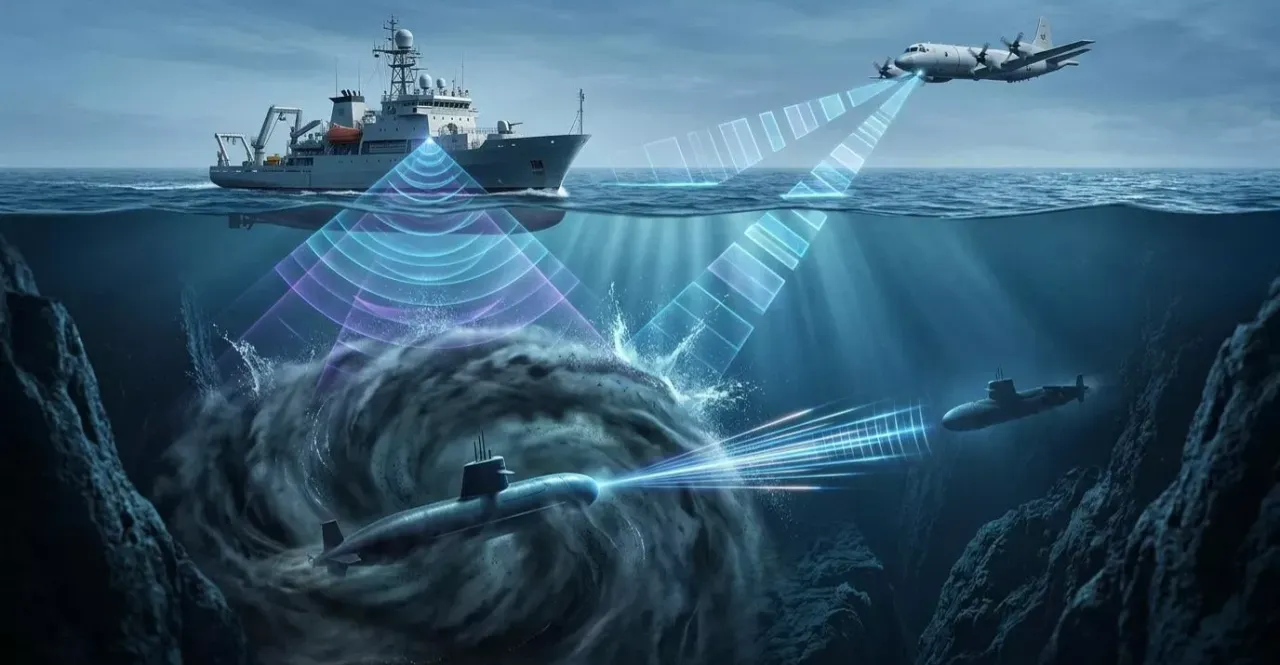
A research team from the Institute of Oceanology of the Chinese Academy of Sciences concluded that wind energy at the ocean surface can be transferred to the seafloor via focused pathways the researchers described as “giant chimneys,” based on analysis of observational data collected over two years.
The study relied on a network of 46 sensor stations installed on the seafloor off Japan’s east coast, where instruments recorded water movement, pressure and changes in ocean layers to track energy transfer within the water column.
The research explains the transfer mechanism as wind moving surface waters to generate internal waves that propagate through ocean layers under the influence of Earth’s rotation, and that ocean current eddies can concentrate that energy downward.
The researchers added that some eddies, especially those rotating clockwise in the Northern Hemisphere, enhance the transfer of energy to the depths and form nearly vertical focused pathways the team named “giant chimneys.”
The analysis results showed that about 68% of the energy of these near-seafloor waves originates from upper ocean layers, while local bottom-near currents contribute roughly 32% of this energy.
The study says these findings challenge the idea that the deep ocean is isolated from surface changes, confirming a continuous dynamic link between surface winds and deep-water motion.
Researchers point out that understanding these pathways is important for developing models of the underwater acoustic environment, because changes in temperature and salinity affect sound propagation and its paths—which is critical for marine detection and communication systems such as sonar.
The team warns of the need for continuous monitoring of various ocean depths rather than relying on sporadic measurements, and adds that successfully developing effective underwater communication and observation technologies could lead to significant changes in deep-water operational capabilities for monitoring and communication.