Arms, unmanned aviation and Turkish forces: the 'Sovereignty' law moves inside the Shia camp
Arms and unmanned aviation and Turkish forces.. the 'Sovereignty' law moves inside the Shia camp
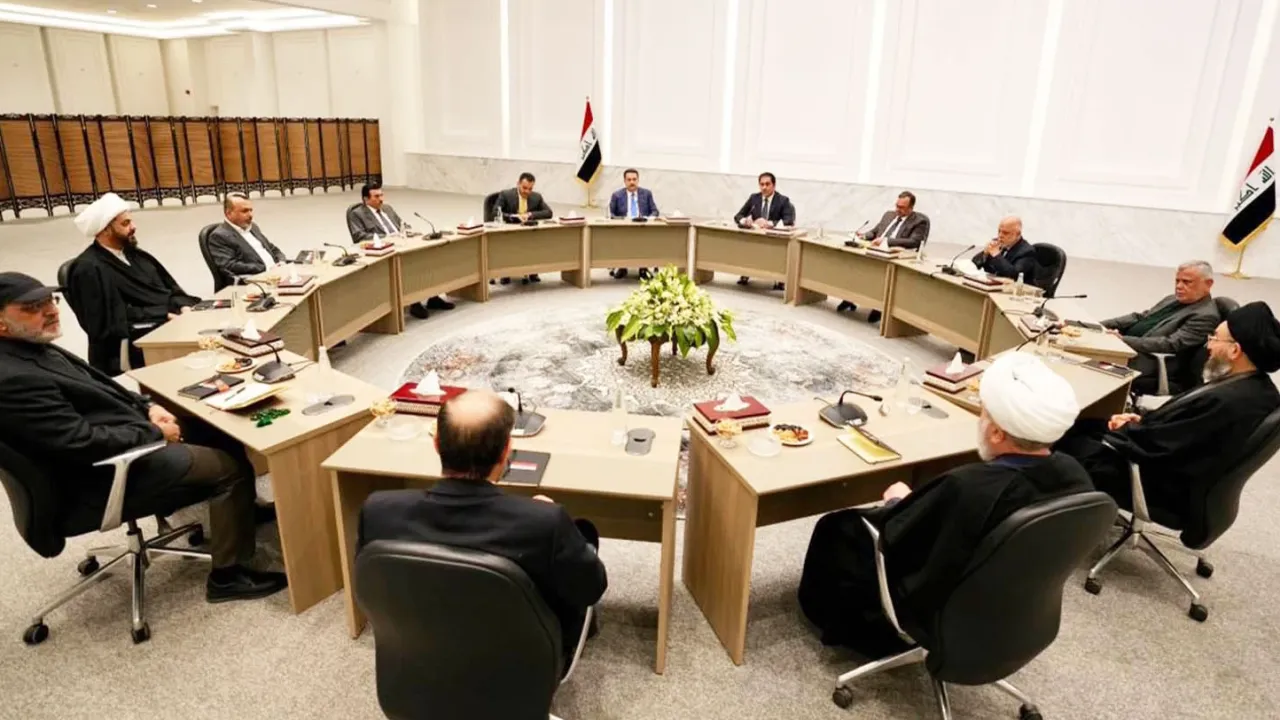
A source in the Coordination Framework revealed on Sunday that the forces of the Shia camp discussed in their recent meetings items of a proposed law under the name 'Sovereignty' that was put forward by the quadripartite committee responsible for negotiating with the factions.
The source told Al-Wasat newspaper that 'the law includes several clauses, among them regulating the process of receiving incoming weapons after agreement with the factions on handing them over, in addition to instructing Popular Mobilization formations/the Popular Mobilization Authority to establish a special unmanned aviation formation within the Authority's formations.'
According to the source, the proposed law also states that 'local administrations in areas known as south of latitude 36 will be left to handle the presence and withdrawal of Turkish and other forces, while Baghdad will undertake the matter of removing Turkish forces from Camp Bashiqa because it lies south of latitude 36, by making use of the influence of U.S. envoy Tom Barak to Iraq to pressure Turkey to withdraw its forces from Camp Bashiqa, which lies within the federal geography.'
Latitude 36 is a historic symbol for the no-fly zone established by the international coalition north of Iraq in 1991 to protect the Kurdistan region, which lasted until 2003.
The source indicated that 'Prime Minister Ali al-Zaidi, during his expected meeting with U.S. President Donald Trump at the New York summit, will discuss the file of confining, organizing and managing weapons with the Popular Mobilization Authority and the time required to complete the referenced file, which may reach mid next year.'
Therefore, according to the source, 'legislating the Sovereignty Law is necessary,' stressing that 'the draft law, which is still under study and discussion, if its articles are completed, will be instructed to MPs of the Shia camp — the Coordination Framework parliamentary bloc — to pass it.'
He added that 'procedures to complete the clauses of the law will proceed rapidly after the final withdrawal of U.S. forces from Iraq.'
The file of the armed factions is one of the most sensitive issues facing the Iraqi government, with the approach of the September 30 deadline set by the main political forces as the ceiling for confining weapons to official institutions.
The September 30 deadline also coincides with obligations related to ending the military presence of the international coalition in Iraq, which some factions primarily use to link the future of their weapons to the withdrawal of foreign forces.
Turkish forces have been present in areas of northern Iraq for years, notably in Nineveh province and border areas in the Kurdistan Region, including Zelikan camp in the Bashiqa district. Ankara says its military presence is part of operations against the Kurdistan Workers' Party (PKK), while the Turkish presence has prompted repeated disputes with Baghdad, which has on several occasions demanded respect for Iraq's sovereignty and an end to the unauthorized military presence.
In recent years, Baghdad and Ankara have moved to strengthen security cooperation in confronting the PKK, alongside the continued unresolved issue of Turkish forces and bases inside Iraq, including Camp Bashiqa, as one of the outstanding files between the two countries.