Tehran says it received a message from U.S. vice president and did not respond
Iranian reports say Tehran received a message from U.S. Vice President J.D. Vance via Qatari mediation and did not reply, insisting on its seven conditions while studying a Qatari draft seven-day plan.
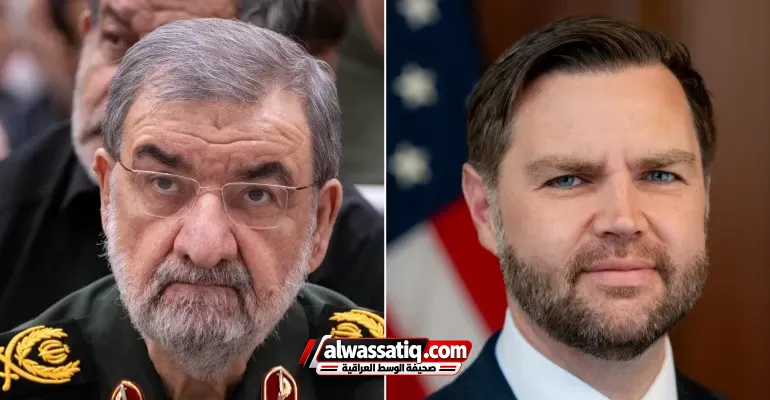
Iranian reports said on Thursday evening that Tehran received a message from U.S. Vice President J.D. Vance "and did not respond to it," and that it insists that the United States meet its seven conditions, stressing that "any position that contradicts this framework is unacceptable."
The Wall Street Journal quoted U.S. officials and informed sources as saying that Vance, acting on the direction of President Donald Trump, initiated sending the message last week via Qatari mediation, and that it was delivered to the secretary of Iran’s Supreme National Security Council, Mohsen Rezaee, last Sunday.
According to a U.S. official, Vance emphasized in his message that any negotiations aimed at avoiding U.S. military strikes "require discussing the nuclear file," and he proposed that the U.S. side lead the talks — an idea that was accepted by some Iranian leaders who consider him an influential figure. The official added that the president was enthusiastic about the message.
The U.S. president told reporters that Vance’s message was intended to help Iran obtain necessary medical supplies, saying it was primarily about bringing in supplies to assist people who are not in good health.
In contrast, Mohsen Rezaee said last week that Iran would not negotiate with Washington unless its core demands are met concretely, and Tehran continues to insist on its seven conditions as a framework it will not negotiate outside of.
Separately, Reuters reported that Qatari mediators presented Iran with a new draft agreement to end the war with the United States and Israel, submitted on Sunday, which Tehran is studying and is to respond to by the end of the week. An informed source said the draft includes a seven-day timetable with daily confidence-building steps each side would commit to implement, and that the timetable could begin to be applied early next week with the participation of several countries guaranteeing the agreement.
But a senior Iranian official participating in the talks denied that Doha had presented a comprehensive offer, saying it had only put forward "unacceptable ideas," and affirmed Tehran’s continuing policy of refusing to show any flexibility on the nuclear issue.
For his part, Iranian Foreign Minister Abbas Araqchi wrote on X that Tehran remains in close contact with mediators to study ideas that could allow implementing the "seven days" proposal it has put forward to end the war in the Middle East, adding that Iran will give diplomacy a chance to succeed even while its armed forces are ready to defend the country, and that it might implement the plan "even in less than a week."