Azerbaijan and Tajikistan sign Makkah Agreement on anti-corruption enforcement in Baku
Azerbaijan and Tajikistan signed the Makkah Agreement in Baku to enhance cooperation, information exchange and mutual legal assistance in enforcing anti-corruption laws among OIC member states.
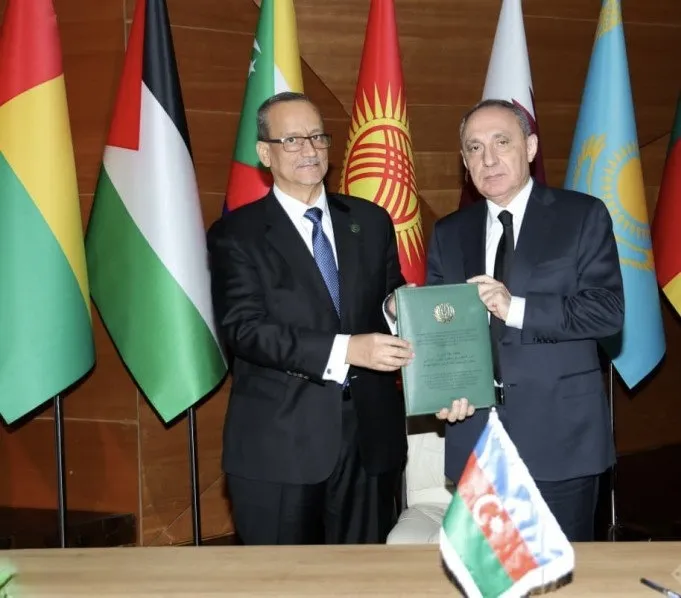
The Republic of Azerbaijan on Wednesday signed the Makkah Agreement on cooperation in the enforcement of anti-corruption laws among member states of the Organization of Islamic Cooperation (OIC), coinciding with the Republic of Tajikistan signing the same agreement, on the sidelines of the third meeting of the Heads of Anti-Corruption Law Enforcement Agencies held in Baku.
Azerbaijan was represented at the signing by Prosecutor General Kamran Aliyev, and the signing ceremony was attended by the OIC Secretary-General Ismail Ould Sheikh Ahmed.
During the signing ceremony, Kamran Aliyev emphasized the importance of international cooperation and the exchange of operational information among countries, and he called on the organization's member states to join the agreement and take the necessary steps to sign and ratify it in order to enhance the effectiveness of anti-corruption efforts.
For his part, Ismail Ould Sheikh Ahmed welcomed the signatures by Azerbaijan and Tajikistan, saying that this step reinforces the values of transparency and integrity and supports the shared Islamic frameworks for exchanging expertise and information in combating financial crimes and protecting development in the member states.
The Makkah Agreement is a multilateral international agreement that was approved during the first ministerial meeting of anti-corruption law enforcement agencies of OIC member states, hosted by Jeddah in December 2022, before being officially adopted during the forty-ninth session of the organization's Council of Foreign Ministers held in Nouakchott on March 16 and 17, 2023.
The agreement aims to establish a common legal framework for cooperation among law enforcement agencies concerned with combating corruption in the member states, and to strengthen their capacities to prevent corruption offenses, detect them, investigate them and prosecute perpetrators, in addition to coordinating the activities of the relevant institutions.
The agreement also provides for expanding the exchange of information and evidence related to corruption offenses, offering mutual legal assistance, cooperating in investigative procedures, and providing technical support and exchanging professional expertise among the member states.
The OIC Council of Foreign Ministers had previously called on member states to expedite signing and ratifying the agreement, and to enhance cooperation to recover funds and assets derived from corruption offenses and return them to their countries of origin.