Bush intervenes to reassert traditional establishment influence in the Republican Party
The Republican Party's shift from the establishment to the MAGA current exposes a split in the party's identity.
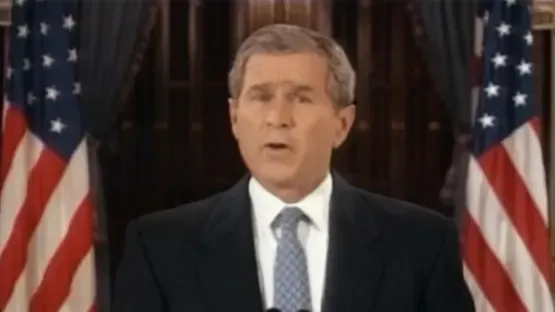
In a move reflecting efforts by the Republican Party's traditional wing to preserve its influence, former U.S. President George W. Bush, together with Republican Senator John Cornyn, is hosting a fundraiser for several party candidates in the Senate elections, excluding Ken Paxton, the Republican candidate in Texas.
According to a report published by The New York Times, Cornyn is chairing the event in which Bush is participating as a special guest, and its proceeds will go to a new joint fundraising committee called "Protecting the Majority" that aims to support Republican candidates in states with competitive Senate races.
The list of candidates set to benefit from the committee includes Susan Collins in Maine, John Husted in Ohio, Dan Sullivan in Alaska, John Sununu in New Hampshire, Ashley Hinson in Iowa, and Mike Rogers in Michigan, with Michele Tafoya, the party's candidate in Minnesota, set to join them later.
Paxton's absence from the guest list stands out as the clearest political signal at the event. Paxton, the former attorney general in Texas, had defeated Cornyn in the state's Republican primary after a fierce and costly contest, backed by the support of President Donald Trump and the populist wing within the party.
Bush and Cornyn's move comes within a broader struggle over the Republican Party's identity and future, between the traditional Republican establishment politically tied to the Bush family and historically conservative party figures, and the populist current that strengthened its influence during Trump's era.
The dispute is not limited to the personal rivalry between Cornyn and Paxton; the Texas primary reflects a wider shift in the balance of power within the party, as the center of gravity has gradually moved from traditional Republican institutions and their donor networks to candidates who rely more on the populist base and the "America First" movement.
The showdown gains additional significance because of the sensitivity of the Senate race in Texas, where Paxton faces competition from Democrat James Talarico, while political action committees linked to Trump and Senate Republicans have pumped more than $80 million into outside advertising in the state.
Thus, the Dallas event appears to be more than just a fundraiser; it signifies an attempt by the Republican Party's traditional wing to reorganize its political and financial networks and to retain a foothold within the party, even as Trump's influence and the populist current continue to shape the party's direction and candidate selection.
Bush's choice to participate in the event alongside Cornyn indicates that figures from the traditional Republican establishment are still seeking to use their influence and donor networks to confront the shifts that have reshaped the party over the past decade.