Saudi Arabia calls from Manama Dialogue to secure Hormuz and Bab al-Mandeb; Syria studies joining Mecca defense pact
Saudi Deputy Foreign Minister Walid al-Khuraiji told the Manama Dialogue 2026 that the kingdom's security is linked to the stability of its region and called for regional and international cooperation to secure navigation in the Red Sea, Bab al-Mandeb and Hormuz. Syrian Foreign Minister Asaad al-Sheibani said Damascus is studying joining the Mecca defense agreement.
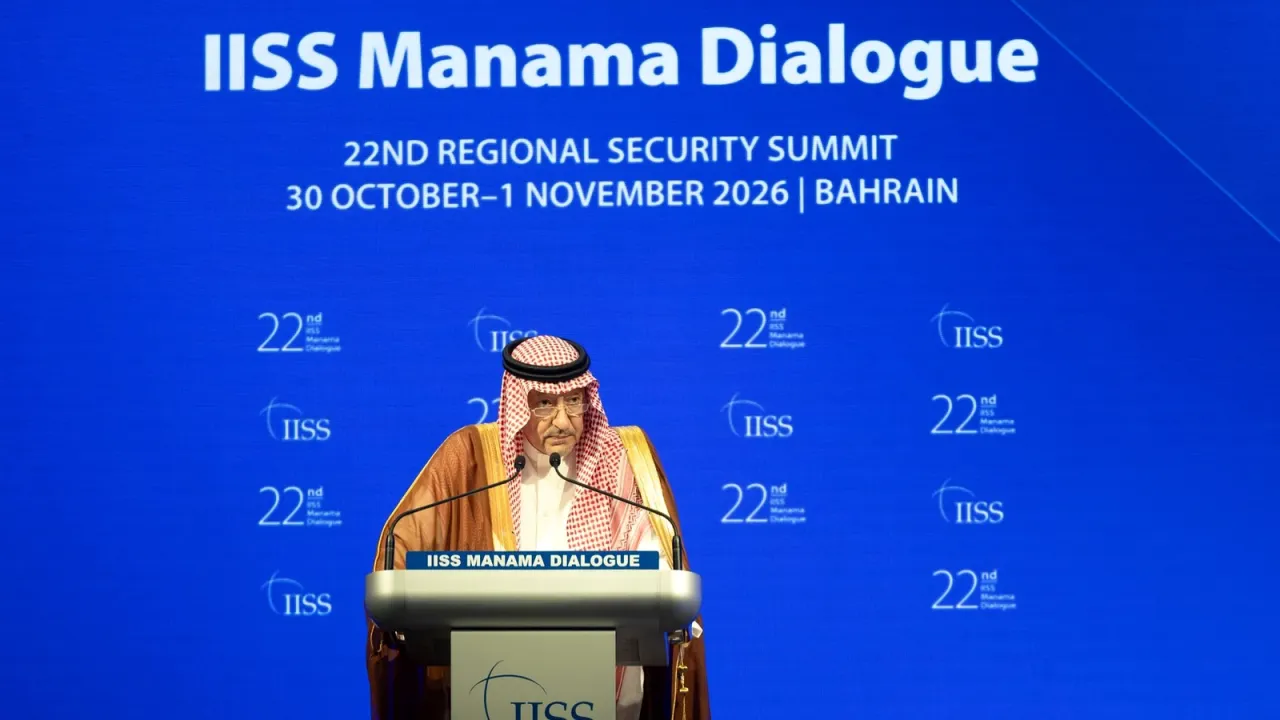
Saudi Arabia said on Saturday, 31 October 2026, that its security is linked to the stability of its regional environment, calling for regional and international cooperation to secure navigation in the Red Sea and the Bab al-Mandeb and Hormuz straits, in remarks delivered by Deputy Foreign Minister Walid al-Khuraiji at the first plenary session of the Manama Dialogue 2026 conference held in the Bahraini capital.
Al-Khuraiji said the region is going through a delicate phase as circles of conflict have widened in recent years and humanitarian suffering has worsened, with repercussions extending to maritime security, energy supplies and the global economy. He stressed that achieving development and prosperity requires a sustainable peace and settlements that address the root causes of conflicts and prevent their recurrence.
Defense capabilities and a diplomatic track
He explained that the kingdom combines strengthening its ability to protect its security and sovereignty in accordance with international law with intensified diplomatic work, based on respect for state sovereignty, good neighborliness and non-interference in internal affairs. He added that Riyadh continues its efforts in coordination with brothers and partners to reduce escalation and resolve disputes by peaceful means.
He noted that the kingdom is working to develop its defensive capabilities, protect its infrastructure and vital facilities, and bolster its cybersecurity, alongside deepening Gulf coordination and expanding its defense partnerships. He said the Saudi defense minister's visit to Tehran this week aimed to reduce tensions, support Qatari and Pakistani mediation, and prevent a return to military escalation.
Yemen and maritime navigation
Al-Khuraiji renewed the kingdom's support for the Yemeni government and efforts toward a comprehensive political settlement that preserves Yemen's unity and security, expressing Riyadh's condemnation of the continued Houthi escalation against Yemen and its people and against the kingdom, particularly the targeting of civilian facilities and threats to maritime security. He warned that this undermines de-escalation efforts and broadens the circle of conflict.
He said that targeting commercial vessels and disrupting trade affects energy and food security and the interests of peoples in the region and the world, and that securing navigation in the Red Sea and the Bab al-Mandeb and Hormuz straits is a shared responsibility requiring regional and international cooperation that respects international law. He also touched on support for Syria's sovereignty, concentrating weapons in the hands of the state in Lebanon, stopping the fighting in Sudan based on the Jeddah Declaration, consolidating the ceasefire in Gaza and moving toward establishing a Palestinian state on the 1967 borders.
Damascus studies joining the Mecca agreement
At the same conference, Syrian Foreign Minister Asaad al-Sheibani announced that discussions are currently underway to assess Syria's accession to the Mecca defense agreement, which includes Saudi Arabia, Turkey and Pakistan. He affirmed that no country in the region can consider its security in isolation and that the security of the Arabian Gulf is part of Syria's regional security.
Al-Sheibani added that his country stands with the Gulf states and their peoples in confronting transnational armed groups, noting that relations with Jordan are integrated across various sectors and that the third session of the Higher Strategic Council between the two countries will be held next month.
Also participating in the opening session was Egyptian Foreign Minister Badr Abdel Aati, who warned that the coming days or weeks are decisive and that any new round of escalation with Iran would be more dangerous and more destructive than the previous one.
Read also: Saudi defense minister heads Mecca Agreement delegation in Tehran to meet Bzshkyan