Saudi Arabia targets more than $40 billion in mortgage refinancing by 2030 as homeownership tops 66%
Saudi Minister of Municipalities and Housing Majid Al-Huqail told the Jini May summit in Virginia that the mortgage finance market is about $260 billion and household homeownership exceeded 66%.
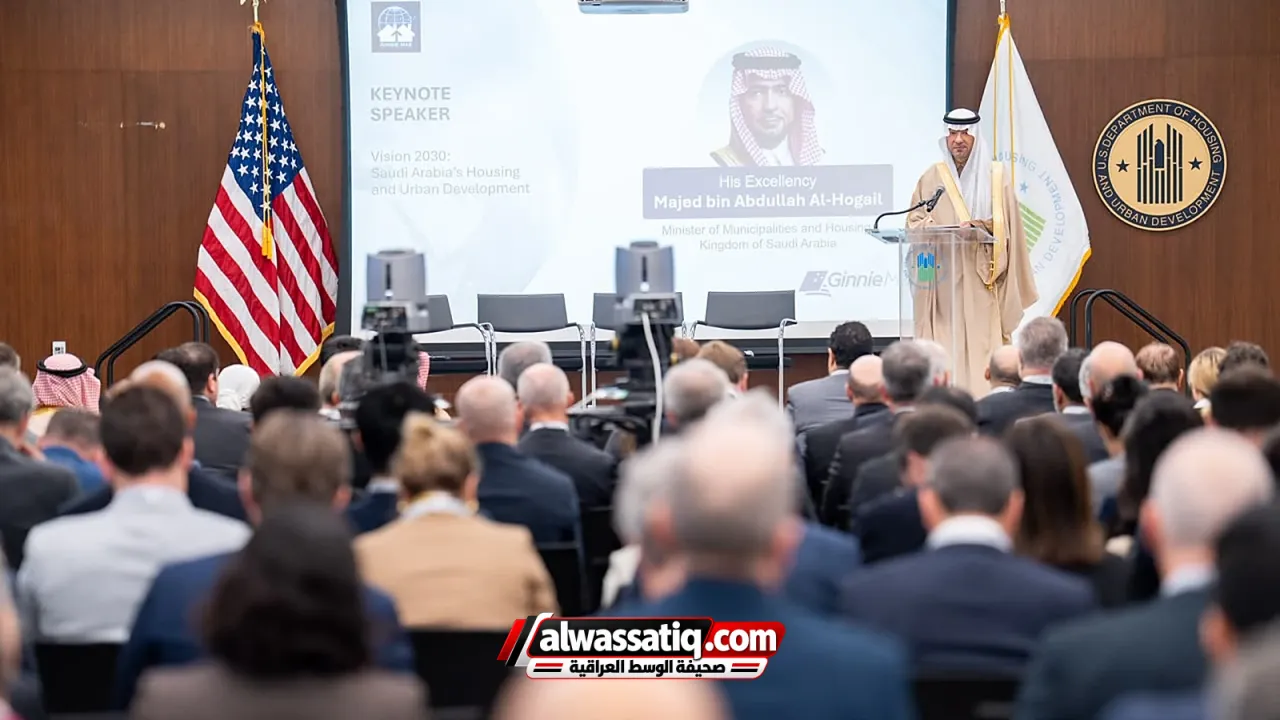
Saudi Minister of Municipalities and Housing Majid bin Abdullah Al-Huqail announced on Thursday, November 12, 2026, that the Saudi Mortgage Refinance Company is targeting more than $40 billion in refinancing by 2030, while household homeownership rose to more than 66% by the end of 2025.
Al-Huqail made the remarks in a speech at the Jini May Global Summit for investors in affordable housing finance 2026, held in the U.S. state of Virginia, where he invited international investors to participate in developing his country’s residential finance market.
Homeownership from 47% to 66%
The minister said that household homeownership in Saudi Arabia rose from about 47% in 2016 to more than 66% by the end of 2025, with a target of reaching 70% by 2030. He noted that roughly one million households, representing about a quarter of Saudi households, have benefited from housing support programs, and that housing demand is underpinned by a young population structure.
Mortgage finance market about $260 billion
Al-Huqail disclosed that the size of Saudi Arabia’s mortgage finance market is about $260 billion, while refinancing transactions amount to roughly $18.7 billion. He pointed out that issuances by the Saudi Mortgage Refinance Company under its international sukuk program listed on the London Stock Exchange have exceeded $7.2 billion, and that more than 300 investment institutions participated in its inaugural $2 billion issuance.
He explained that the residential finance ecosystem rests on five pillars: government guarantees, loan guarantees, securitization, financing services, and data standardization. He stressed that rising global financing costs have affected households’ purchasing power, requiring diversification of liquidity sources, risk distribution, and development of longer-term products with more stable costs.
Increasing supply and regulating rent
The minister said building a balanced housing market requires increasing supply, improving development efficiency, directing support to eligible recipients, and providing diverse units at competitive prices, in addition to regulating the relationship between landlord and tenant, enhancing transparency, and protecting the rights of parties in off‑plan sales, within a regulatory framework overseen by the Saudi Central Bank and the Capital Market Authority.