Taiwan warns of 53 Chinese ships including carrier Liaoning
Joseph Wu reports 53 Chinese vessels, including 34 warships and the carrier Liaoning, deployed from south of Japan to the Philippines and calls the simultaneous threat to the three countries “clear”; Beijing says the exercise is an annual routine not aimed at any country.
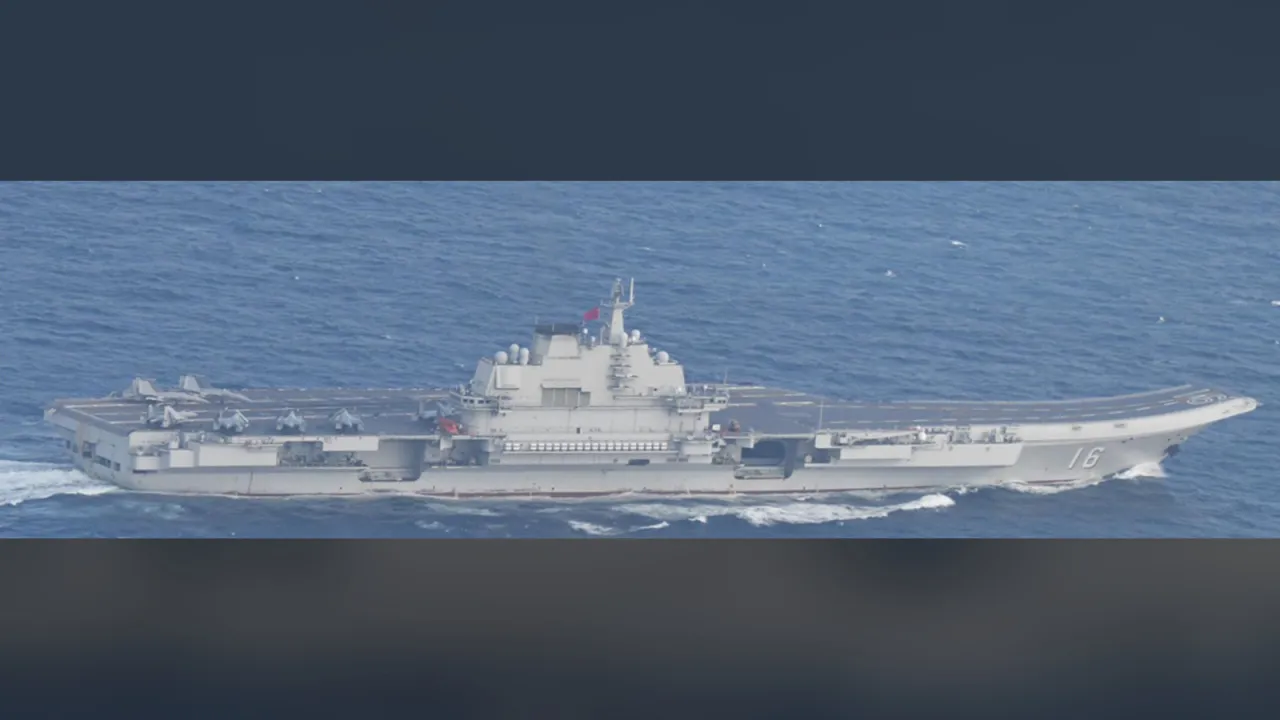
Taiwan’s Secretary-General of the National Security Council, Joseph Wu, said on Wednesday, 28 October 2026, that China is deploying 53 vessels belonging to its navy and official agencies across a wide maritime area extending from south of Japan to the waters around Taiwan and the Philippines, describing the simultaneous threat to the three countries as “clear.”
In a post accompanied by a map showing the ships’ locations, Wu said: “We are monitoring their activities vigilantly, and the concurrent threat to Taiwan, Japan and the Philippines is clear.” According to the map, the 53 vessels include about 34 warships, among them the aircraft carrier Liaoning, alongside 19 coast guard vessels and other Chinese official ships.
Deployment from south of Japan to east of the Philippines
The Taiwanese map showed the Liaoning and its strike group positioned east of the Philippines, while other naval formations were deployed off Taiwan’s eastern and southeastern coasts, in addition to three formations off southern Japan, covering what is known as the first island chain running from southwest Japan through Taiwan to the Philippines.
On 14 October the Chinese navy announced it had sent the Liaoning carrier group to the western Pacific to conduct drills as part of its annual plan, and on the same day Japan’s Self‑Defense Forces detected the carrier and accompanying ships passing between the main Okinawa island and Miyako Island toward the Pacific.
Beijing: annual training not aimed at anyone
At the ministry’s regular press briefing in Beijing on Thursday, 29 October, Chinese Ministry of Defense spokesman Zhang Xiaogang said the Liaoning carrier group’s training in the western Pacific waters “is routine annual training” intended to test and strengthen the group’s combat capabilities on the high seas, stressing that it “is not directed at any country or party in particular, and is in accordance with international law and international practice.”
The Chinese response came after questions about Japanese Self‑Defense Forces ships and aircraft shadowing the carrier and Tokyo’s disclosure of the number of its patrol sorties, and after Japanese officials spoke about the need to bolster their defensive posture.
Taipei: we do not welcome attempts to display deterrence
Taiwan’s Defense Minister Wellington Koo said on Thursday, on the sidelines of a legislative session, that the Taiwanese military is fully tracking the movements of the Liaoning and the other naval formations, as well as official and coast guard ships, through joint surveillance and reconnaissance means and information sharing with allies, adding: “We do not welcome any attempt at a show of deterrence that would undermine peace and stability in the Indo‑Pacific region.”
Koo said China “has never renounced the use of force to annex Taiwan,” and noted that his country is working to build its own deterrent capabilities to preserve peace by force if necessary.
In its daily report, Taiwan’s Ministry of Defense said it had detected by 6 a.m. local time on Thursday six sorties by Chinese military aircraft, seven warships and one official vessel around the island within 24 hours, with five of those sorties entering the air defense identification zone in northern, central and southwestern Taiwan, adding that it responded by deploying aircraft, warships and coastal missile systems, in a daily monitoring that has become routine, as it had announced earlier this month when it detected 12 aircraft and six Chinese warships within 24 hours.
Joint transit through the Osumi Strait
On the Japanese front, the Joint Staff Office of Japan’s Ministry of Defense said on Wednesday that at about 10 a.m. on Tuesday, 27 October, its forces observed three Chinese warships — two missile destroyers of the 055 and 052D classes and a 054A‑class frigate — accompanied by a Chinese coast guard vessel about 200 kilometres west of Kuchi‑no‑Erabu Island in Kagoshima Prefecture, before they transited the Osumi Strait south of Kyushu toward the Pacific.
This was the first time Japan’s defense ministry publicly reported a Chinese coast guard vessel accompanying PLA Navy warships during a passage of a strait near Japan; a Japanese destroyer, a minesweeper and a maritime patrol aircraft monitored their movements.
This wide deployment comes as U.S. Secretary of Defense Pete Hegseth and his Japanese counterpart Shinjiro Koizumi on Wednesday in Cebu city in the Philippines agreed to enhance deterrence and denial defense in the first island chain.
U.S. readiness on a 2027 basis
Separately, U.S. Army Pacific commander General Ronald Clark said at a military conference in Honolulu on Tuesday, 27 October, that his forces are preparing the Indo‑Pacific theater on the assumption that China could move against Taiwan as early as 2027, saying that the so‑called “Davidson window” still stands as a readiness date.
The term refers to an estimate made in 2021 by then‑Commander of U.S. Indo‑Pacific Command Admiral Philip Davidson that China would have the military capability by 2027 to seize control of Taiwan by force. By contrast, the U.S. Office of the Director of National Intelligence’s 2026 Annual Threat Assessment says Chinese leaders are not currently planning to invade Taiwan in 2027 and do not have a set timetable for reunification.
Beijing regards Taiwan as part of its territory and has not ruled out using force to bring it under its control, while insisting it prefers “peaceful reunification.” Taipei rejects Beijing’s demands and says the island’s people alone will decide their future.