Planning launches United Nations Cooperation Framework for Sustainable Development 2025–2029
The Ministry of Planning announced today, Sunday, the launch of the United Nations Sustainable Development Cooperation Framework (UNSDCF) for 2025–2029 at a ceremony at the ministry headquarters, attended by government and UN representatives, stressing the need to align national priorities and strengthen ownership and institutional arrangements for implementation.
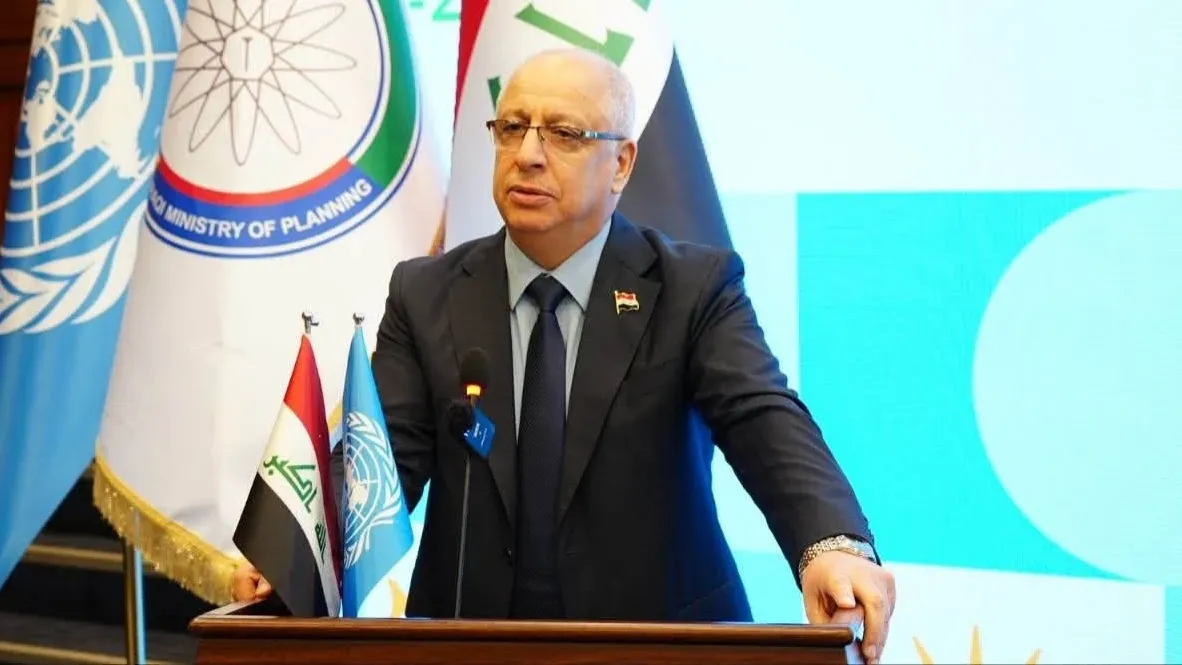
The Ministry of Planning announced, today, Sunday, the launch of the United Nations Sustainable Development Cooperation Framework (UNSDCF) for the period 2025–2029.
The announcement came during a ceremony organized by the Department of International Cooperation at the ministry headquarters in Baghdad, in cooperation with the United Nations and attended by representatives of the Iraqi government, UN agencies and relevant parties.
The ministry's Undersecretary for Technical Affairs, Maher Hammad Juhan, said the launch of the document represents “a pivotal milestone in the trajectory of joint development work” and a basis for strengthening the partnership between the Republic of Iraq and the United Nations system in the coming years. He noted that the document’s preparation was the result of joint efforts and continuous coordination between national institutions, UN agencies and international partners, with a commitment to supporting Iraq’s development path and responding to its priorities and development needs.
Juhan added that aligning the priorities of the United Nations Cooperation Framework for Sustainable Development with Iraq Vision 2030, the government programme priorities and the National Development Plan (2024–2028) constitutes a fundamental pillar to ensure that international cooperation is consistent with the national development path and to direct resources, expertise and technical support toward the priorities identified by Iraq.
He pointed to the importance of strengthening national ownership of the framework, stressing that its success and the sustainability of its results require coordination and integration among ministries and government institutions and the mainstreaming of its priorities into implementation programmes, sectoral plans and budgets. He also emphasized the need to strengthen the responsibility of national institutions in leading implementation and follow-up and in converting priorities and commitments into implementable and measurable programmes and projects to ensure that cooperation outputs are tangible and their impact on citizens’ lives is measurable.
Juhan called on Iraq’s partners within the United Nations and international and regional organizations to continue providing technical support, financing and expertise in line with national priorities and development plans, with a focus on building national capacities and transferring knowledge and expertise to Iraqi institutions and personnel to achieve the sustainability of cooperation results.
For his part, the UN Resident Coordinator in Iraq, Peter Hawkins, stressed the importance of continuing cooperation between the Iraqi government and the United Nations in implementing the cooperation document for 2025–2029, which was signed by both sides on 25 December 2025. He said the cooperation framework aligns with the national development plan and Iraq Vision 2030 and supports progress toward achieving the Sustainable Development Goals.
Hawkins added that the meeting provided an opportunity to review UN-supported programmes and their relevance to government institutional priorities, to strengthen national participation in results groups, and to follow up on programme implementation and impact assessment. He affirmed the United Nations’ commitment to continue working with the government and people of Iraq to strengthen the partnership and achieve tangible results that are reflected in citizens’ lives.
The ceremony included a review of the main elements of the cooperation framework and the results groups, and discussion of next steps to activate the framework and achieve its goals. Participants were also divided into specialized groups that addressed: inclusive social development; sustainable economic development, livelihoods and employment; environment and climate resilience; good governance and the rule of law; in addition to the data, monitoring, evaluation and Sustainable Development Goals group (DMESG).