Prime Minister Ali Faleh Al‑Zaidi Is Not a Party Cashier
Prime Minister Ali Faleh Al‑Zaidi is not a cashier for the parties
Baghdad - report by the Al-Wasat Iraqi newspaper
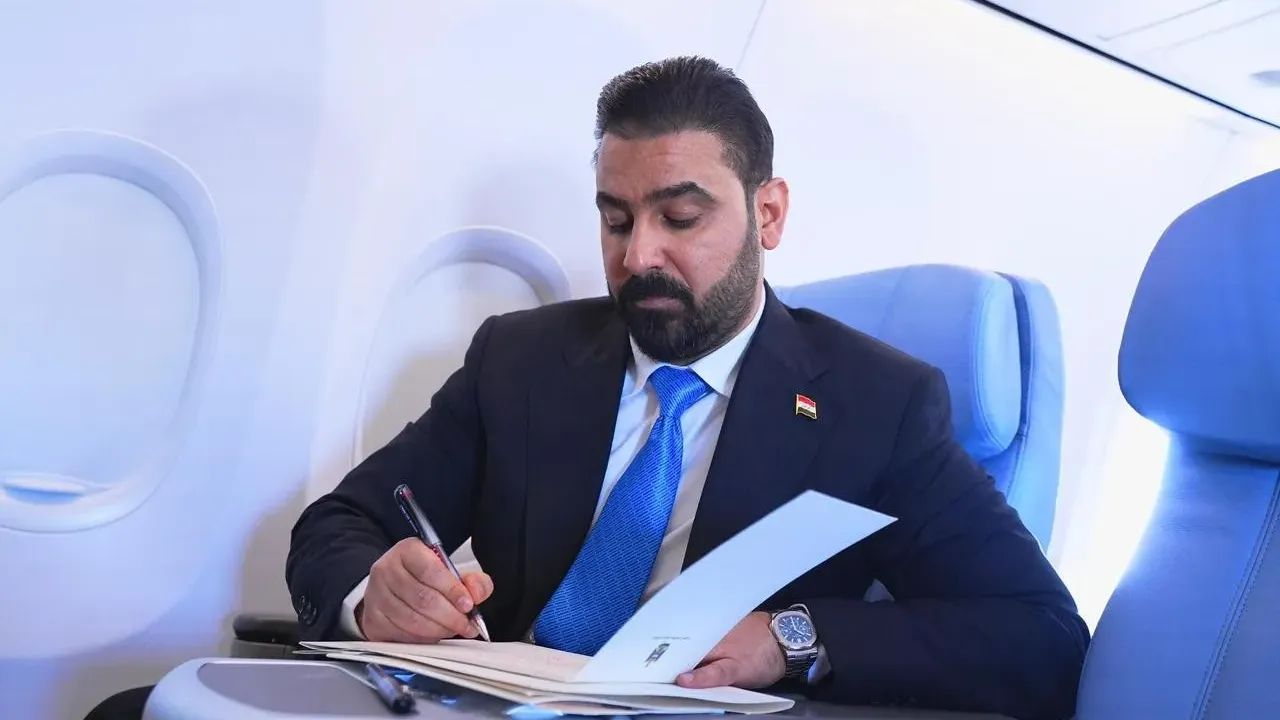
In Iraq, the performance of the prime minister should not be measured by what pleases this party or that one, but by what he delivers to the people and by preserving the dignity and sovereignty of the state. Mr. Ali Faleh Al‑Zaidi, since assuming the premiership, should not be treated as an employee of a political faction, nor should his role be reduced to an insulting expression such as "a cashier for a party." The prime minister is responsible for managing the state, not for opening its coffers to meet the wishes of competing forces.
It is true that forming governments in Iraq proceeds through political understandings, and that the Coordination Framework nominated Ali Al‑Zaidi for the premiership, after which the Council of Representatives gave confidence to his government on 14 May 2026. But a political nomination does not negate the fact that constitutional and national responsibility is toward the state, its institutions, and the citizens.
Parties have the right to disagree, negotiate, and present their visions, but no side has the right to treat state institutions as if they were a private share or a subordinate fund. Public money belongs to the Iraqis, and appointments, services, and government decisions must be subject to law, competence, and the public interest — not to quota deals or partisan loyalty.
A strong prime minister listens to everyone, but he does not allow anyone to seize his decision or impose measures that contradict the national interest. He places services, anti-corruption, job opportunities, and the protection of state funds at the top of his priorities, and he holds negligent officials accountable regardless of their position or affiliation.
This call does not mean granting any official immunity from criticism; the government is required to be transparent, and people have the right to ask about the outcomes of promises and programs. But criticism should address decisions, performance, and facts, not turn into an insult that reduces a constitutional office to an abusive label. Conversely, slogans alone do not prove the independence of decision-making; what proves it is a fair practical stance, equal application of the law to everyone, and results that citizens can see.
Iraq needs a prime minister whose first loyalty is to the constitution, the state, and the people, and who treats parties as active political forces, not as guardians of the government. Therefore, Mr. Ali Faleh Al‑Zaidi is not a cashier for any party; he is the prime minister of Iraq, and his real measure of success is how much he delivers to Iraqis and preserves for the state institutions.