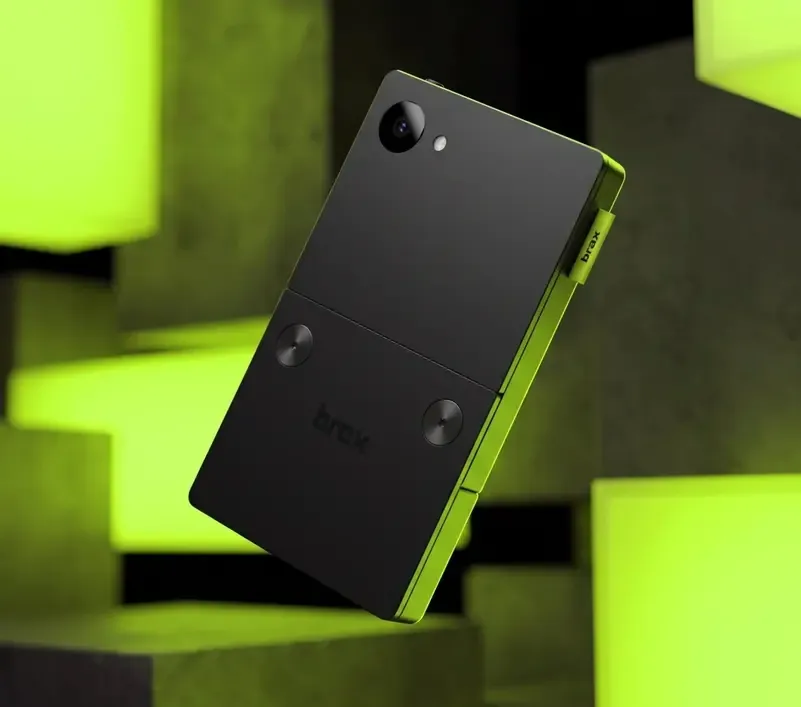
Brax unveils Wink: small phone with physical keyboard and communications kill switch
Brax introduces the Wink phone with a BlackBerry-inspired design and a swappable physical keyboard, running BraxOS built on Android without Google services, and featuring a physical switch to disable communications and microphones.
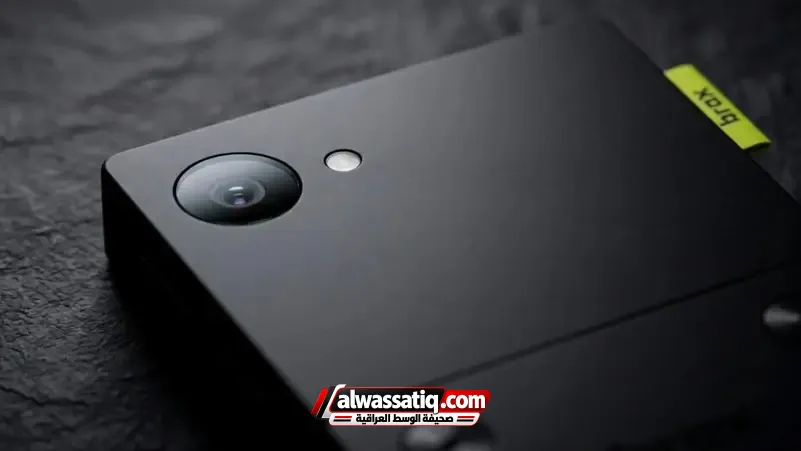
Brax announced its new Wink phone, which focuses on privacy and data control, combining a small screen with a swappable physical keyboard, along with an operating system built on Android with Google services disabled and a hardware switch that can disable the device’s communication and sensing functions.
According to press reports, Wink’s design follows an approach closer to traditional BlackBerry phones, with a front split between a 4-inch screen and a full physical keyboard at the bottom of the device. The lower section that holds the keyboard is replaceable with an optional module that includes an additional battery to increase available power.
The device runs an OS called BraxOS, a modified version of Android that does not include Google services and avoids requiring Google account sign-in or tracking user activity for advertising or analytics, the company says. Brax states that the system’s code is available on GitHub as open-source software to allow review by developers and interested parties.
A prominent feature of the phone is a physical switch on the side of the chassis that allows the user to disable cellular communications, microphones, the camera, location services and sensors, giving direct control over elements that may raise privacy concerns rather than relying solely on software settings.
Brax also offers a communications service for calls and text messages that is end-to-end encrypted and works exclusively on its devices; the company says this prevents access to the content of communications via that service. The phone also provides a data-only mode that disables traditional calls and texts while keeping voice calls and messaging over the internet available.
Wink includes an automatic data-wipe feature that activates when predefined conditions are met, such as entering a special duress password, exceeding a set number of failed unlock attempts, or even on every device restart, according to the company’s specifications.
Brax targets users who prefer small devices with a physical keyboard and a practical design. The company says the device’s keys provide clear tactile feedback and can be swiped with a finger to navigate on-screen content, in addition to being used for text entry.
On the technical side, Wink is powered by a MediaTek MT8875 octa-core processor and includes 8 GB of RAM and 128 GB of internal storage with microSD support up to 1 TB. It also features a single 50-megapixel rear sensor, a 4-inch OLED screen, a traditional 3.5 mm headphone jack, and a promise of system updates through 2032.
Conversely, the phone has no front-facing camera and no fingerprint sensor, meaning integrated front-camera video calls are not available and unlocking relies on a password or PIN. The device is about 10 mm thick, but the company has not yet disclosed the phone’s weight or the actual battery capacity, nor has it announced specifications or availability for the optional replaceable battery module at launch.
It is worth noting that Brax previously released its open_slate tablet, whose development was crowdfunded on Indiegogo, and deliveries experienced delays with a targeted December delivery date. The company says this date should be taken into account by those considering purchasing Wink, as the phone is still an upcoming product.
Regarding price and shipping, Brax expects Wink’s official retail price to be about $700. The company is offering a reservation for a first-batch unit, scheduled to ship in July 2027, for a $449 prepayment, while adding a name to the queue for a second batch requires a $30 deposit, with that batch’s total cost expected to be $550 and shipping anticipated in September.
Brax positions Wink as an attempt to combine a physical keyboard, open-source software and hardware privacy controls, while accepting notable trade-offs in some modern smartphone features related to photography, biometrics and high-end performance.