Imam and two preachers call on government to review exchange rate change, propose paying salaries in dollars
Najaf Friday prayer leader Sadr al-Din al-Qabanji and Abu Hanifa mosque preacher Abdul Sattar Abdul-Jabbar asked the government to review the decision to devalue the dinar or compensate employees by paying salaries in dollars, amid a government exchange-rate adjustment and growing public protests.
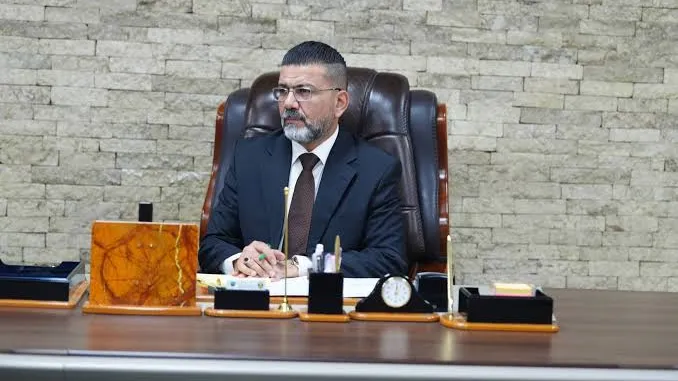
The Imam and Friday sermon leader of Najaf, Sadr al-Din al-Qabanji, today, Friday, called on the Iraqi government to reconsider the decision to adjust the exchange rate, proposing that employees’ salaries be paid in US dollars if the decision goes ahead and is not reversed.
Qabanji said during the Friday sermon that “we join our voice to the voice of the people, and we demand that the government review the decision to reduce the value of the dinar, especially since Iraq’s financial revenues depend on oil by about 90%, while religious tourism represents 3% of them.”
He stressed that “despite temporary obstacles in export operations, urgent solutions must be found, especially after the government announced that the Strait of Hormuz is open to the Iraqi supertankers that transported 4 million barrels last month,” adding that “if the national currency must be devalued, the government should pay employees’ salaries in dollars.”
For his part, the Imam and Friday preacher of the Abu Hanifa al-Nu’man Mosque, Abdul Sattar Abdul-Jabbar, urged the Iraqi state to take measures and procedures to protect low-income earners and the poor from the repercussions of the decision to lower the dinar’s value against the dollar.
Abdul-Jabbar said in the Friday prayer sermon in Baghdad that “the Iraqi state took its decision to lower the dinar to limit the speculative operations carried out by speculators who buy dollars at the official rate and sell them at high prices, which caused the extreme price increases in the market,” adding that “the state is supposed to be vigilant, and to provide protections and facilitations for the poor who will be crushed by the exchange-rate rise.”
He pointed out that “employees’ salaries and most pensions are meager, and they were affected by this rise,” calling on the Iraqi state to intervene to provide the necessary protection for those salaries, “because the damage has reached a large extent.”
These positions come concurrently with the Iraqi Cabinet’s decision to adjust the dollar exchange rate based on an emergency recommendation submitted by the finance minister and the central bank governor, making the Ministry of Finance’s buy rate 1,500 dinars, the sell rate to banks 1,510 dinars, and the sell rate to the final beneficiary 1,520 dinars per US dollar.
Under the new adjustment, the central bank raised the public exchange rate by 20,000 dinars per 100 dollars compared to the previous rate of 1,320 dinars per dollar (132,000 dinars per 100 dollars), at a time when the parallel market had jumped before the decision to about 165,000 dinars per 100 dollars driven by leaks and expectations.
Yesterday, Thursday, the Iraqi Parliament hosted Prime Minister Ali al-Zaidi regarding the exchange-rate adjustment decision; he explained that “the government faced three options: first, go to compulsory savings and leave the employee living on promises; second, distribute salaries every 45 days; third, go into borrowing and drown the country in debt, which it is already burdened with.”
He added that he took on “the task while our economy is besieged due to the halt in oil exports and the closure of the Strait of Hormuz, and the size of public debt was more than 208 trillion dinars and the government is required monthly to provide 10 trillion dinars; despite the crisis we provided the salaries,” noting that “the previous exchange-rate difference was being monopolized by speculators.”
Meanwhile, the Speaker of Parliament Hibat al-Halbousi affirmed that “the decision to change the exchange rate is irreversible, and the heads of the political blocs support the decision,” amid popular anger and protests by Iraqis against the move.