Shops Closed in Shorja and “Alwa Jameela” After Dollar Raised to 1,520 Dinars
Merchants stopped work on Wednesday morning in Shorja market, “Alwa Jameela” and exchange offices after the Central Bank issued a circular raising the official dollar exchange rate from 1,320 to 1,520 dinars. The decision caused market confusion and fears of price increases and frozen real estate transactions.
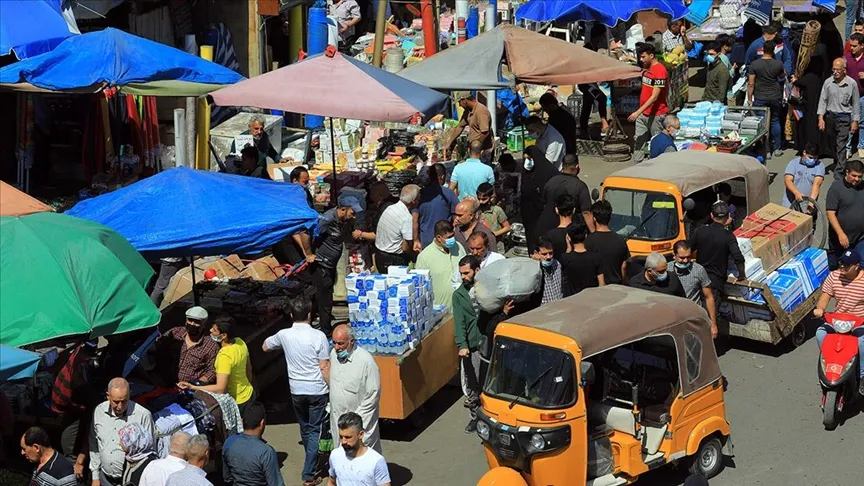
Merchants’ warehouses and shops in Shorja market, “Alwa Jameela,” and a number of money-exchange and transfer companies closed their doors on Wednesday morning after the Central Bank of Iraq raised the official exchange rate of the U.S. dollar against the dinar from 1,320 dinars to 1,520 dinars.
Shorja market in central Baghdad is considered the largest economic hub for various goods and daily necessities, while “Alwa Jameela” is a primary source of dry foodstuffs and agricultural goods and a main supplier to the capital and neighboring provinces.
Traders said the Central Bank’s decision surprised them and left them unsure how to calculate buying and selling prices, as they rely on the dinar’s value against the dollar for pricing imported goods and financial transfers.
Reports indicated the Central Bank’s decision disrupted transactions and buying and selling markets, prompting many merchants to suspend financial dealings until conditions stabilize and it becomes clear whether the new rate will remain or be subject to further changes.
The Central Bank issued a circular on Wednesday morning specifying the dollar exchange rate as follows: 1,500 dinars as the purchase price from the Ministry of Finance, 1,510 dinars as the sale price to banks, and 1,520 dinars as the sale price by banks and nonbank financial institutions to the end beneficiary. The decision was issued based on a Cabinet decision at its regular session held Tuesday and on an urgent recommendation submitted by the finance minister and the governor of the Central Bank.
Thus the Central Bank raised the dollar sale price to the public by 20,000 dinars per $100, after previously using a sale price of 1,320 dinars per dollar (132,000 dinars per $100).
A number of small traders and shop owners said that large merchants who have goods worth billions of dinars in storage will exploit the change to raise prices, which could immediately affect the local market and commodity prices.
Gold prices recorded a significant rise in local markets in Baghdad and in Erbil following the adjustment in the exchange rate.
The repercussions extended to the real estate market, where Erbil real-estate expert Sardar Azad said, “The sudden rise in the dollar exchange rate and the instability markets are experiencing have directly affected the sector; they initially led to a complete halt in buying and selling activity and will later lead to higher prices for housing units built by investment companies.” He added that on the first day of the exchange-rate increase “no real-estate transactions or deals were recorded in the city of Erbil due to the scene’s ambiguity and the lack of clarity for citizens and market actors.”
Azad noted that the rise in prices of housing units under construction is due to two reasons: first, construction materials and supplies are offered and sold in dollars, which raised their costs; second, units sold on installment plans will bear additional costs that will be reflected in the final price.
The Iraqi Contractors Union asked Prime Minister Ali al-Zaydi to delay implementing the dollar exchange-rate decision, warning of its financial repercussions on government contracts and projects. The union said construction companies are still bearing the effects of a previous exchange-rate adjustment under Cabinet Decision No. (301) of 2021, and that dues resulting from that adjustment have not yet been paid, noting that the ramifications of the latest rate increase extend to contracts still under study or referral and may lead to agreements that do not match the actual execution costs.
Economic experts warned of the decision’s impact on wide segments of society. Economist Mohammed al-Hasani said these decisions “harm all segments of the people,” explaining that a public employee loses, in his estimate, 30% of the value of his salary, while a citizen’s loss in purchasing power for goods could rise to more than 70% because of customs tariffs and transport costs, which he said means a loss of about 50% of the monthly income for the citizen as a whole.
Expert Ali Daadoush warned of an increasing gap between the official rate and the parallel market, predicting that “the price has already begun to rise” and that the decision will lead to “severe, runaway inflation” and rising food prices, calling on the government to take measures to limit price increases such as reducing customs duties to help restore balance and prevent price surges in the local market.
A trader predicted the dollar price in the parallel market would rise to between 190,000 and 200,000 dinars per $100, attributing this to increased demand for foreign currency from people with mandatory payment obligations, and saying that when the government raises the official rate it must also take responsibility for controlling the parallel market because the decision directly affects prices and citizens’ livelihoods.
The Eco Iraq Economic Observatory warned of a widening gap between the official and parallel rates and the resulting increase in import costs, reduced purchasing power, and their reflection on prices of goods and services, calling for curbing speculation and boosting foreign-currency inflows through official channels.
The Baghdad Chamber of Commerce warned that any change in the exchange rate represents a “direct influencing factor” on import costs and the prices of goods and services, noting that a large segment of traders have financial obligations and commercial contracts with companies and suppliers outside Iraq and that a stable, clear environment is required to enable the private sector to plan and make decisions on sound economic bases. Al-Hamdani added that the current stage requires a comprehensive study of the decision’s effects while taking into account the conditions of local markets, citizens’ purchasing power, and the obligations facing traders, importers and different economic sectors.
In response, parliamentary circles moved to hold an emergency session to discuss the decision to raise the dollar exchange rate and to compel the government to reverse it, amid warnings of its repercussions on citizens and the market. MP Ibtisam al-Hilali said she rejects the Cabinet’s decision to change and raise the dollar exchange rate, noting the decision will have direct repercussions on the Iraqi economy and market, and said that if the government wanted to address the financial crisis the exchange rate should have been set at 1,400 dinars per dollar or lower to control the market and limit its impact on food prices. MP Susan al-Saad said she submitted an urgent request to the Speaker of the Council of Representatives to discuss the decision and its economic repercussions and asked for a session to question the rationale behind the decision and its effects on the living and economic conditions in the country.