The European hoopoe in Suki.. an unusual visitor lands in Sudan
The European hoopoe in Suki.. an unusual visitor lands in Sudan
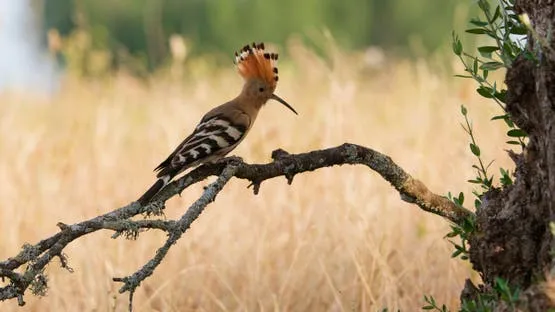
In a scene not often repeated, a group of European hoopoes paid an unusual visit near a house in the city of Suki in Sennar State during this September, drawing attention to one of the migratory birds that cross Sudan in their seasonal journey, but which are rarely seen together in such numbers.
Notably, the city of Suki in Sennar is about 350 kilometres southeast of Khartoum, which makes the appearance of these birds in the area notable in the context of tracking migration routes and the habitats that receive them.
A university professor spotted them
Dr. Mohamed Al-Makki Ali Al-Badawi, a wildlife professor at Sennar University, observed the group near his home, in a scene he described as "not easy to see," noting that the European hoopoe is usually seen as scattered individuals while searching for food.
Al-Badawi told Al Arabiya.net / Al Hadath.net that the appearance of the European hoopoe in the area is not a new phenomenon, as it comes to Sudan annually as a migratory bird, but it remains one of the species that stop observers in their tracks when it appears in groups.
Al-Badawi added that the hoopoe "has a major role in ecological balance, as it feeds on large numbers of insects, probing the soil with its bill for food, including larvae, worms and other organisms that can be harmful to crops. The European hoopoe belongs to the same family as the hoopoe found in Sudan, but Sudan also knows the resident African hoopoe. The scientific name of the European hoopoe is written Upupa epops epops, while the African hoopoe is referred to as Upupa africana."

European hoopoe in Suki (photo by Dr. Mohamed Al-Makki)
While the African hoopoe remains in Sudan year-round, the European hoopoe arrives as a migrant during the winter season, crossing wide areas of the country and taking advantage of agricultural environments and open areas in search of food.
The Sudan Birds Atlas by Nicholas, published in 1987, noted the presence of the hoopoe among Sudan's birds, while recent field observations have shown that this bird still finds Sudanese environments a suitable refuge during its seasonal journey, as Dr. Mohamed Al-Makki confirms.
The importance of the hoopoe goes beyond being a pleasant sight; its presence, and the diversity of migratory birds in general, can provide important signals about the condition of the environments these birds pass through, and about the availability of food, vegetation cover and suitable resting and feeding areas.

European hoopoe (iStock)
In Sudan, where migration routes cross fields, farms, plains and open areas, spotting a migratory bird like the European hoopoe is more than a fleeting image; it is a small window onto an ecological world in which birds travel thousands of kilometres in search of food, warmth and safety.
An exceptional status
The hoopoe also holds an exceptional place in Arab religious and cultural memory, after being mentioned in the story of the Prophet Solomon, when it was absent from his council and then returned with news from the Kingdom of Sheba.
But the hoopoe that appeared in Suki this time carries, by its mere appearance, a message from nature itself: that Sudan remains part of global migration routes, and that its migratory birds continue to cross its skies and lands, even amid the environmental changes that have affected its habitats in recent years.

European hoopoe (iStock)
Separately, the first week of this September witnessed an exceptional event in which the Sudanese Bird Society celebrated the resumption of monitoring, following, recording and documenting the return of local and migratory birds, coinciding with the gradual return of life to the Sunt forest in Khartoum.
The results of a birdwatching tour, which covered about five kilometres of the eastern strip of the forest, revealed the observation, recording and documentation of the return of 36 species of birds residing in the forest.
Among the species seen were Abu Qirdan, the white egret, the al-warwar, the hoopoe and some of the finches and swallows that live in the forest year-round.