From September to June: Details of al-Zaidi's Plan to Disarm the Factions
From September to June: Details of al-Zaidi's Plan to Disarm the Factions
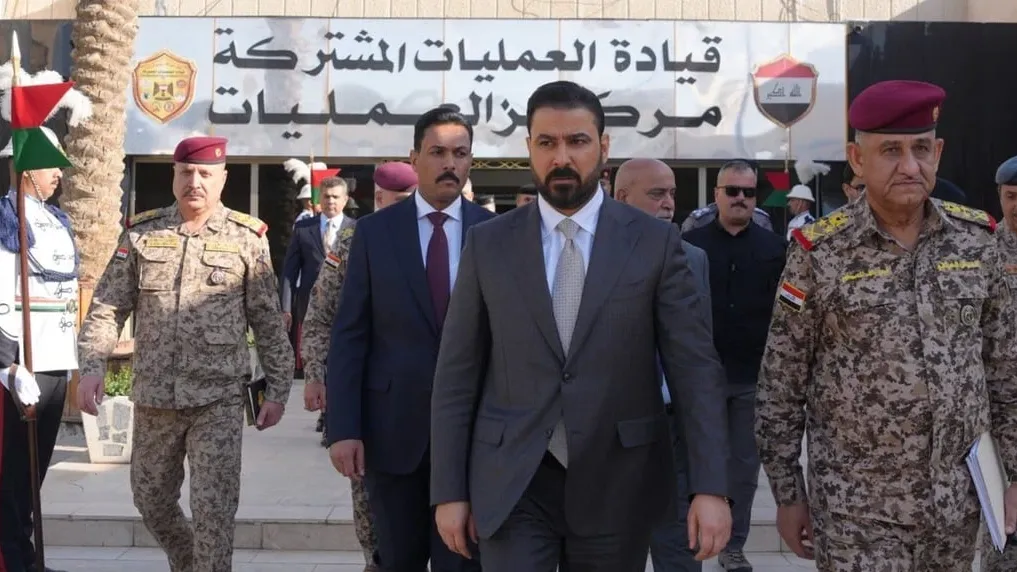
The British site "Amwaj" said that Iraq's move to place the factions under state authority, with the postponement of the deadline to hand over their weapons to 30 June next year, and gradually integrating fighters into the regular forces, within a timetable, places less emphasis on the idea of rapid control and more on finding a practical political way to achieve that.
The British site said in a report it translated that formalizing the Popular Mobilization Units in 2016 did not resolve the legal status of the factions within and around them, noting that the Coordination Framework on 9 May approved forming a committee chaired by Prime Minister Ali al-Zaidi and his predecessor Mohammed Shia' al-Sudani and Badr Organization leader Hadi al-Amiri, tasked with registering weapons, classifying armed groups and studying options to integrate fighters into civil institutions or official security forces.
The report pointed out that by mid-August, senior leaders of the Coordination Framework were proposing a formula to "manage" the private weapons of the "resistance" factions, including Kataib Hezbollah and Al-Nujaba, so that "organizing" the weapons would replace immediate disarmament.
The report noted that as armed groups attached their conditions to any disarmament arrangements, the deadline set for 30 September became difficult to implement, while disagreements within the Coordination Framework over efforts to adopt a unified approach became complicated, because some factions resisted the idea that the ruling political coalition could determine their military status.
According to the report, al-Zaidi's plan to monopolize weapons in the hands of the state by June 2027 formalizes a distinction that has emerged for months: individual fighters can join the Popular Mobilization, while "resistance" factions will lose their status as independent armed entities.
He added that if the plan is implemented, one of the likely major issues will be how the leadership networks and political influence of the integrated fighters are reproduced once they enter the state's security institutions.
The report suggested that the deadline set for next year will shift the focus from missing the 30 September date to the implementation mechanisms, adding that one should not assume that a longer timeframe automatically makes negotiations with the "resistance" factions easier.
The report noted that Baghdad is likely to prioritize, over the coming months, weapon registration and the integration of individuals, while the armed groups are likely to seek guarantees about the process and their status in the future.
He added that progress on the Popular Mobilization's service and retirement law could affect how fighters are integrated into the overall force, and the dynamics of separating the Popular Mobilization from politics.
The report pointed out that the coalition forces' withdrawal date set for 30 September might remove one major point of contention, but disputes over the factions' autonomy are likely to continue.
The report concluded that the first 90 days of al-Zaidi's six-point plan, which requires halting attacks on the coalition and US interests, may be fragile, noting that any renewed strikes by the armed factions would undermine the conditions for implementation and provide reasons to suspend the process.