Japan tightens permanent residence requirements and raises application fees 20-fold
New rules require applicants to prove an income above the national average and proficiency in Japanese, and impose a fee of 200,000 yen from Thursday, to be implemented in stages.
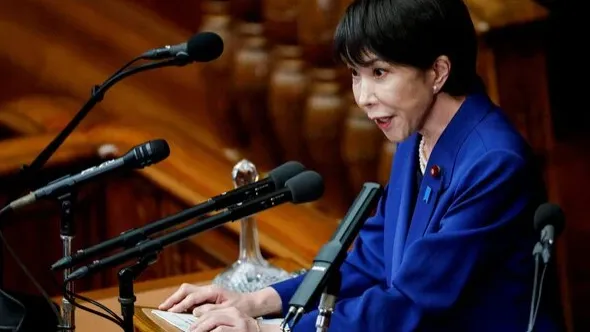
Japan on Thursday tightened the conditions for foreigners seeking permanent residence as part of a tougher approach adopted by Prime Minister Sanae Takaichi.
Under the new rules, which will be applied in stages, applicants are required to prove that their annual income exceeds the country’s average income, in addition to demonstrating proficiency in the Japanese language.
Applicants must also show that they ‘understand’ social values and that they are saving money for retirement.
The cost of submitting applications has risen 20-fold, from 10,000 yen (about $63) to 200,000 yen (about $1,265), effective Thursday.
Previous guidelines did not set specific levels for earnings, pension savings or language skills.
With an aging population and labor shortages in several sectors, anti-foreigner sentiment has grown in the country, prompting nationalist Prime Minister Sanae Takaichi to call for a stricter immigration policy.
Takaichi wrote in a lengthy post: "With the number of foreign residents in Japan rising, the government recognizes that some citizens feel anxiety and grievance," calling for an "orderly coexistence" with migrants.
Programs launched to attract foreign workers have stirred public concern, and anti-immigrant sentiment has spread on social media, fanned by false information about insecurity and social costs.
Despite this, several experts and company executives have emphasized that the archipelago needs to accept more foreign labor to ensure its sustainability.
The issue of foreign labor was a central theme in last year’s upper-house elections in Japan, with the Sanseito ("Japan First") party advancing while describing migration as a "silent invasion."