Judicial Cooperation Center: Cooperation with the United States helped identify one involved in New Orleans attack
The National Center for International Judicial Cooperation says cooperation with the United States helped identify one person involved in the New Orleans attack.
Baghdad – Al-Wasat Iraqi newspaper
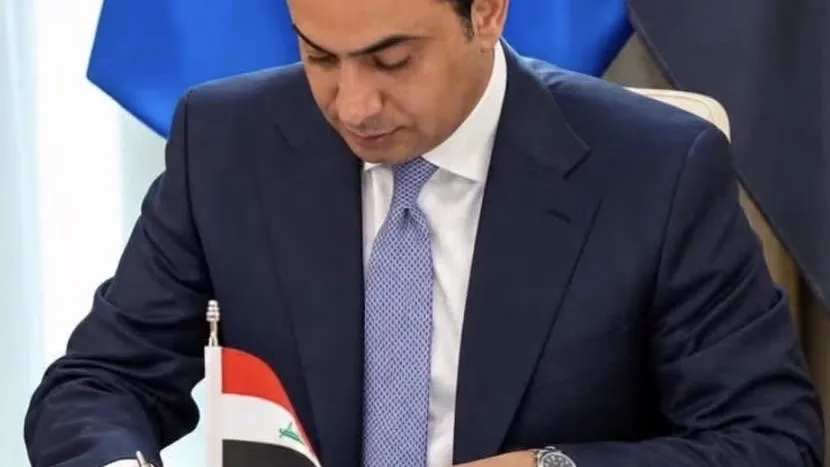
The head of the National Center for International Judicial Cooperation, Ali Hussein Jaffat, revealed today, Sunday, the center’s main tasks and operations. He said the center participated in foiling a planned terrorist attack in Germany and confirmed it is seeking to expand its network of judicial partnerships with countries and international institutions.
Judge Jaffat told Al-Wasat Iraqi newspaper that "the establishment of the National Center for International Judicial Cooperation came within the framework of the Supreme Judicial Council’s vision to develop direct judicial relations with countries and international bodies, given the Iraqi judiciary’s great capacity and accumulated experience in dealing with crimes whose effects and boundaries exceed the national scope, foremost among them terrorism and transnational organized crime."
He added that "the need was reinforced for a national judicial institution specialized in this area after the end of the mandate of the United Nations investigative team to enhance accountability for crimes committed by ISIS (UNITAD), to ensure continuity in collecting evidence related to crimes of ISIS gangs, preserving and archiving it, and using it in judicial proceedings." He explained that "the Supreme Judicial Council issued the judicial order on October 21, 2024 to establish the center, and it was officially opened on December 29 of the same year, forming a permanent national framework for international judicial cooperation."
He stressed that "the head of the Supreme Judicial Council, Judge Faiq Zidan, affirmed during the center’s opening that the center would be 'the gateway for judicial cooperation with countries of the world' and that international cooperation has become a necessity in confronting terrorism, extremism, drugs, organized crime and other crimes that threaten security and stability."
Judicial contact point
Judge Jaffat continued that "the National Center for International Judicial Cooperation is one of the formations of the Supreme Judicial Council, and it functions as the central authority responsible for coordinating judicial cooperation on files related to combating terrorism, organized crime and cases with an international dimension, and as the main contact point between the Iraqi judiciary and international partners." He clarified that "the center’s tasks include receiving and following up requests for cooperation and legal assistance, collecting, preserving, archiving and analyzing evidence, exchanging evidence and information within legal frameworks, providing judicial and technical support, as well as building international partnerships and developing national capacities in investigation, digital evidence and documentation."
He mentioned that "the human rights file represents one of the main tracks of the center’s work, especially in cases related to victims and survivors of terrorist crimes," noting that "the center works to contact survivors and document information related to them, and to coordinate with competent courts to enable them to give testimony, while observing principles of confidentiality, privacy, safety, dignity and avoiding causing additional harm to them."
He pointed out that "the center prepares studies and reports related to terrorism and extremism crimes, and develops working tools that help competent judicial bodies deal with complex and multinational files."
From correspondence to direct cooperation
Judge Jaffat said that "the center acts as a link between the Iraqi judiciary and judicial and legal bodies in other countries, transforming international cooperation from mere correspondence exchange into an organized judicial process," explaining that "the center receives requests for assistance and cooperation from competent authorities in other countries according to the law, agreements and approved frameworks, and this path has become more developed with the establishment of direct lines of communication with international judicial bodies."
He pointed out that "this cooperation reached the signing of a strategic memorandum of understanding between the Supreme Judicial Council, represented by the national center, and the European Union Agency for Criminal Justice Cooperation (Eurojust) in The Hague, in June 2026, making Iraq the tenth country from outside the EU to sign a memorandum of cooperation with the agency."
He said this step aims to "accelerate and develop cooperation, exchange information, and support the pursuit and extradition of wanted persons in cases of an international character."
Terrorism and organized crime
He affirmed that "combatting terrorism and documenting ISIS gang crimes are one of the center’s core focuses, but the scope of judicial cooperation it practices is not limited to terrorism, as the nature of modern crime has become transnational."
He added that the center deals, according to its mandate, with files related to international organized crime, drug trafficking, money laundering and terrorism financing, internationally wanted persons, serious international crimes, in addition to requests for legal assistance and exchanges of evidence and information.
He pointed out that the center "worked on creating and developing a comprehensive, secure and searchable archiving system that allows for the preservation of digital evidence and physical documents, including battlefield evidence and information related to terrorist crimes, retrieving them and linking them to investigations when needed, in a way that preserves their legal value and supports their use before competent judicial authorities."
He confirmed that "the center pays special attention to witnesses and survivors of terrorist crimes, and for this purpose it prepared the 'Guidance Manual for Dealing with Survivors of Terrorism' to serve as an organized framework for interacting with them during contact and documentation processes, preserving their dignity, privacy and the safety of their information and identity, and ensuring consideration of their rights when documenting their testimony and using it in judicial proceedings."
Reaching Yazidi survivors
As a practical application of this work, Jaffat said the center, "by auditing archived data and matching information available in the national database, was able to reach a large number of survivors from the Yazidi community and link their data to related cases and information."
He said that "among these cases, a survivor connected to a case before the Basic Court in Pristina, Kosovo, was identified, and in coordination with the First Karkh Investigative Court and in the presence of the competent judge, her testimony was heard judicially via videoconference, making her testimony part of the international judicial cooperation process related to the case."
5,704 suspects from 67 countries
On the center’s most prominent achievements during the short period since its establishment, Jaffat said "these achievements can be measured on two levels: building institutional capacity internally, and achieving tangible judicial results internationally."
He confirmed that "at the institutional level, Iraq’s receipt of 5,704 suspects belonging to ISIS gangs from prisons in Syria, representing 67 countries, posed a major challenge to the judicial system and to data management and international coordination mechanisms," noting that "the First Karkh Investigative Court, competent in terrorism cases, began interrogation procedures against them upon their arrival to take legal measures."
He said this file demonstrated the distinctive role and core value the center added by bringing together tracks that previously required coordination among multiple entities within a specialized central judicial contact point."
According to Jaffat, this is especially evident in the file of evidence related to ISIS crimes after the end of UNITAD’s mandate, since there is now a permanent Iraqi judicial body responsible for completing the process of collecting, preserving, archiving and updating evidence and cooperating on it with other countries, instead of tying this work to a time-limited international mission."
He explained that "this file represents a different model in terms of size and complexity, given its link to thousands of suspects and dozens of nationalities, which contributed to developing information management, archiving, analysis and coordination mechanisms with foreign judicial and diplomatic bodies."
At the international level, Jaffat confirmed that "we moved in a short period from building relationships to achieving actual results through cooperation and exchanges of evidence and information, whether in preventing terrorist crimes, supporting investigations outside Iraq, pursuing wanted persons and organized crime networks, as well as advancing to an institutional level of partnership with Eurojust."
Judicial cooperation
Judge Jaffat said the National Center for International Judicial Cooperation "has multiple cooperation tracks with a number of countries and international judicial bodies, and cooperation with each country is not limited to a single case but includes a number of files and requests for assistance and exchanges of information and evidence according to the nature of each case and the applicable legal frameworks."
He pointed to several prominent examples announced officially, including Spain, where judicial cooperation covered a number of files. One notable result was providing Spanish authorities with information and evidence that contributed to the arrest of two people suspected of links to terrorist activities during two operations carried out by the Spanish National Police in the cities of Cartagena and Ferrol."
In Germany, cooperation takes place on multiple files and cases related to combating terrorism. One of the most notable results, according to Jaffat, was that the exchange of highly significant information and evidence between the two sides contributed to foiling a terrorist plot in the city of Hamburg that was in advanced preparatory stages and targeted an attack against civilian gatherings; the information supported surveillance and investigation measures and enabled the German side to take necessary measures to prevent the attack before it was carried out."
In Sweden, cooperation extends to a number of files linked to transnational organized crime, most notably cooperation between the center and the Swedish Public Prosecution Authority, which resulted, in coordination with the competent law enforcement agencies and after obtaining judicial approvals, in the arrest of several leading members of organized crime networks with direct impact in Sweden, and the case concluded with a life sentence."
In Australia, judicial cooperation covers a number of cases and files. One notable example is the case of the convicted Kazem Malik Hamad Rabah al-Hajami; the official cooperation request led to judicial proceedings against him in Iraq for crimes related to drugs and organized crime, and the case ended with a life sentence against him and confiscation of his movable and immovable assets."
As for the United States of America, Jaffat notes that international judicial cooperation contributed to identifying one of those involved in incitement to the terrorist attack that took place in the city of New Orleans in January 2025, which resulted in the deaths of 15 people and injuries to 30 others."
He says that "the efforts of the National Center for International Judicial Cooperation, based on investigations conducted by the First Karkh Investigative Court, contributed to identifying the defendant and arresting him in Iraq, given the proven affiliation to what is called the 'Office of External Operations' of ISIS gangs, and taking legal measures against him under the Anti-Terrorism Law."
Transnational crime
On the main challenges, the center’s head explains that "the primary challenge is that transnational crime does not follow the jurisdictional boundaries of a single state: the suspect may be in Iraq, the evidence in a second country, and the victim or witness in a third, while other parts of the investigation are distributed among more than one judicial authority."
He adds that this is accompanied by "differences in legal systems and legislations, the volume of digital evidence, multiple languages and nationalities, confidentiality of investigations, requirements for protecting data and evidence, the need to protect witnesses and survivors, while at the same time maintaining rapid response to international requests."
He affirms that the center is working on "continuous development of mechanisms for managing evidence and information, expanding direct communication channels with counterpart bodies, investing in digital tools and specialized training, and establishing long-term institutional cooperation frameworks."
He sees the memorandum of cooperation with Eurojust as an example of the shift "from cooperation based on individual cases to a sustainable institutional cooperation structure."
Vision for the next phase
Regarding the next phase, Jaffat says the center’s vision "is based on turning the expertise that the Iraqi judiciary has gained in dealing with terrorism and complex crimes into a sustainable institutional capacity in the field of international judicial cooperation."
He adds that the center aspires to expand its network of judicial partnerships with countries and international institutions, and to continuously develop its capabilities in managing digital evidence, speeding up mechanisms for legal assistance and evidence exchange, completing the work related to documenting ISIS gang crimes, while strengthening an approach that places the rights, dignity and protection of victims and survivors at the heart of the justice process."
He concluded by saying that "the longer-term goal is to consolidate its role as the Iraqi judiciary’s gateway for judicial cooperation with the world, relying on the partnerships and practical results it has achieved in exchanging evidence and information and supporting cross-border investigations and prosecutions."
According to Jaffat, the center also looks to expand this role, develop its tools and mechanisms and strengthen its network of international partnerships, "to further solidify Iraq’s position as an active partner in the international judicial cooperation system, contribute more to combating transnational crimes, and enhance accountability and the achievement of justice."