Lawmakers and experts warn against proposals to 'Balkanize' Iraq as government moves to monopolize arms
Lawmakers and experts warn against proposals to 'Balkanize' Iraq as the government continues to move to monopolize arms
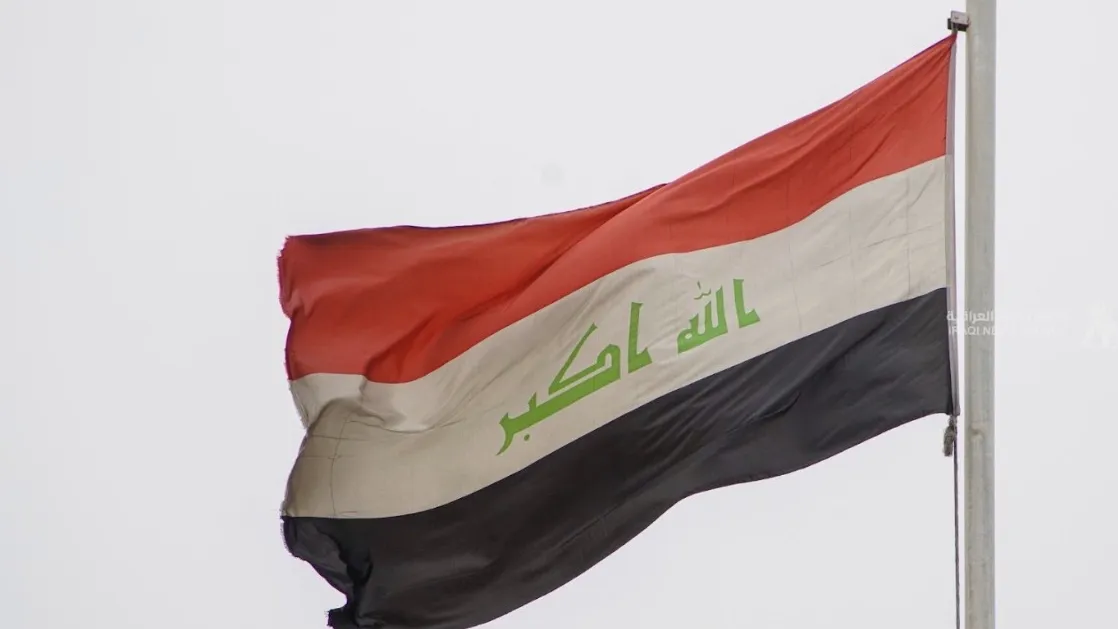
Iraqis categorically reject any projects or proposals aimed at dividing the country or what is called the 'Balkanization of Iraq,' stressing that the unity of its territory and its national sovereignty are nonnegotiable constants, coinciding with the government’s ongoing implementation of the process to place weapons under state control, in accordance with the constitution and the law, and with a national will affirming that organizing the security file is an exclusively Iraqi matter.
In this context, Member of Parliament Abu Turab al-Tamimi affirmed that the division of Iraq is unlikely, stressing that Iraqis and the government are the ones who decide on organizing weapons and confining them to the state.
Al-Tamimi said in a statement that "talk of dividing Iraq, which was mentioned by the U.S. Secretary of State, is unlikely, and no country can impose a method of organizing weapons on Iraq," noting that "there is no guardianship over Iraq from the United States or neighboring countries, and that Iraq is a democratic state that determines its path according to elections and constitutional institutions."
He pointed out that "Prime Minister Ali Faleh al-Zaidi is working well and implementing his program, despite internal and external pressures, and that his steps are moving toward building a strong government that lays the foundation for state-building."
Regarding the confinement of weapons to the state, al-Tamimi explained that "the matter is agreed upon within the framework, and there are schedules agreed with the government and the prime minister to organize this file," indicating that "the arrangement of this matter will occur after the complete U.S. withdrawal from Iraq and non-interference in internal affairs across economic, security, military and political fields."
Concerning the Turkish presence, al-Tamimi affirmed that "Iraqi sovereignty does not accept the country being captive to any external presence," noting that "the state must be the decision-maker in war and peace."
He added that "what exists today is an American presence imposed on Iraq and Iraqis, and there are timetables that will be agreed upon," and al-Tamimi ruled out a clash between the government and U.S. forces or between the government and resistance factions, saying: "The resistance does not work against the state or its policy; rather it supports the state and the Iraqi political order."
Meanwhile, Member of Parliament Nasser Turki al-Awadi affirmed that the process of organizing weapons within the framework of the state is an entirely Iraqi matter, noting that the issue is proceeding strongly and smoothly under the supervision of Prime Minister Ali Faleh al-Zaidi.
Al-Awadi said that "there is a high-level committee holding discussions and dialogues in important meetings with all concerned parties, and the file of organizing weapons is moving forward strongly and smoothly under the supervision of the prime minister."
He added that "Iraqis are the owners of the house, and they know best their interests, away from any foreign interference or from any other party."
He stressed that "Iraq is united with all its sons from Zakho to Al-Faw, and the attempts by Iraq’s enemies to fragment this noble country have not succeeded."
He explained that "the positions of the country’s sons and the pure blood that was shed on its soil are enough to keep Iraq one and united," affirming that "no statement by that minister or anyone else can partition Iraq or take an inch of its land."
Al-Awadi pointed out that: "Everyone agrees that our strength is in our unity."
For his part, security and strategic expert Fadel Abu Raghif said that talk of the 'Balkanization of Iraq' or dividing it is inaccurate, pointing out that Iraq is a state that cannot be divided.
Abu Raghif told Al-Wasat newspaper that "talk about what is called the 'Balkanization of Iraq' or its division is inaccurate from the start, because Iraq is a state that is not subject to division."
He added that "the files of confining weapons and the issue of disengagement, which fall under the responsibilities of the Commander-in-Chief of the Armed Forces, are moving toward completion by mid-June of next year."
He indicated that he "does not believe Iraq will face 'Balkanization or Lebanese-ization' or anything of that sort," explaining that "Iraq’s sociological environment is completely different from environments elsewhere in the region."
He affirmed that "Iraqis are cohesive and united," expressing his belief that "this statement on the matter is not accurate, even if it was issued by the U.S. Secretary of State."
Security expert Mukhled Hazem explained that the file of dividing Iraq and the region’s countries is closed, while noting that the coming phase will move toward strengthening the power of the state and the center.
Hazem said that "I expect the process of dividing Iraq or regional countries to be a closed file, especially after the failure of visions presented in previous periods, including what was known as the project of 'creative chaos.'"
He added that "the current phase is moving toward strengthening the center and the state, to deal with the head of government rather than with multiple parties," noting that "the existence of a force parallel to the state’s power, or weapons outside its control, is unacceptable."
He pointed out that "the coming phase will witness support for proceeding with the file of confining weapons to the state," indicating that "it is better for the factions to come under the authority of the state and the law for several reasons."
He affirmed that "weapons will be within the Popular Mobilization Authority (al-Hashd al-Shaabi), and this represents protection for factions from any targeting or attempts to eliminate their presence, while the matter will remain within the framework of the state and the law."
Hazem added that "the sovereign entity in the country cannot be touched by any external party," considering that "moving in this direction will hierarchically help end the negative consequences, serving the Iraqi political, security and economic reality."
Hazem pointed out that "meetings held on the sidelines of the United Nations General Assembly showed U.S. comfort with the vision presented by Prime Minister Ali al-Zaidi regarding confining weapons to the state," noting that "the vision explained to the American side was accepted, which was reflected in more than one supportive statement for the prime minister on this file."
He said that "the most important thing in the file is setting the date of September 30, for everyone’s commitment to the vision, and after that date no party will be allowed to carry weapons outside the framework of the state, whether factional, tribal or any other entity."
He indicated that "what comes after the deadline will be administrative arrangements to close this file," noting that "U.S. Secretary of State Marco Rubio’s statements ranged between praising the vision and issuing warnings about the file."
He affirmed that "this tone is something we always hear from Rubio, unlike what was said by Barak, who praised the efforts of Prime Minister Ali al-Zaidi on this file."
For his part, academic and political researcher Ghalib al-Daami said that "talk of what is called the 'Balkanization' of Iraq or its division includes a warning against Iraqi parties seeking to turn the country into confederations or regions, leading to its breakup and fragmentation."
He added that "these attempts may serve other parties seeking to expand at Iraq’s expense, which constitutes a serious threat."
He expressed his hope that "Iraq will be able to address the files that threaten its unity and cohesion," stressing that "the wisdom of the Iraqi government and the religious authority in Najaf will play a major role in preserving Iraq’s unity."
He pointed out that "the role of the leader of the Sadrist Current, Sayyid Muqtada al-Sadr, alongside patriotic forces, will be important in maintaining Iraq’s unity."
Separately, political analyst Hamza Mustafa said that U.S. Secretary of State Marco Rubio’s support for Prime Minister Ali Faleh al-Zaidi on the file of confining weapons to the state is an indicator of the Iraqi government’s seriousness on this issue.
Mustafa said that "the U.S. Secretary of State’s announcement of support for the Iraqi government in confining weapons to the state confirms that Washington perceived seriousness in the measures the government is taking," noting that "the file passed through a first phase marked by the start of some factions handing over their weapons."
He added that "the new phase began with a mutual truce for 90 days, followed by work to put in place mechanisms for collecting and confining weapons and determining their fate," explaining that "measures related to this file are scheduled to continue until June 2027."
He noted that "Rubio’s warning that the continued presence of weapons outside the state’s framework could be a prelude to the 'Balkanization' or division of Iraq is a serious indicator that should be read from a national perspective."
He pointed out that "the continued presence of weapons outside the state’s framework, under any pretext, could be viewed as a prelude to a multiplicity of decision-making within Iraq, which could affect other components, especially the Sunni and Kurdish communities."
He affirmed that "the Sunni and Kurdish components support the government’s measures to confine weapons to the state," noting that "achieving stability and confining weapons to official institutions will help turn Iraq into a secure environment to attract companies and investment across various fields."