Iraq pushes (6+2) proposal and stresses need for regional economic integration
The foreign minister said Baghdad is holding ongoing contacts with regional countries to finalize a (6+2) proposal that includes the six GCC states plus Iraq and Iran, welcoming a meeting of the Makkah Pact with Tehran and seeking to draw on the EU's experience in building a common market.
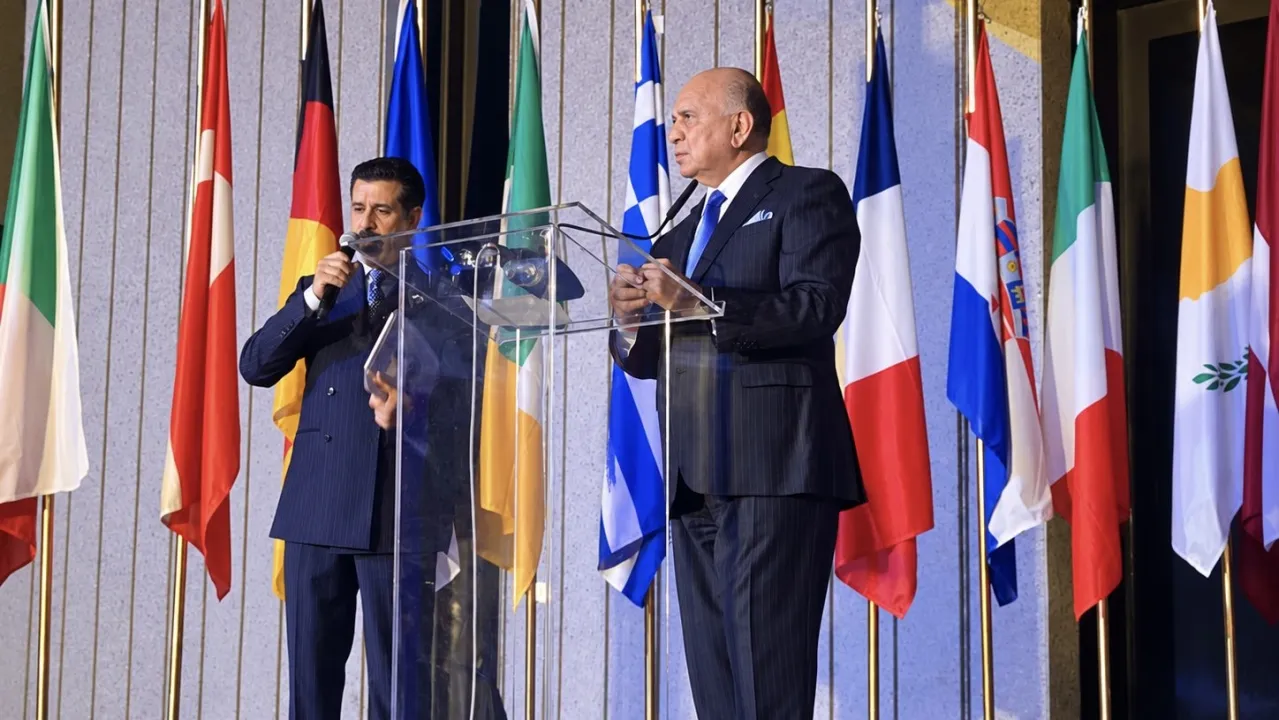
Baghdad – The foreign minister said on Tuesday that Iraq continues contacts with regional countries to mature a proposal in the (6+2) format, which includes the six Gulf Cooperation Council states plus Iraq and Iran, with the aim of enhancing regional security and stability.
He added that the idea was put forward days ago and that diplomatic efforts are underway to prepare the conditions for holding a meeting in such a format through contact with a number of foreign ministers of the countries concerned.
The minister expressed Baghdad's welcome for a meeting of the Makkah Pact countries with Iran in Tehran, looking forward to positive results that contribute to enhancing stability and cooperation among countries in the region.
He noted that proposing the concept of regional security does not mean acting in isolation from international partners, explaining that achieving security and stability requires international dimensions, especially regarding U.S. policy and the European role.
He pointed to the close relationship between security and the economy, saying that building a stable economy is impossible without a stable security environment, and that national security cannot be achieved in isolation from a state's surroundings and neighboring countries.
Regarding the economic vision, the foreign minister confirmed Iraq's pursuit of benefiting from the European Union's experience in transitioning to a common economic market, recalling the stages of European integration starting with the Schuman Declaration in 1950, then the Maastricht Treaty in 1992, and the formation of the Union in its known form.
He said the Iraqi vision includes working to achieve economic integration between Iraq and Turkey, Iran, and Syria in addition to the Gulf countries, based on exploiting the region's diverse economic potentials and natural resources, including oil, gas, water resources and agriculture.
He affirmed that the goal is to build an integrated regional economy by strengthening cooperation with the Gulf countries in the south and with Turkey, Iran and Syria in the north, and by laying practical foundations to benefit from each country's available assets.
On relations with Europe, the minister said that the relationship between Iraq and the European Union extends for decades and at the bilateral level with European countries in addition to cooperation with the Union as an organization, pointing to the Partnership and Cooperation Agreement as a basis for developing joint work relations.
He also pointed to Baghdad's gratitude for the positions of the European Union, NATO and European countries in supporting Iraq during the war against terrorist organizations, recalling the participation of forces from France, Britain, the Netherlands, Germany and other European countries in military operations against terrorism.
He concluded by calling for continued cooperation with the European Union in multiple fields, expressing Iraq's appreciation for the role played by European companies in building the national economy and enhancing opportunities for cooperation and investment.