Trump's reversals in U.S. administration, market losses and cost of Iran war
In recent weeks President Donald Trump has backtracked on decisions he signed or announced, from Russia sanctions to publicly funded ads, amid mixed messages on Iran, market declines and a war cost exceeding $38 billion.
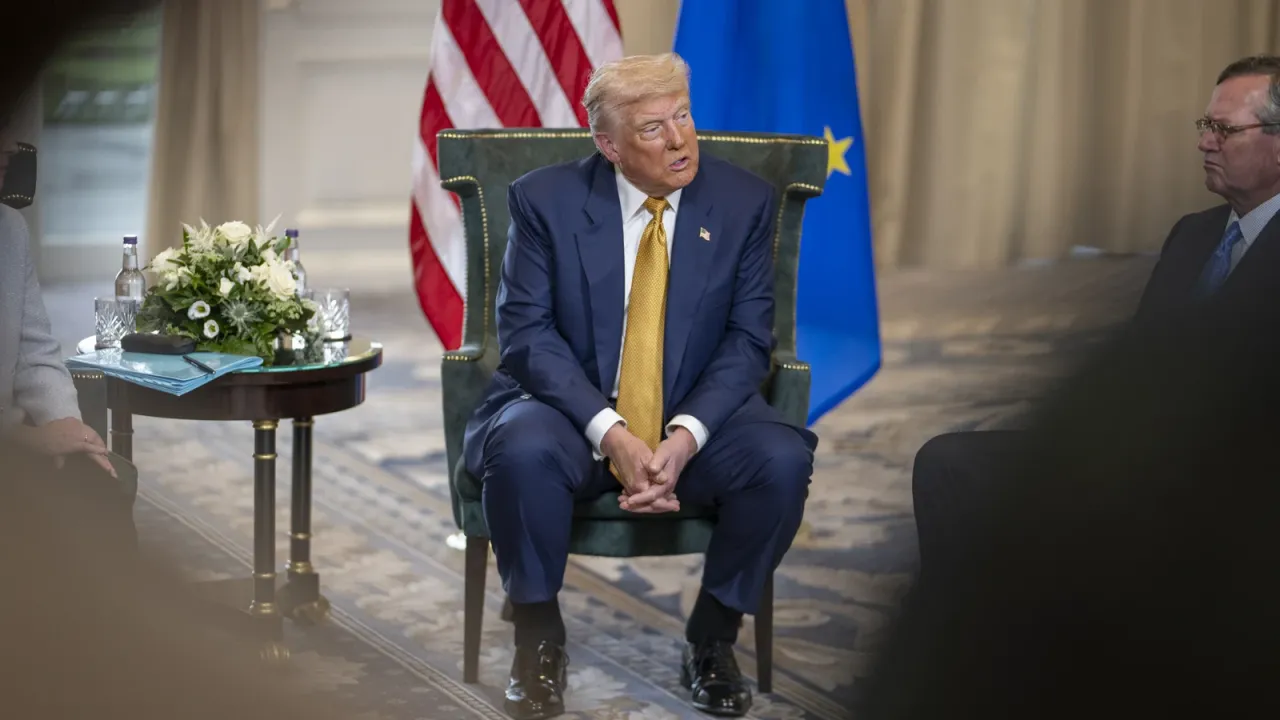
In recent weeks there have been a series of reversals in decisions by U.S. President Donald Trump, covering foreign and domestic files, alongside rapid changes in the White House team, coinciding with mixed messages about the war with Iran, declines in financial markets, and a rising cost of the war on taxpayers and American households — all occurring less than two weeks before the midterm elections scheduled for November 3.
Russia sanctions: from signing to suspension
On September 18, Trump signed the sanctions law on Russia and Iran that Congress approved with bipartisan support, bearing the name of the late Senator Lindsey Graham. The law provides for raising tariffs on Russian goods by up to 500 percent, and imposing duties of up to 100 percent on goods from the five countries that are the largest importers of Russian oil and gas.
But on October 16 Trump signed an executive order that suspended the application of those tariffs and sanctions, doing so two days before the law’s implementation deadline. In his letter to Congress he said the exemption served the national interests of the United States, while keeping in place the sanctions previously imposed on Moscow under earlier executive orders.
Publicly funded ads and a canceled live execution broadcast
On October 5, Trump backed away from having taxpayer funds pay for television advertisements that promote him and his administration’s policies, after criticism from Democratic and Republican lawmakers. He said he would instead fund them from his own money and from a pro-Trump political action committee.
On October 15, Trump canceled a plan announced by Defense Secretary Pete Hegseth to broadcast the execution of Nidal Hasan, the perpetrator of the 2009 Fort Hood attack, live; the sentence was to be carried out without a live broadcast.
Rapid changes inside the White House
On the presidential team front, Katy Zakaria left the White House press secretary post just five days after taking it, following criticism of her first press conference and questions about her legal qualifications; Zakaria said working with Trump had been an honor. U.S. media reports spoke of tensions among senior aides inside the White House and questions about the future of chief of staff Suzy Wiles, while Trump said she had his full confidence.
Mixed messages on Iran and the Strait of Hormuz
On the Iran file, Trump told reporters on Wednesday evening that the United States is not negotiating with Iran, adding that something will happen very soon, while Iranian Deputy Foreign Minister Abbas Araghchi said Tehran remains open to diplomacy and is ready to defend itself.
On Thursday, Trump accused Tehran on his Truth Social platform of fabricating attacks on ships and mines in the Strait of Hormuz to raise oil prices ahead of the elections, asserting that the volumes of oil transiting the strait are now greater than before the war. In contrast, the Iranian Revolutionary Guard announced that seven oil tankers were hit in the strait — four by strikes and three by naval mines.
Market losses and rising oil
U.S. markets closed broadly lower on Thursday: the S&P 500 fell 1.2 percent to 7663.43 points in its worst session since July, while the Nasdaq Composite dropped 2.6 percent to 26008.86 points in its worst performance since June, and the Dow Jones ended the session nearly flat at 52867.98 points. The declines were driven by concerns about the cost of spending on artificial intelligence and reports of U.S.-Israeli plans to resume strikes on Iran after the elections.
Brent crude rose 4 percent to settle at $113.17 per barrel, its highest level since May, while U.S. crude rose to $99.47 per barrel.
Cost of the war to the treasury and households
In September the Congressional Budget Office estimated the cost of the war with Iran to the Department of Defense at about $38.1 billion through August 1, with additional costs ranging between $2 billion and $3 billion for each additional month of fighting.
At the household level, Mark Zandi, chief economist at Moody’s Analytics, estimated that consumers have borne about $265 billion in costs since the war began in late February — roughly $2,000 per household on average — due to higher energy prices and the cost of borrowing.
Read also: Wall Street falls and Nasdaq drops more than 2% amid concerns about AI costs and rising oil
Read also: Trump confirms negotiations with Russia on Iran, Ukraine, hostages and diesel