Zaidi's ban on flights between Iraq and Iran puts Coordination Framework in an awkward position
Prime Minister Ali al-Zaidi's decision to suspend flights with Iran under U.S. pressure drew broad criticism of the Coordination Framework for its initial silence, prompting its leaders later to demand the ban be lifted amid political and parliamentary threats and pressure.
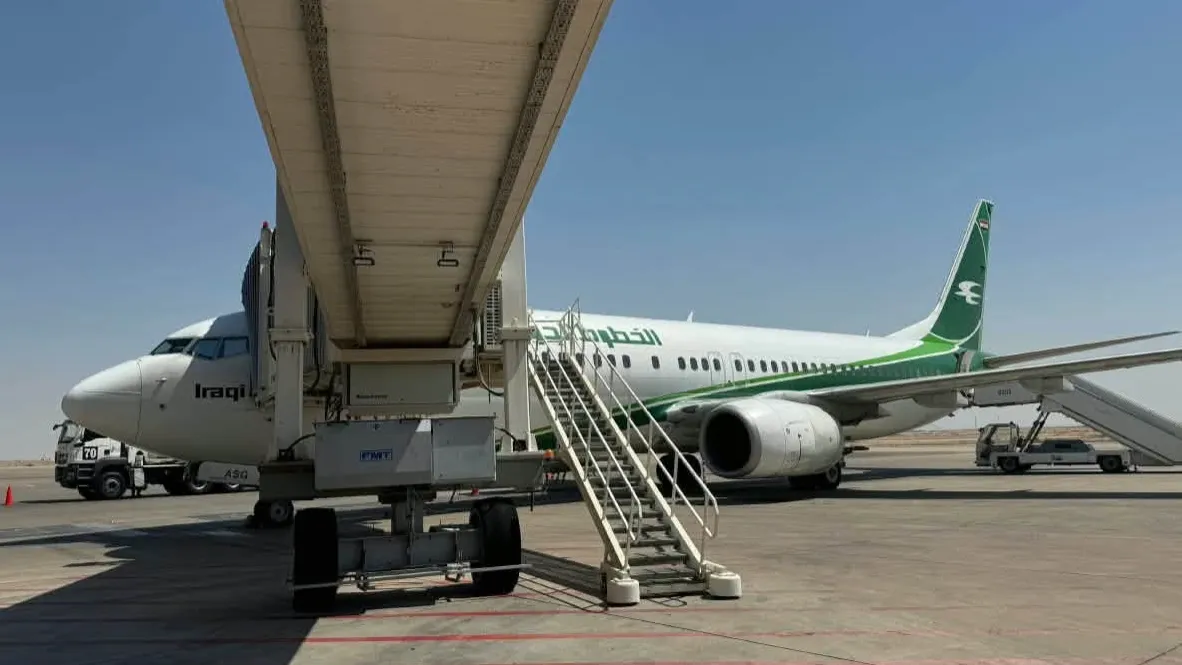
The Coordination Framework's slow response in objecting to Prime Minister Ali al-Zaidi's decision to ban flights between Iraq and Iran provoked criticism and doubts about the coalition's stance on this development, while its forces later sought to "save face."
The suspension of Iranian flights, it should be noted, was imposed under U.S. pressure, which pushed the governing Coordination Framework to try to soften its tone after an initial silence that angered the public, its supporters and drew criticism from Iran.
Although Framework leaders condemned the suspension as a violation of Iraqi sovereignty, the matter did not end there, and criticism continued despite Washington agreeing to a temporary, partial exemption for air travel to Najaf.
Facing the widening criticism, Najaf International Airport director Hussein Mahna said: "The orders to ban came from the office of Prime Minister al-Zaidi."
The absence of an immediate position from Framework leaders did not help calm public anger, and the decision faced Iranian criticism: the Iranian consulate in Najaf posted on X on Sept. 25 questioning how an airport serving the shrine of Imam Ali could be closed "in front of the largest Shiite country in the world."
Ali Akbar Velayati, an adviser to Iran's Supreme Leader, also offered an implicit criticism of the Framework, saying that the prime minister's legitimacy "is rooted in the soil of Najaf and the blood of the martyrs, not in Washington," and noting that the Framework that remained silent had the "confidence of the resistance."
By Sept. 26 criticism escalated from Framework leaders, including Asa'ib Ahl al-Haq leader Qais al-Khazali and al-Nujaba leader Akram al-Kaabi, who threatened sit-ins at the airport unless flights were resumed, while Badr Organization head Hadi al-Amiri urged the government to reverse the decision, calling it "unjust."
Observers said the shift in rhetoric appeared to be an attempt to "save face," and that Framework leaders' opposition to suspending Iranian flights reflects a broader problem within the ruling coalition.
Zaidi is regarded as having moved closer to Washington economically in the early months of his term, while politically relying on a set of influential forces that include some of Iran's closest allies. The Framework, as ruling parties, have an interest in limiting the cost of U.S. sanctions on Iraq, but some of them also politically depend on opposing U.S. pressure and maintaining close ties with Iran.
Baghdad's compliance with the ban despite objections from Framework leaders shows the difficulty of resisting U.S. pressure when it threatens state institutions with sanctions, and the cost of that compliance is clear in Najaf given the importance of Iranian visitors to the religious tourism industry. That has driven Baghdad to seek exemptions covering religious visits as well as medical and educational travel.
This dispute comes amid a broader struggle over Zaidi's authority, following a clash between him and Hadi al-Amiri in August over who would lead a campaign to place armed factions' weapons under state control; al-Amiri insisted that key decisions should be made collectively by the Coordination Framework rather than by Zaidi alone.
Some consider al-Amiri's Sept. 26 call for Zaidi to rescind the ban as evidence that the power struggles over the prime minister extend beyond the weapons issue to how the government responds to U.S. pressure.
The opposition to banning Iranian carriers may move from public condemnations to direct political pressure on Zaidi: a group of Basra MPs moved to demand lifting the ban and began collecting signatures to summon Zaidi, the transport minister and the head of the Civil Aviation Authority before parliament, while a security commander in Kata'ib Hezbollah threatened to topple Zaidi's government "by all means" if the "air siege" on Iran continued after Oct. 1.