Michigan Democrats seek to rally behind Abdul Sayed ahead of Senate election
Michigan Democrats seek to rally behind Abdul Sayed ahead of Senate election
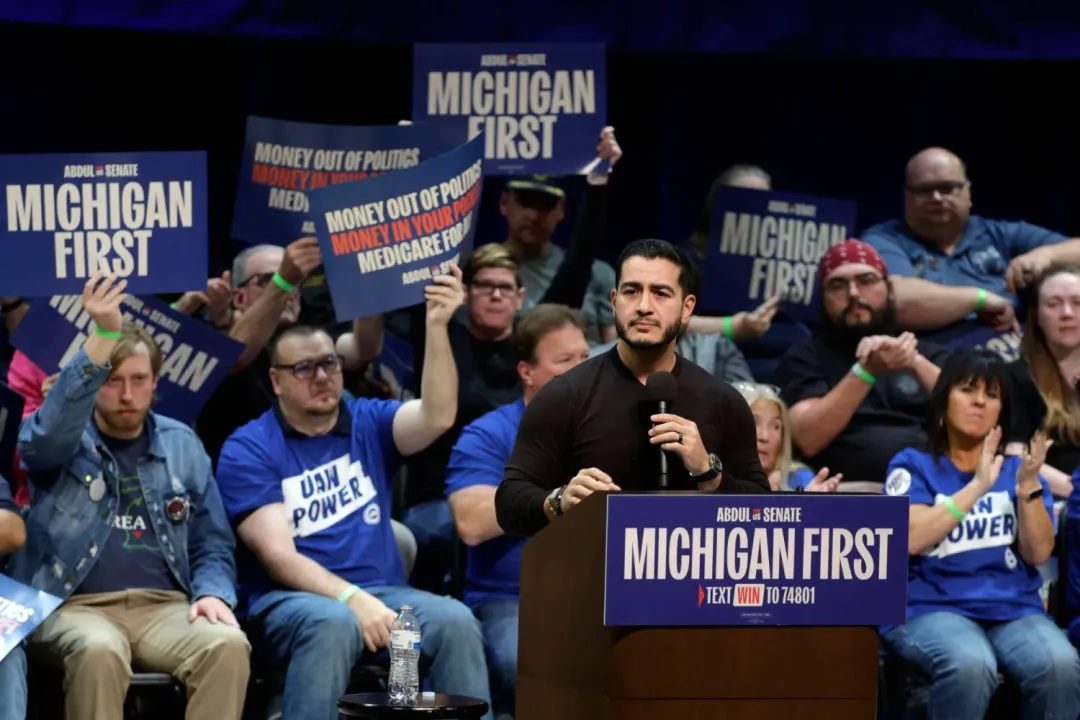
Democratic candidate for the U.S. Senate from Michigan, Abdul Sayed, will participate on Sunday in a campaign event in Detroit alongside his former primary challenger, Representative Haley Stevens, in their first joint public appearance in months, after a week in which their ongoing disputes were made public, according to The Associated Press.
They will be joined by Representative Jim Clyburn of South Carolina, one of the most prominent Black politicians in the United States, at an event urging voters to go to the polls at a Detroit church, according to two people familiar with the arrangements who were not authorized to discuss them publicly. The Associated Press was the first to reveal the event.
The joint appearance — the first since a morning meeting to unify Democrats following the August 4 primary — comes after weeks in which the party’s efforts to rally behind Sayed faltered. Sayed narrowly defeated Stevens. Stevens received strong support from Jewish and Black voters, raising concerns that their turnout could decline in the November midterm election.
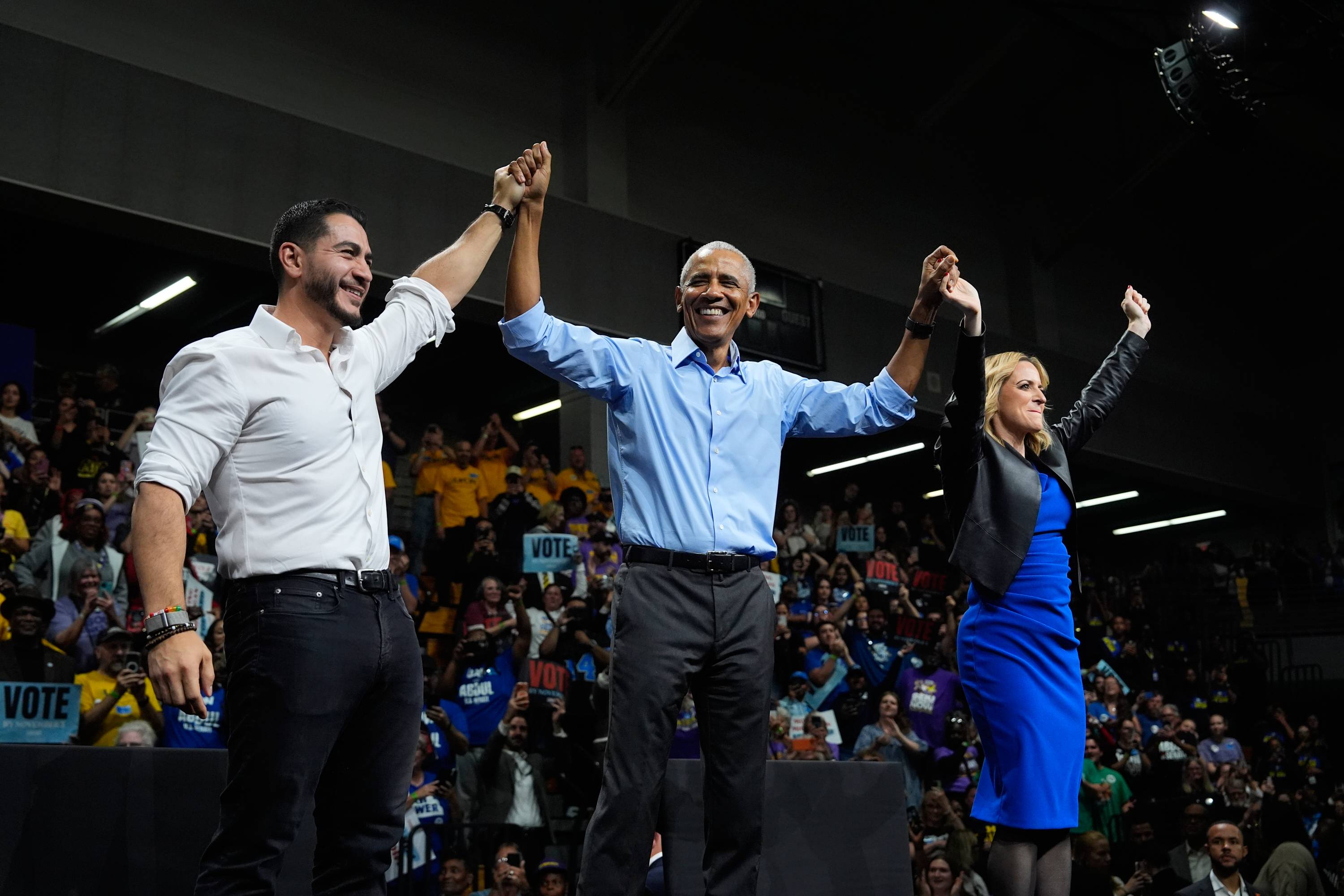 Former U.S. President Barack Obama (center) raises his hands with Democratic Senate candidate Abdul Sayed (left) and the party’s candidate for Michigan governor and secretary of state Jocelyn Benson during a campaign event in Detroit on October 24, 2026 (AP).
Disputes surface
Tensions resurfaced Wednesday when Stevens’s fiancé, Jason Torkish, told the Detroit News that he would vote for Republican candidate Mike Rogers.
Hours later, Stevens appeared on CNN to reiterate that she will vote for Sayed, but she called on his campaign to "push back against and denounce hatred." She said he needs to reach out to the voters who were part of her coalition and "make them feel comfortable about going to the polls."
Responding to a question Thursday evening about the upcoming event with Stevens, Sayed said, "We always try to unify the party," attributing the delay in their joint appearance to their busy schedules. He then criticized the reporter who asked the question, saying that "nobody cares" about internal party interactions amid rising cost of living.
Despite the importance of the joint appearance, it comes only days before the election. Their last appearance together was on August 6, two days after the primary, when Stevens pledged to support Sayed and told CBS News she would do "whatever he wants me to do" during the campaign.
But divisions left by the heated primary contest have persisted. About $60 million was spent on ads attacking Sayed, including $30 million from the American Israel Public Affairs Committee (AIPAC). Stevens is a strong supporter of Israel and represents a district that includes a large Jewish community in the Detroit suburbs.
The church visit on Sunday aims to bolster a unity that remains elusive, but its impact is uncertain, especially since it comes just two days before the election, while early voting in Michigan began on October 24.
Stevens told CNN on Wednesday: "We have a coalition of Black and Jewish voters who turned out in large numbers to vote for me. I want them to go out and vote for Democrats."
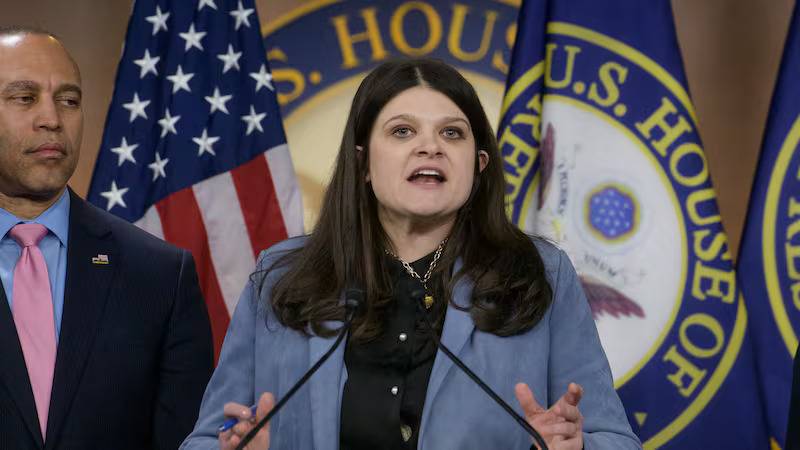 Representative Haley Stevens (Democrat from Michigan), with House Minority Leader Hakeem Jeffries (Democrat from New York) beside her, speaks at a press conference at the Capitol building in Washington on February 6, 2025 (AP).
Ads anger Jewish voters
Sayed’s criticisms of Israel and earlier remarks, as well as his ties to Hasan Piker, the controversial livestreamer, have long worried some members of Michigan’s large Jewish community. Torkish and others said Sayed has not done enough to address those concerns ahead of the general election.
The latest controversy centered on an ad released by the left-leaning independent political action committee Rebellion, which linked U.S. support for Israel to rising food prices.
Sayed said about the ad: "That has nothing to do with our campaign," adding, "Certainly, that is not what I want to be talking about right now."
But Stevens and other Democrats urged him to take a clearer stance and condemn the content of the ad instead of merely distancing himself from it.
In an effort to broaden his base of support, Sayed organized campaign events in Republican-leaning areas, including Michigan’s Upper Peninsula. His campaign also released an ad featuring clips of prominent conservative figures praising him, including former Fox News host Tucker Carlson, who has faced accusations of anti-Semitism that he denies.
But that ad in turn became an additional source of friction with some Jewish voters.
Rabbi Aaron Star of the Shaarei Tzedek congregation in Southfield criticized both the Rebellion committee's ad and Sayed's campaign ad during a call with reporters.
Star said, "We are a week away from the election, and it seems the level of tension has risen a lot," adding, "Instead of improving over the past seven weeks, things have actually gotten worse."
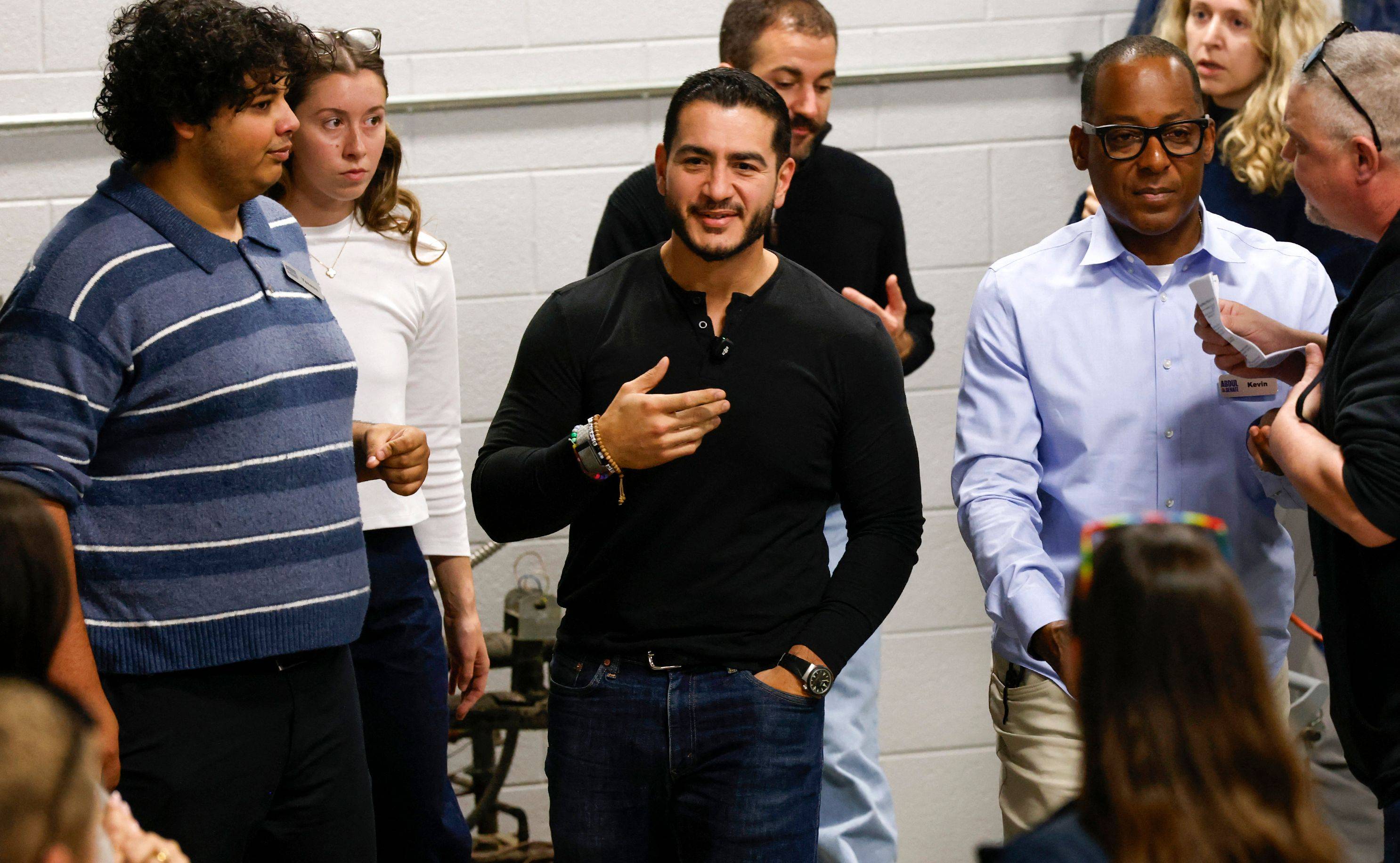 Democratic Senate candidate Abdul Sayed arrives to deliver remarks at a union hall in Jackson, Michigan, on October 29, 2026 (AFP).
Trump poses challenges for Republicans
Republicans also face political challenges, notably voter dissatisfaction with President Donald Trump, the war with Iran, and rising cost of living.
Republican candidate Rogers has remained closely aligned with the president on most issues, and appeared alongside him at a Michigan rally on Sunday, where he praised Trump's role in bringing manufacturing jobs back to the state.
The rally was held in Port Huron, opposite Canada across the river, a country that has close economic ties with Michigan and was targeted by Trump with tariffs.
By contrast, Rogers on Wednesday appeared alongside Republican Senator from Texas Ted Cruz at an event hosted by the Republican Jewish Coalition in Birmingham, Michigan.
Cruz called anti-Semitism "a poison tearing the country apart," and accused Democrats of being under the control of "Communists and Islamists who say so openly."
Trump has repeatedly attacked Sayed over his Muslim faith, calling him a "jihadist," and on Sunday said he "stands with the terrorists."
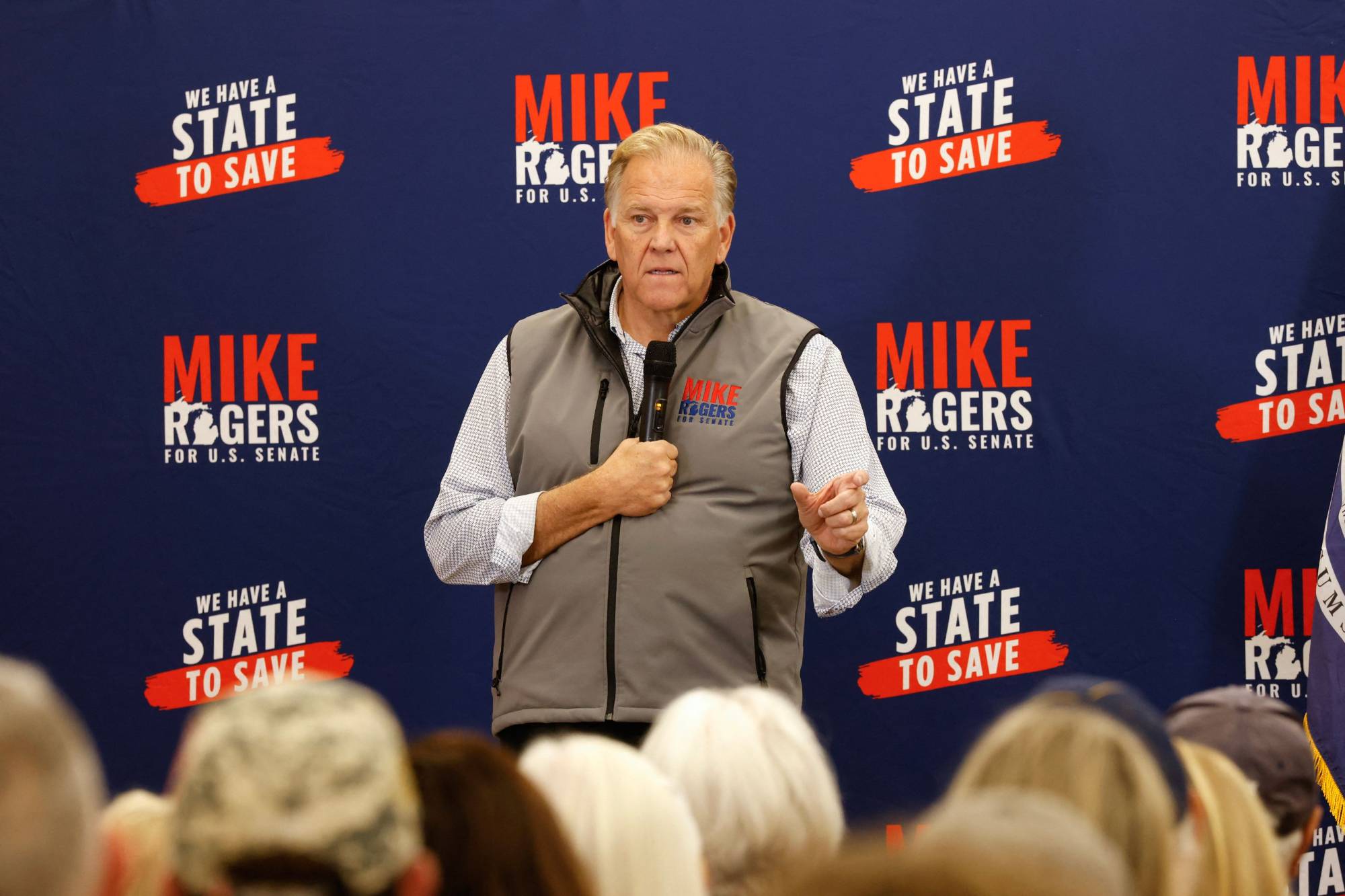 Republican Senate candidate Mike Rogers speaks at a campaign rally in Michigan on October 28, 2026 (AFP).
Race to court Black voters
Both candidates are seeking to win support from Black voters, particularly in Wayne County, which includes Detroit, where Stevens outperformed Sayed in the Democratic primary.
Sayed's event with Stevens and Clyburn is part of efforts to bolster his support among these voters. Appearing in Detroit has occupied a large part of his campaign's recent activities.
Republican Senate candidate Mike Rogers has also tried to broaden his support among Black voters: he visited a reading skills program at a Detroit high school and discussed housing costs with residents of Pontiac, north of the city. Earlier this month, his wife handed out $10 gift cards at a gas station.