First documentation of Asia Minor ground squirrel near Dre village in Barzan
Environmental photographer Saber Dri documented for the first time in Iraq the Asia Minor ground squirrel near the village of Dre in Barzan; the photos are under evaluation by research centers in Germany and India.
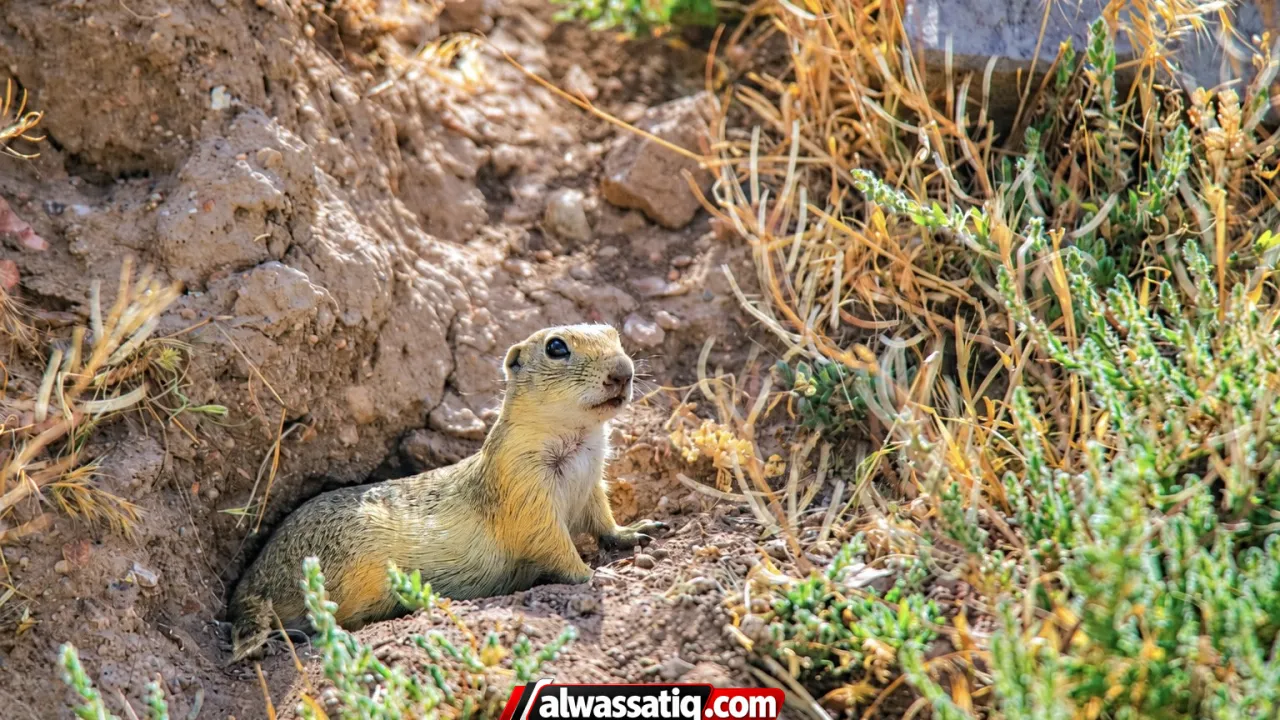
Environmental photographer Saber Dri announced he has documented for the first time in Iraq the Asia Minor ground squirrel, based on sightings recorded near the village of Dre in the Barzan area near the Turkish border, he said.
Dri explained that the photos showing the animal were taken about a year ago and remained archived because there was insufficient information at the time about its species, before they were re-examined later and verification of their identity and rarity began.
He noted that the photos are now subject to research and evaluation by several research centers and universities in Germany and India in order to confirm the squirrel's species and the possibility of officially recording it in biodiversity registers at the Kurdistan Region and Iraqi levels.
Dri said the Asia Minor ground squirrel (Asia Minor Ground Squirrel) belongs to the Sciuridae family and primarily lives in the Anatolia region, explaining that documenting its presence in the Kurdistan Region and Iraq adds to data on the species' geographic distribution in the area.
Dri described the species' features as a plump body, short limbs and a short tail, with a thin white ring around the eyes; dorsal fur color ranges from light brown to gray and pale yellow, while the belly is lighter in color.
He added that the body length of adult males, excluding the tail, ranges between 25 and 28 centimeters, and that males are generally larger than females.
According to Dri, this squirrel's diet mainly consists of plant seeds and leaves, grasses and buds; it sometimes eats insects, and it digs burrows and underground tunnels to use as shelter and protection from predators.
He reported that this species is active during the day and enters winter hibernation, with the duration of its activity varying by season and climatic conditions.
Regarding its conservation status, Dri pointed out that the species is classified as Near Threatened according to data attributed to the International Union for Conservation of Nature (IUCN), warning that conversion of natural land to agriculture and habitat fragmentation could affect its numbers.
Dri concluded by affirming that the results of ongoing studies will determine the significance of this observation and the possibility of officially including it in biodiversity records, which would contribute to expanding knowledge about wildlife and natural environments in the Kurdistan Region and Iraq.