UCSF researchers create molecular autism map revealing 1,800 protein interactions
Researchers at the University of California, San Francisco created a molecular map of autism based on artificial intelligence, genetic data and lab-grown miniature human brain tissue models, revealing more than 1,800 protein interactions, 87% of which were previously unknown.
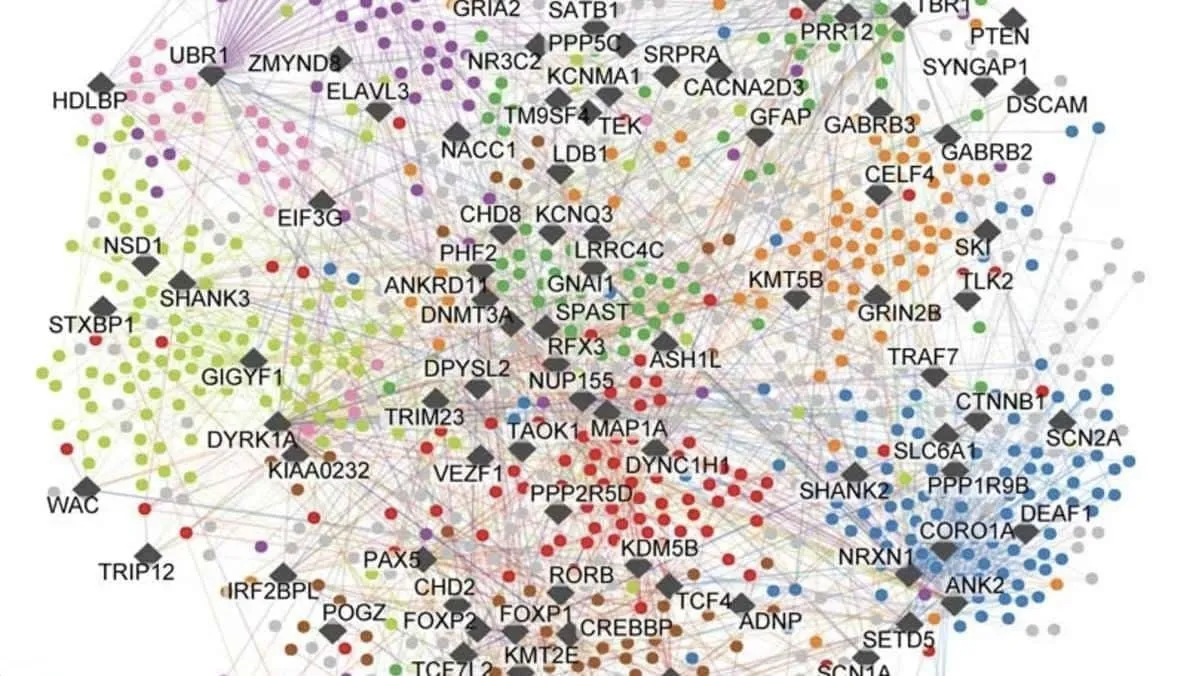
A research team at the University of California, San Francisco (UCSF) produced a broad molecular map of autism that relied on a combination of artificial intelligence tools, genetic data, and lab-grown miniature human brain tissue models.
The map showed more than 1,800 interactions among proteins linked to autism genes, and the researchers found that about 87% of these interactions were previously unknown, offering new insights into potential biological mechanisms that connect genetic mutations to brain development and function.
In their approach, the team used AI tools including AlphaFold to predict how proteins interact, then tested a set of predictions in lab-grown miniature human brain tissue models, including studies on mutations associated with the FOXP1 gene.
The results reveal that different mutations can affect shared protein networks: some mutations may break preexisting links while others may create new links, altering cellular processes related to the development of brain cells.
The researchers say the map could help identify new drug targets by focusing on biological pathways common to people with different genetic changes, rather than trying to develop a separate treatment for each mutation, and could eventually support designing therapies more tailored to the biological characteristics of patient subgroups.
However, the team warns that these findings represent a step in basic research and are not a treatment available now; the discovered interactions still require further testing, and developing a potential drug would require advanced laboratory studies and clinical trials to demonstrate efficacy and safety.
The researchers emphasize that the map could help shift research from merely identifying genes linked to autism to understanding how those genes affect brain cells, taking into account the large diversity among people on the autism spectrum.