Admiral Brad Cooper flies over Strait of Hormuz and affirms Washington's support for shipping
Admiral Brad Cooper visited the Strait of Hormuz and reviewed the situation from the air, while CENTCOM said it had helped partners export more than 1.5 billion barrels and aided the passage of over 3,000 ships.
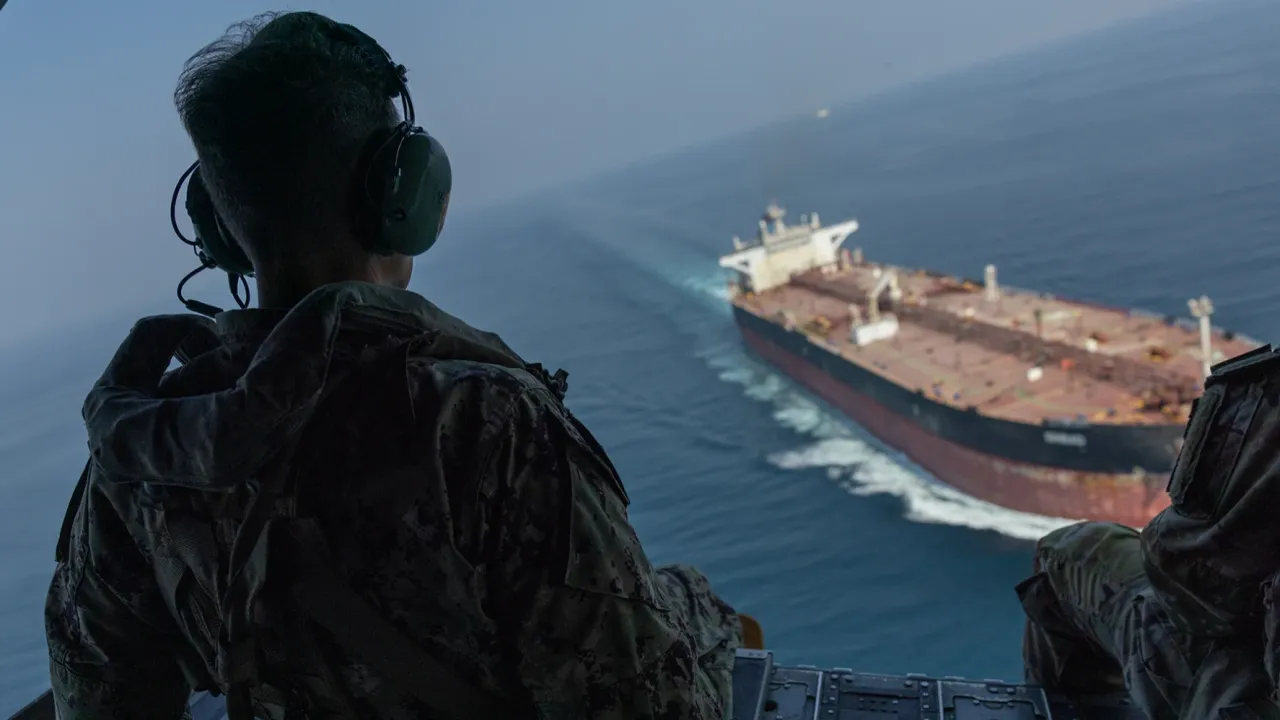
Admiral Brad Cooper, commander of U.S. Central Command (CENTCOM), visited the Strait of Hormuz on Sunday and conducted a flight over the international waterway aboard a U.S. Army CH-47 Chinook helicopter to assess the current operational situation.
The visit coincided with CENTCOM's announcement that it has helped U.S. partners in the Gulf export more than 1.5 billion barrels of crude oil since the summer, and that more than 3,000 commercial vessels have successfully transited the strait with support from its forces over the past six months.
Cooper said U.S. forces "continue to stand side-by-side with our partners in the Gulf and the shipping sector," adding that the visit underscores "our firm commitment to continue ensuring freedom of navigation through the Strait of Hormuz."
CENTCOM said the tempo of operations accelerated in recent months after U.S. forces succeeded in clearing international shipping lanes in the strait of naval mines it said were planted by the Islamic Revolutionary Guard Corps. Cooper said the main transit routes in the strait "remain free of Iranian naval mines, thanks to the exceptional efforts of our personnel."
He added that the focus remains on ensuring the continued flow of commercial navigation in cooperation with relevant U.S. agencies, the Gulf Cooperation Council and the shipping sector. The statement said more than 95% of ships that sailed through the strait in recent months arrived safely, despite what it described as "unjustified hostile acts" by the Islamic Revolutionary Guard Corps — which the command said was evidence of U.S. and regional partners' control of the waterway.
The visit coincided with U.S. President Donald Trump’s announcement on Sunday that he would not launch an attack on Iran that night. In an interview with a television network, Trump said the only question regarding Tehran was "do I make a deal with them or destroy them once and for all?", adding that the United States knows exactly what is happening at the 'Jabal al-Fais' site near the Natanz facility.
Reuters described 'Jabal al-Fais' as a heavily fortified site that contains two complexes of tunnels buried at great depth. Trump repeatedly threatened the possibility of striking the site, while Iran says there is no nuclear activity there. Later, Trump said he had two different intelligence assessments about Iran, and that they were making "good progress" in dealing with Tehran.