Brussels and Beijing agree on cap for plug-in hybrid car imports — 350,000 units a year for four years
The EU‑China deal sets a cap of 350,000 Chinese plug-in hybrid cars per year for four years with a 6% annual increase; preliminary implementation is expected in December.
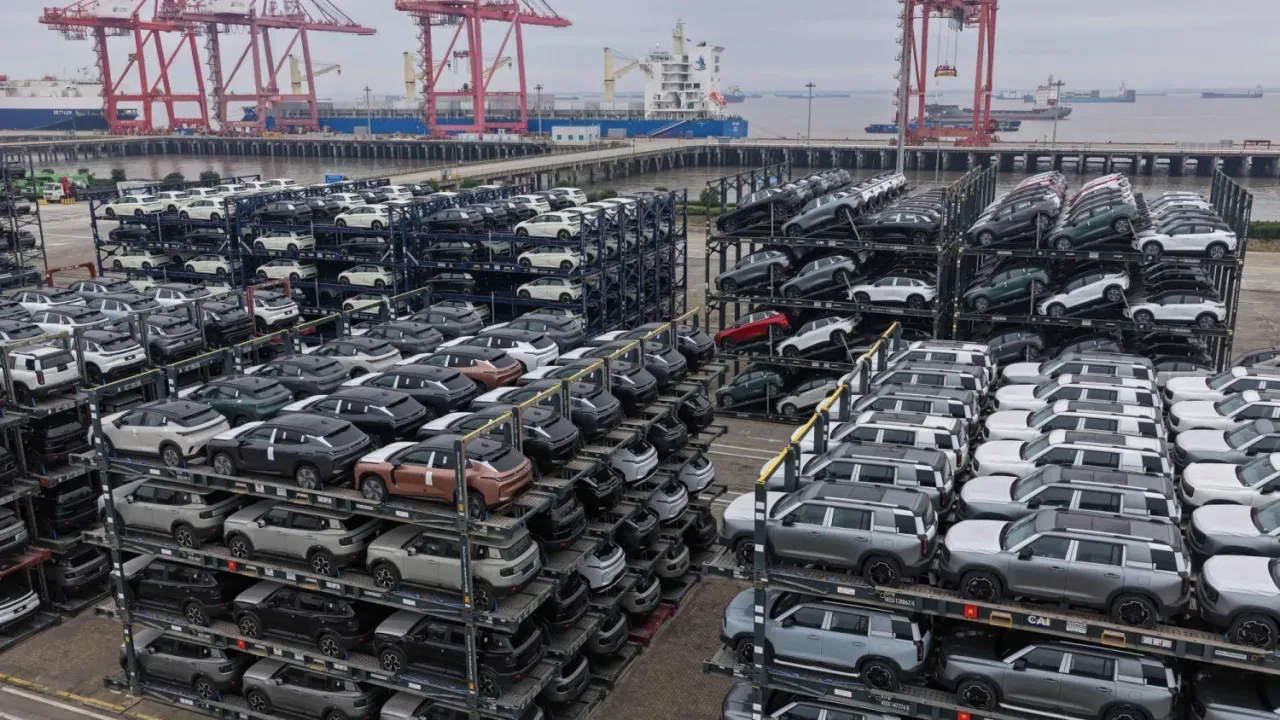
European and Chinese authorities have reached an understanding that imposes an annual cap on imports of plug‑in hybrid cars from China, a step intended to contain the flow into the European market and avoid escalation of a trade dispute between the two sides.
A European Commission official said the agreement runs for four years and sets an initial cap at 350,000 cars per year, with an annual increase estimated at 6 percent, and that preliminary EU implementation measures are expected to start in early December.
The move follows an unprecedented surge in Chinese plug‑in hybrid exports to EU member states, as those models benefited from not being included in additional duties the EU imposed on fully electric cars in October 2024.
Chinese customs data showed the value of plug‑in hybrid car exports to the EU27 rose to $7.5 billion in the first half of 2026, compared with about $2.5 billion in the same period a year earlier, a large jump from 2021 exports of $845 million.
Reports attributed part of the appeal of plug‑in hybrids to weak electric‑vehicle charging infrastructure in some parts of Europe, which gives those cars longer driving range and easier use in limited infrastructure environments.
Analysts said that applying duties to fully electric cars pushed demand toward plug‑in hybrids, making them a main channel for preserving export growth and expanding the market share of Chinese companies.
Jefferies estimates that SAIC Motor, BYD and Chery accounted for more than 90 percent of Chinese plug‑in hybrid sales in the EU, and that this segment made up more than half of their sales in the bloc, leaving these companies most exposed to the pact’s effects if quota limits tighten.
From the Chinese side, the Ministry of Commerce said the understanding followed intensive consultations with the EU covering plug‑in hybrids, electric vehicles and other economic issues, stressing that the agreement ensures China’s share will not be lower than the shares granted to any other source of EU imports and that the measures will not target Chinese products or discriminate against its companies.
EU Trade Commissioner Maroš Šefčovič said the agreement could cut imports of plug‑in hybrids from China by more than half compared with the path they would have taken without restrictions, indicating the pact’s ability to rein in growth.
Details on how quotas will be implemented, including allocation mechanisms, exemptions and price thresholds, remain technical negotiation points that have not yet been finalized.
Investors welcomed the deal as reducing uncertainty over the imposition of extra duties, even though it imposes new quantity limits: BYD’s share fell 1.8 percent, while shares of Chery and SAIC rose about 0.25 and 0.4 percent respectively.
Jefferies analysts described the shift as a move from tariff risk to export‑quota risk, with companies likely to raise model prices or focus on higher‑margin models to offset quantity constraints, which could intensify competition with German luxury brands.
Citi analysts said the agreement reduces some trade risks, but its final impact depends on implementation details related to import volumes, prices and exemptions; experts also expect accelerated Chinese investment to build factories in Europe to reduce reliance on direct exports.
Bill Russo, founder of Automobility consulting in Shanghai, said import limits increase the attractiveness of producing closer to European consumers, but warned that shifting to local manufacturing requires large capital investments that could force smaller Chinese companies to reconsider expansion plans.
The agreement coincides with the opening of the Paris Motor Show, where European and Chinese companies are preparing to reveal around 60 new models, and about 20 Chinese brands—more than in 2024—are participating, including BYD and Chery and newer names such as AITO, while Changan plans to present the NIVO and Avatr brands.
On the European side, companies are intensifying efforts to regain market share: Stellantis is showing six new models and nine concept cars, and its CEO said the group is reinventing historic brands and developing low‑cost electric versions inspired by classic models.
The head of Volkswagen said competition must take place on a level playing field within the European market and that companies operating there contribute to local jobs and value creation.
Chinese firms are seeking to expand industrial presence in Europe in anticipation of trade limits and possible local‑content requirements for market access; companies such as Geely Auto in July announced plans to produce electric cars at a Ford plant in Spain, reaffirming commitments to expand local partnerships.
Car sales in China fell by about 20 percent in the first half of 2026, pushing companies to focus on the European market, which has become their main overseas destination amid difficulty expanding in the U.S. market.
The agreement ushers in a new phase of competition between China and Europe, as companies shift from relying on export growth to a mix of export quotas, local manufacturing and developing higher‑value models. Implementation mechanisms and firms’ ability to build local production will determine how the new quotas affect prices, sales and future investment.